

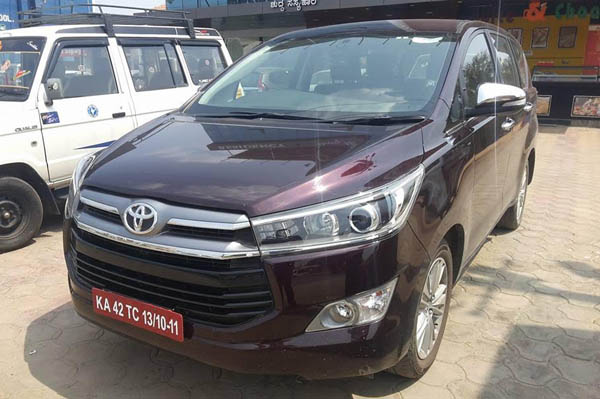
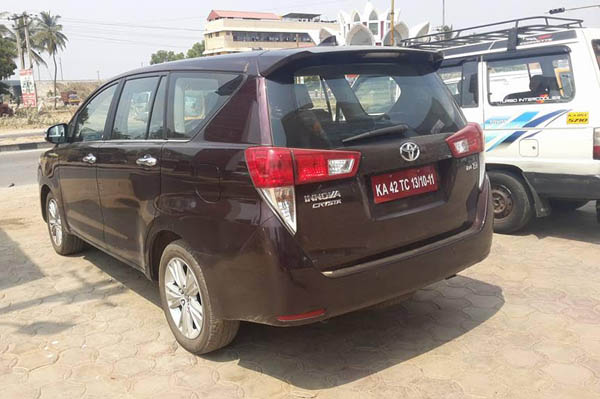
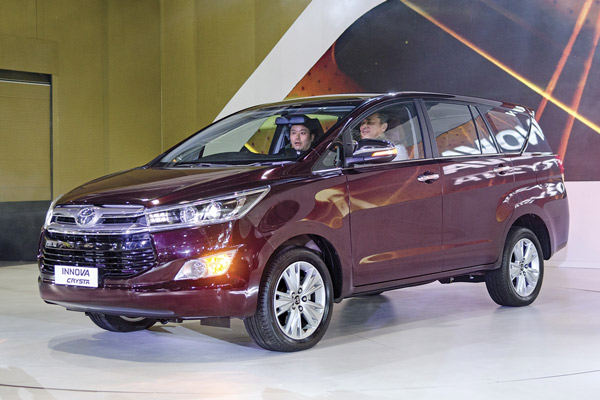
It’s taken Toyota more than ten years to introduce a replacement for the Innova which, in today’s age of shorter lifecycles, makes the current car two generations old. However, age hasn’t bothered Innova buyers and for a car about to be phased out, demand is still strong.
Few cars evoke as much loyalty as the Innova which, after a decade of impeccable service, has garnered a huge fan following. Which is why Toyota was reluctant to tamper with a proven formula and the big conundrum for the Japanese automaker was how to improve on something that’s worked perfectly for years.
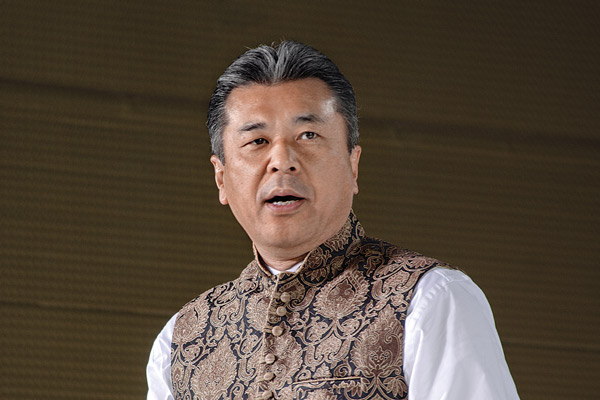
Not surprisingly, Toyota has played safe and the all-new Innova, which comes with a new suffix ‘Crysta’, is more of an evolution than a revolution. However, every part of the car has been changed, says Hiroki Nakajima, managing officer, Toyota Motor Corporation and the chief engineer of the Innova. “After ten years, we felt we needed to change the entire structure of the new Innova to meet all future legislations and, of course, customer requirements. There are no carry-over parts and even the body-on-frame is newly developed and a hundred percent new.”
KEEPING IT SIMPLE
Starting from a fresh sheet of paper, one would have expected Toyota to go in for a ‘hydroformed’ chassis, a trend even homegrown Tata Motors and Mahindra & Mahindra are following. But Toyota has stuck to a conventional tubular chassis. Hydroforming helps reduce weight, especially in heavy ladder chassis; so, why didn’t Toyota adopt this technology for the new Innova?
“Yes, hydroforming is a good way to reduce the weight itself. However, from the manufacturing point of view, we have to produce the same vehicle not only in India, but also other markets like South Africa, Argentina, Venezuela, etc. It can be very difficult to get the material for the hydroforming process in some countries and we have to then import it, which dramatically increases prices. So, we use a material that we can get easily and for that, we have decided to use the conventional method of construction,” explains Nakajima.
As a result, the new Innova is heavier than the outgoing one but Nakajima is not fussed by the approximately 200kg increase in weight and says, “We’ve changed the frame’s cross section size and torsional rigidity is a lot better; this has greatly improved riding comfort, one of our priorities.”
The new Innova also comes with the same 2750mm wheelbase as before and again, Nakajima didn’t want to tamper with what he considers is the perfect dimension. “I had many opinions on the wheelbase length, but size wise, what we have is ideal for India and other markets too.”
Toyota also uses an old-school hydraulically assisted power steering instead of the new electrically assisted ones. Again, the reason is not to compromise a shred of reliability. “From a quality and durability point of view, hydraulic steerings are better especially in rough road conditions where it is difficult to use EPS (electric power steering). Since the steering is shared between the Innova, Fortuner and Hilux, even the new Innova gets hydraulic steering”, explains Nakajima.
 Lenny D'sa
 Saptarshi Mondal
 Uday Singh
 Viraaj Bhatnagar