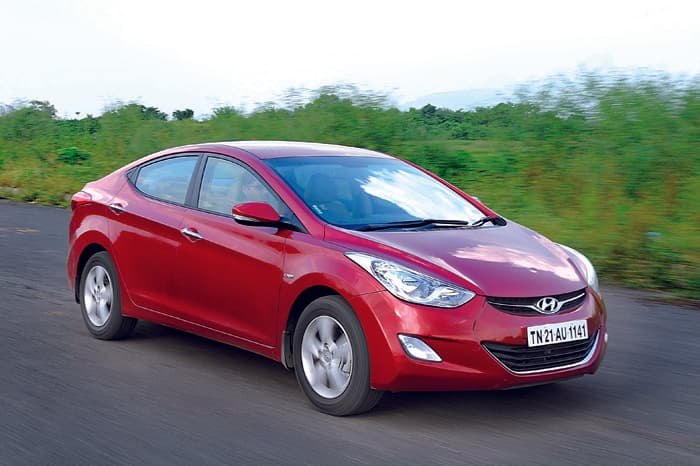
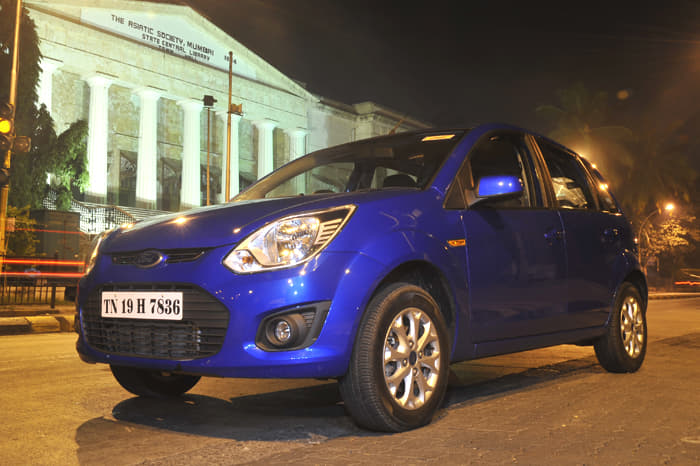
The Figo’s nose is without a doubt the most attractive part of the car, sporting Ford’s Kinetic Design language. The slim upper grille and huge anvil-like lower grille are typical Kinetic Design elements, which work brilliantly to offer a sporty and contemporary look. Details like the very technical-looking headlamps and the prominent wheel arches add to the dramatic-looking front end.
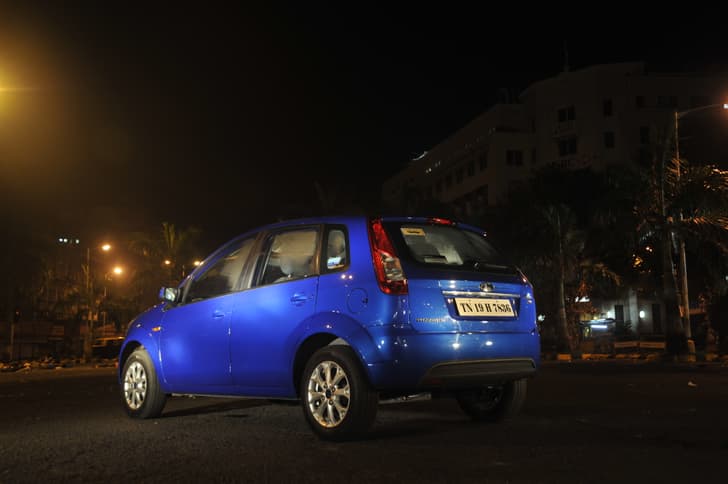
Start moving back and the Figo rapidly loses its modern looks and moves a generation back to betray its roots, which lie in the previous Mark V Fiesta (code: B256) from 2003. Though Ford has re-skinned most of the car by replacing almost all the body panels, the large glass area and low window line point look stylistically outdated. Move over to the rear of the car and the Figo redeems itself with a completely re-designed tailgate and a new vertical tail-lamp cluster. To meet brutal cost targets, Ford had no choice but to retain some of the panels from the previous-generation European Fiesta, for the Figo.
The Figo is based on the tried-and-tested Fiesta platform that’s successfully sold in India. In fact, the underpinnings are almost identical to the saloon and that’s a good thing. You get the same tough build (the doors shut with a big-car thud) and the same brilliant suspension and steering systems. The front struts with the lower A-arms are mounted on a tough sub-frame for rigidity and road isolation and the Figo gets a long 170mm travel suspension. The ‘valveing’ on the rear dampers has also been altered to make ride more comfortable and Ford has reduced steering effort at low speeds in accordance with customer demand. For all practical purposes, the Figo is a Fiesta without a boot and around 20kg lighter.
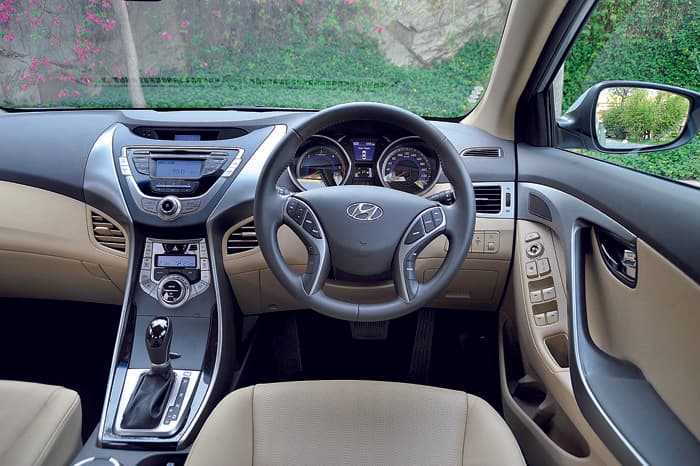
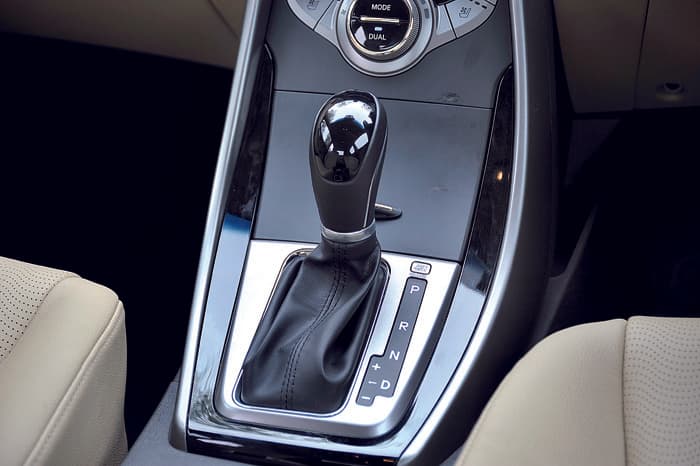
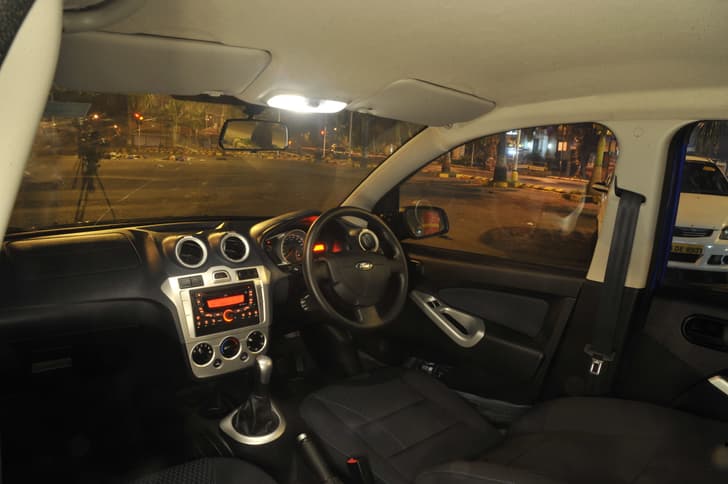
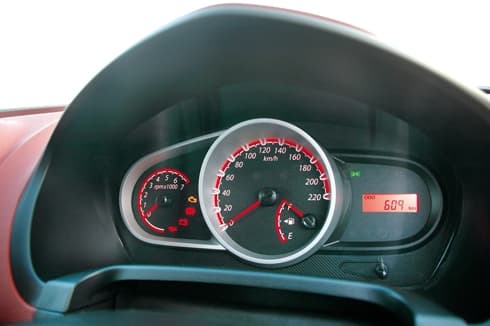
The Figo’s interiors are based on the Fiesta saloon but have been redesigned extensively. The lower half of the dashboard is similar to the Fiesta, which means it is supremely practical with generous storage in the central console, door pockets and glovebox. The dashboard ‘topper’ is all new and smartly shaped with lots of edgy bits. However, the optional red colour for the dash top is really jarring but thankfully there’s an all-black interior that you can choose too.
Splashes of silver, especially around the air vents, look great and lend an air of sophistication to the cabin. The plastics don’t have the richness you now expect in a big hatch but the plastics are hardwearing and the switchgear have a solid, workmanlike feel.
Equipment levels though are a mixed bag. On the top-end version, safety essentials like ABS and airbags are standard as are luxury items like electric power mirrors, a new double DIN audio system with MP3 and Bluetooth connectivity. What’s missing is steering adjust and steering-mounted audio controls but the biggest bit of penny pinching is the absence of power windows at the rear.
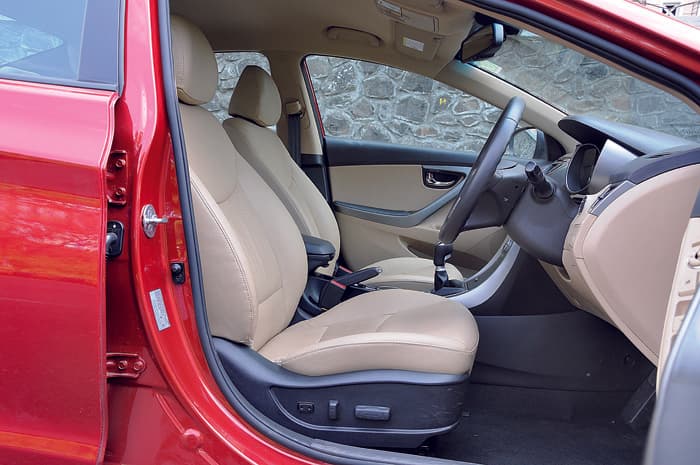
There is loads of legroom in the front, even for six-footers. The front seats with their firm padding and durable material are pretty comfy and visibility is excellent. In fact,
the Figo’s generous glass area and low window sills have given it a particularly airy cabin. It’s just as
well that the Figo retains the Fiesta’s big-capacity air-con compressor, which is particularly effective even in peak heat.
The driver’s seat adjusts for height but not the steering wheel which can sometimes feel odd, especially if the seat is dropped to its lowest setting.
Despite the overall length of the car and the long wheelbase, legroom at the rear is not a Figo strength. That’s because the Figo with its sloping roof is low-slung at the rear and passengers have to crouch a bit and that takes up more kneeroom than when sitting more upright. To make up, Ford has cleverly liberated plenty of foot space below the front seats, which ensures you never really feel cramped. Another plus point is the generous width and long seat squab, great for underthigh support.
The Figo provides exceptional boot space and the design of the hatch makes it easy to load as well. Two suitcases can be squeezed in without dropping the single-piece bench (there is no split).
The Figo comes with two engine options – a 1.2 petrol and a 1.4 diesel. The diesel is the same Duratorq unit that powers the Ikon and Fiesta while the petrol is a scaled-down version of the 1.4/1.6 Duratec engine from the Fiesta and belongs to the same Sigma engine family.
In fact, Ford used the European Fiesta’s 1.25-litre Sigma engine as a base and merely reduced the bore (the stroke is the same). Along with this reduced capacity comes a lower compression ratio of 9.75:1 and a new design for the head, both done to allow the engine to adapt better to our lower octane fuel. Ford has also constructed a special water jacket to cool the head more effectively. A digital throttle also helps improve control over the engine and this motor is Euro IV-compliant from the word go. The power output of the motor is an unimpressive 70bhp – the Honda 1.2 produces 89bhp in comparison.
Throttle response is pretty decent and on part-throttle the Figo is quite sprightly for its power-to-weight ratio. However, floor the throttle pedal to overtake in a hurry and you will be disappointed. The mid-range is quite weak and you need to drop down a gear, sometimes two, to get a serious move on. Ford has also curtailed the top end of the motor. Unlike the 1.6 or even the 1.4, it no longer pulls to 7000rpm, the limiter cuts in at 6500rpm, and the last 1000rpm feels strained. As a result, flat-out acceleration to 100kph takes a leisurely 16.3 seconds with 120kph only coming up in 24.8sec. This is clearly slower than competition like the Swift, which is 3.2sec faster. In-gear acceleration, though slower than the Swift, isn’t too far removed from cars like the i20, which also have a weak bottom end. However, Ford’s iB5 transmission which is light, precise and an absolute jewel, makes it easy to keep the motor in the perky part of the powerband.
The smooth and very responsive Duratorq diesel is by far the more driveable motor. There’s little turbo-lag and this is easily the most tractable small diesel in the market. The Duratorq has only two valves per cylinder which reduces high-speed flow to the cylinders. This gives a
very strong bottom end and good mid-range too but there is a lack of ◊ ∆ top-end grunt. Still, the diesel does the 0-100kph in a petrol-matching 16.3sec and can stay with the petrol as speeds build up as well. This common-rail diesel is also exceptionally smooth and vibration-free. You can hear some amount of diesel clatter but it’s one of the quieter diesels around. The Figo diesel is clearly the better of the two engine options.
With the Fiesta chassis as a starting point, we expected the Figo to have outstanding ride and handling. What we didn’t expect is how much of an improvement it would be. Ford’s engineers wanted to deliver a comfortable ride without compromising the fun-to-drive elements that characterise every Ford, which they have succeeded in doing.
The ride on the long-travel springs and finely tuned dampers is perfect. The suspension has the right amount of suppleness to absorb bumps without getting unsettled, and functions silently with no crashes or thuds. And this is at low, medium or high speeds. Having sophisticated suspension geometry and a long wheelbase pays dividends and straightline stability is hugely impressive.
Ford has reduced steering effort to make maneuvering at parking speeds a lot easier. The steering feels delightfully light at low speeds but up the pace or attack your favourite twisty road and the Figo steers very accurately; however, some of the ‘Fordness’ and feel of the steering system is lost. Nevertheless, this remains one of the nicest steering systems around and offers a purity of steering only achieved by hydraulic and not electric assistance.
Body control and chassis balance are outstanding as well and the Figo simply begs to be driven hard. It’s such a pity that neither engine option can fully exploit this wonderful chassis. The brakes, though pretty effective, need an extra shove on the pedal to shed speed quickly.



.JPG?w=728&q=75)
.JPG?w=728&q=75)
_0_0.JPG?w=728&q=75)
 Sergius Barretto
 Soham Thakur
 Lenny D'sa