

Last Updated on: 31 Aug 2026
Kia Syros EV
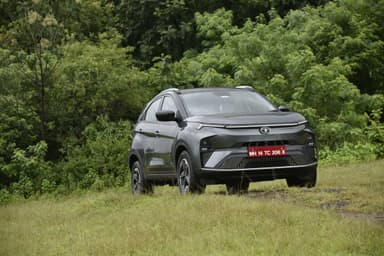
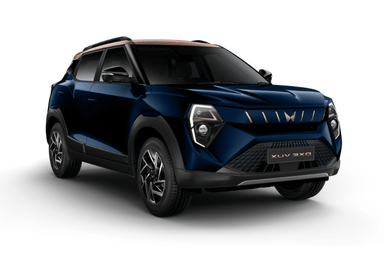
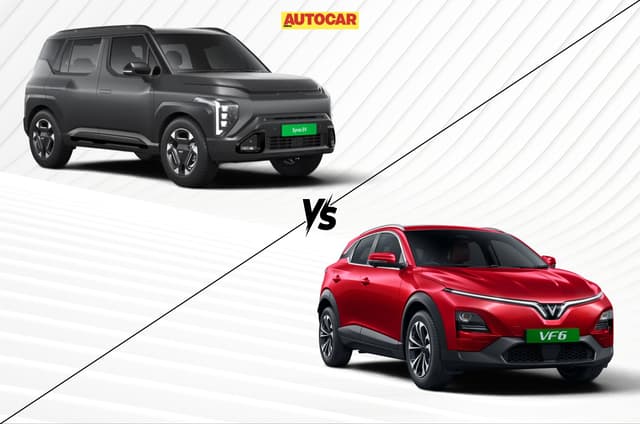
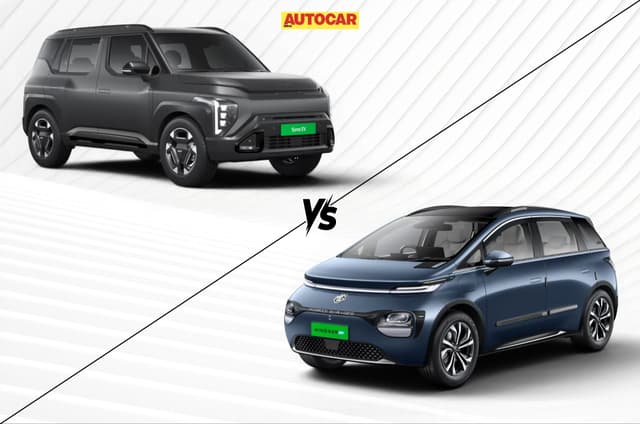
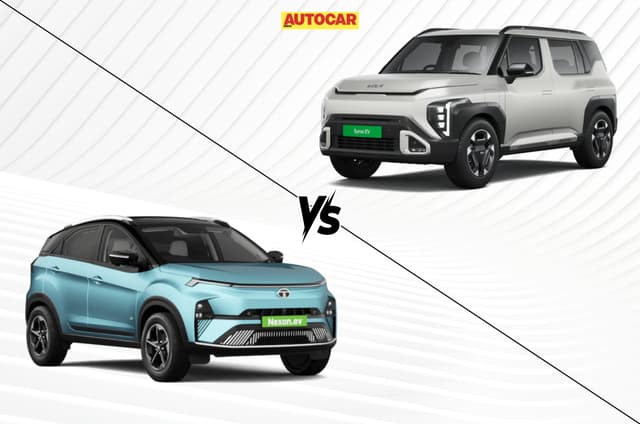
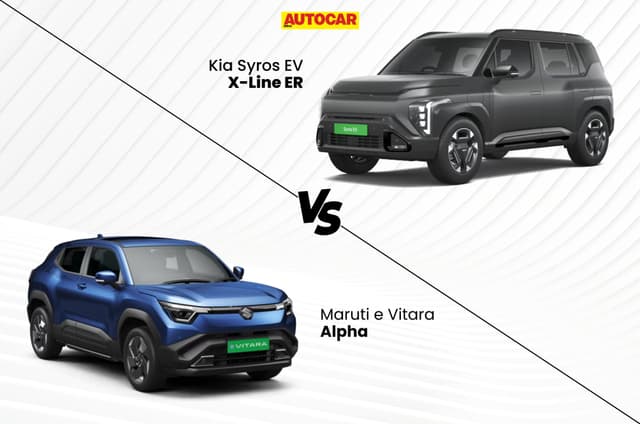
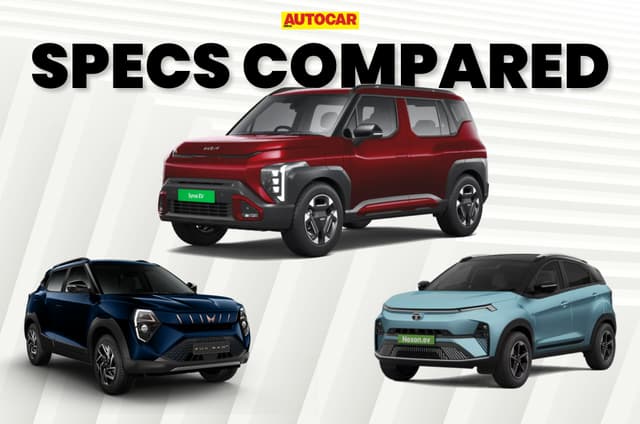
The Kia Syros EV is the carmaker’s second mass-market all-electric model in India. The Kia Syros EV price ranges between Rs 13.50 lakh and Rs 20.00 lakh. This makes it the most affordable Kia electric car in India. The Kia Syros EV rivals include the Tata Nexon EV and the Mahindra XUV 3XO EV.
The Kia Syros EV is available in 7 variants. Its battery options include 42kWh and 51.4kWh. Both battery packs are paired with a 255Nm front-mounted motor, which produces 135hp and 171hp in the 42kWh and 51.4kWh guises, respectively. The ARAI-claimed Kia Syros EV range is 443km for the 42kWh battery and 526km for the larger 51.4kWh unit.
As standard, the Kia Syros EV is equipped with 6 airbags, ABS, brake assist, ESC, stability control, hill-start assist, a tyre pressure monitoring system (TPMS), all-wheel disc brakes, an electronic parking brake with auto-hold, follow-me-home headlamps, a virtual engine sound system, a child lock, rear parking sensors, speed-sensing door locks, impact-sensing auto door unlock, 3-point seatbelts for all seats, ISOFIX anchors, a front passenger airbag on/off switch, and rear occupant alert. Higher variants in the lineup also get a 360-degree camera, an auto-dimming IRVM, and a Level 2 ADAS suite.
Key Highlights of Kia Syros EV
- The Syros EV gets the largest battery pack (51.4kWh), most powerful motor (171hp, 255Nm), and highest ARAI range in the segment (526km).
- EV-specific features for the Syros EV include Vehicle-to-Load (V2L) functionality, battery heating system, and regenerative braking.
- The Syros EV gets segment-first features like reclining and sliding rear seats and ventilated seat bases.
- Apart from Level 2 ADAS, the Syr features automatic flush door handles, a 360-degree camera, a digital key, puddle lamps, multi-colour ambient lighting, and metal pedals over the ICE Syros.
- The Syros EV is offered with three interior themes and seat upholstery options depending on the variant chosen.
- A 10-80 percent charge takes 39 minutes using a 100kW DC charger.
Kia Syros EV Latest Updates
- 17 August 2026: Kia dealer partner Incheon Kia delivers 150 Syros EV units in one day, setting a new record for maximum single-model electric cars delivered in a single day
- 23 July 2026: Kia Syros EV launched at Rs 13.49 lakh
- 15 July 2026: Kia Syros EV revealed with up to 526km range
- 11 July 2026: Kia Syros EV all details leaked ahead of launch, unofficial bookings open.
- 5 July 2026: Kia teases upcoming Syros EV.
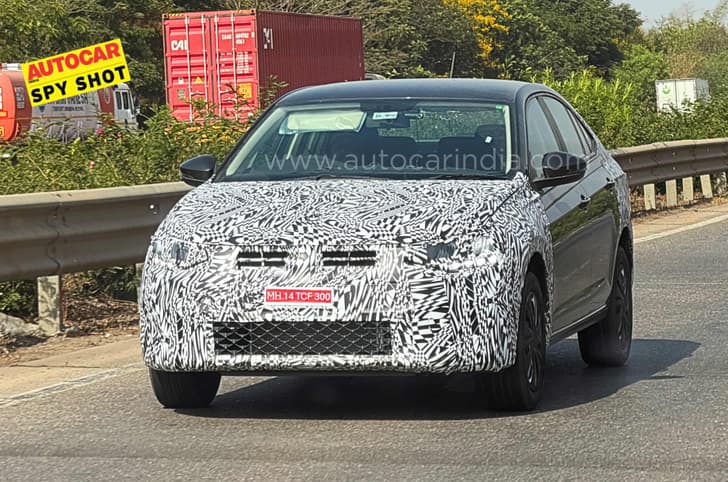
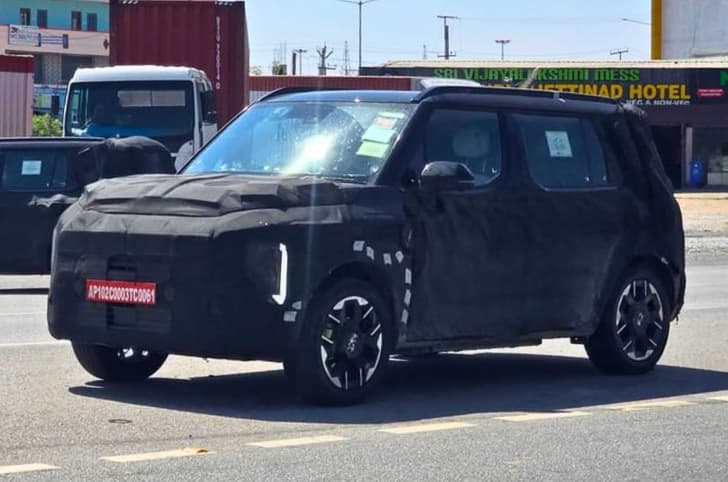
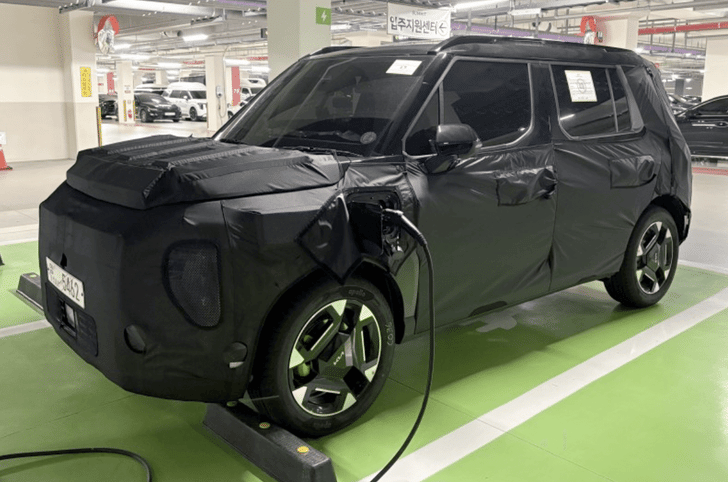
- 26 February 2026: Kia Syros EV spied in India.
Kia Syros EV Features and specifications
Our Rating | 8 |
Battery Range | 443 km - 526 km |
Fuel Type | Electric |
Transmission | Auto |
Seats | 5 |
Body Style | SUV |
Doors | 5 |
Claimed Electric Motor Range | 526 km |
| Fuel Type/ Propulsion | Electric |
| Motor Type | Permanent Magnet Synchronous Motor |
| Number of Motors | 1 |
| Gearbox Type | Auto |
| Drive Mode Types | Multiple |
| Battery Capacity | 51.4 kWh |
| Charging Time | 4 hour 50 mins 10 - 100% (11kW AC) |
| Claimed Range | 526 km |
| Front Suspension Type | McPherson Strut |
| Front Springs | Coil Springs |
| Rear Suspension Type | Coupled Torsion Beam Axle |
| Rear Springs | Coil Springs |
| Length | 3995 mm |
| Width | 1805 mm |
| Height | 1670 mm |
| Wheelbase | 2550 mm |
| Ambient Lighting | |
| Climate Control | 1-zone |
| Cruise Control | Yes (Adaptive) |
| Cup Holders |
| Adaptive Cruise Control | |
| Airbags | 6 |
| Anti Theft Alarm | |
| Anti-Lock Brakes (ABS) |
| Antenna | Shark Fin |
| Daytime Running Lights | LED |
| Follow Me Home Headlamps | |
| Front Fog Lamps |
| Speedometer | Digital |
| Tachometer | Digital |
| Adjustable Front Headrests | |
| Adjustable Rear Headrests |
| Android Auto | Wireless |
| Apple CarPlay | Wireless |
| Branded Music System | Harman/Kardon |
| Display | 12.3-inch Touchscreen |
| Check Vehicle Status via App | |
| Digital Key | |
| Find My Car | |
| Live Location Sharing |
Kia Syros EV price & variants
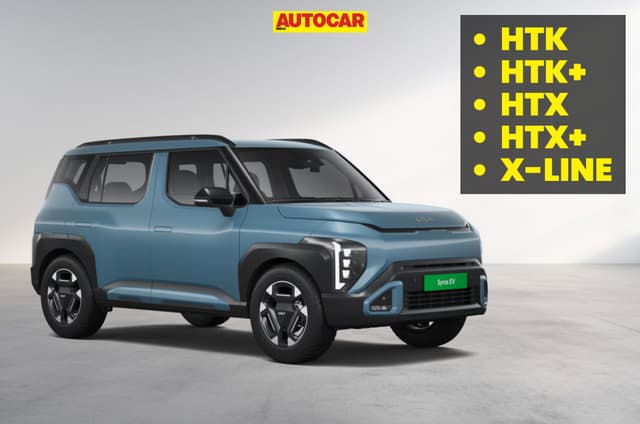
The Kia Syros EV variants include 7 options sold over five trims, namely HTK, HTK+, HTX, HTX+ and X-Line. The 42kWh battery pack is offered with the HTK, HTK+ and HTX variants, while the 51.4kWh battery pack is offered with the HTK+, HTX, HTX+ and X-Line variants.
The Kia Syros EV ex-showroom price ranges between Rs 13.50 lakh and Rs 20.00 lakh. Kia Syros EV on-road price in Sindhudurg is Rs 14.31 lakh and Rs 21.20 lakh.
Both the 42kWh and 51.4kWh battery packs are paired to a front-mounted motor. In the former, the motor delivers 135hp and 255Nm, while it produces 171hp and 255Nm in the latter.
With a 11kW AC charger, the 42kWh takes 4 hours to charge from 10-100 percent, while the 51.4kWh takes 4 hours and 50 minutes to charge. With a 100kW DC charger, both versions take 39 minutes to charge.
Kia Syros EV expert review
We like
Impressive performance and range
Spacious and practical cabin
Feature packed
We don't like
Pricey at the top end
7
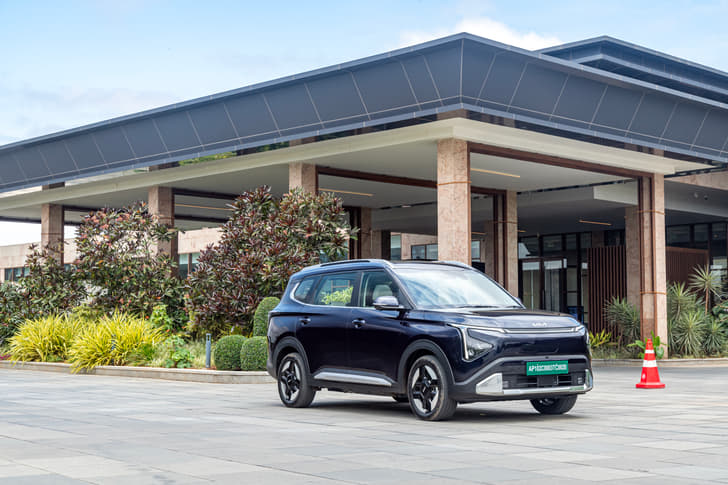
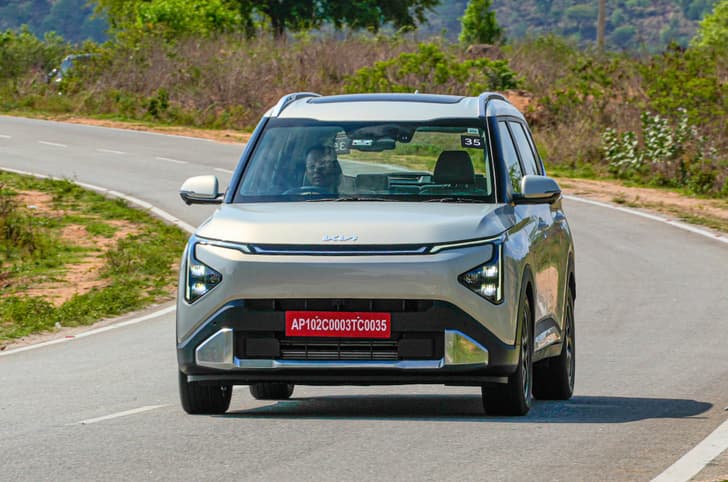
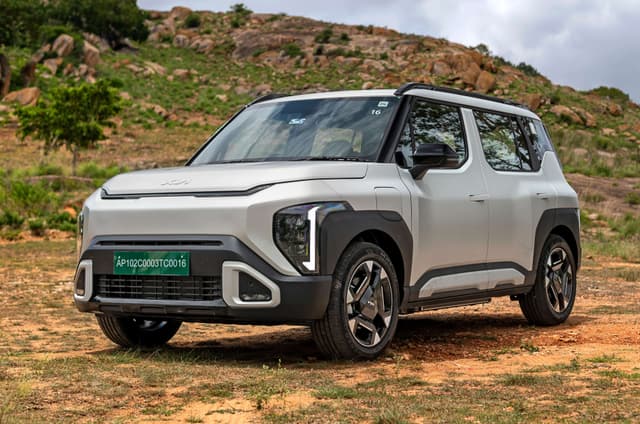
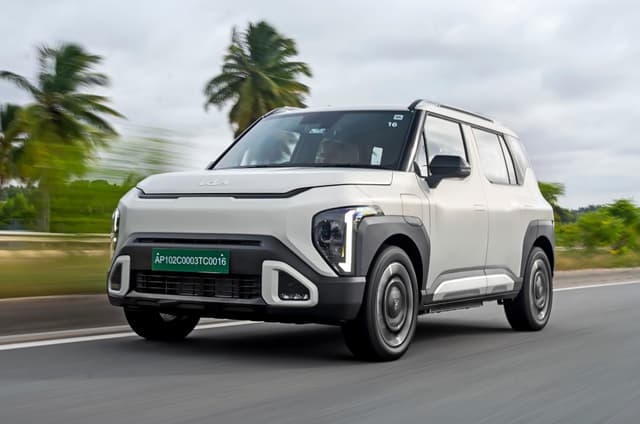
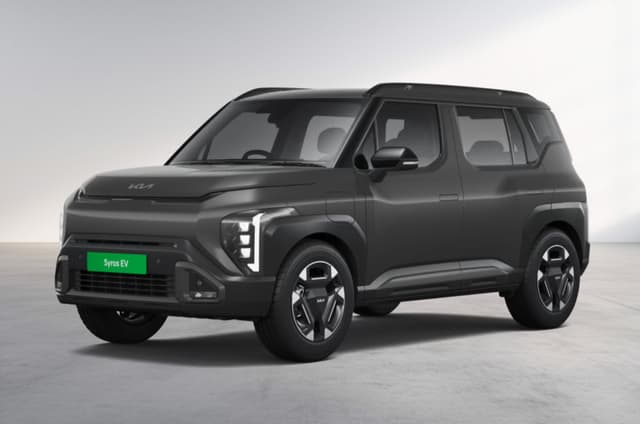
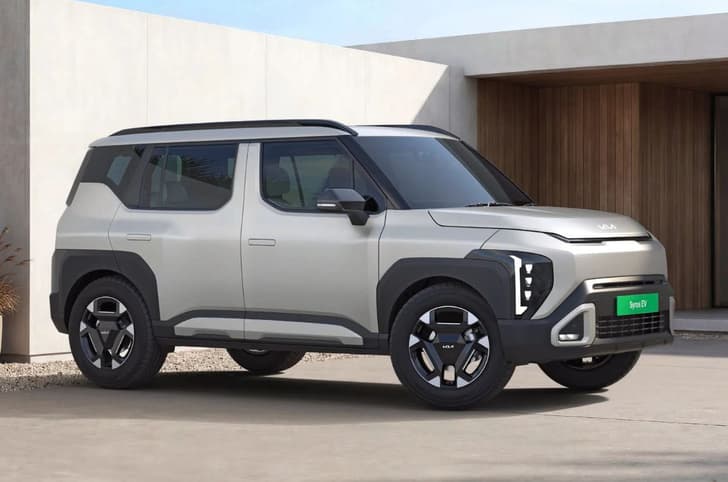
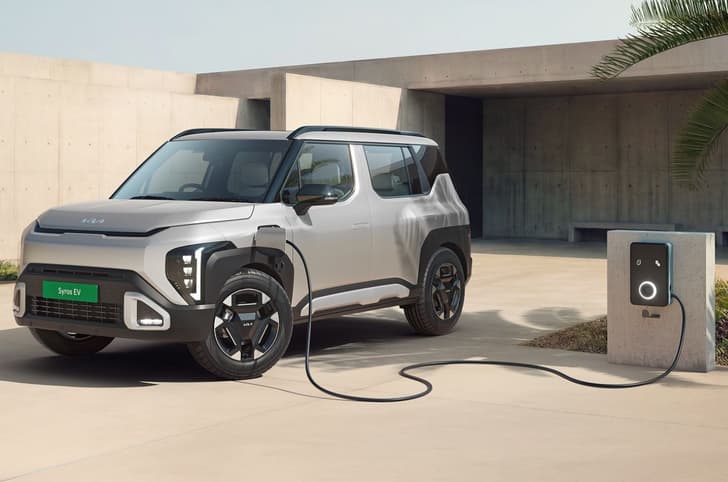
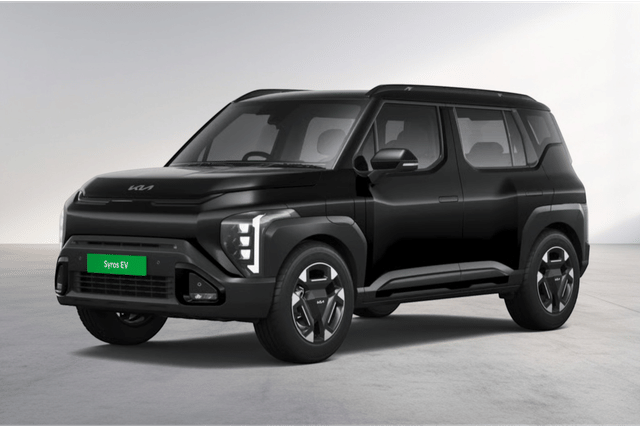
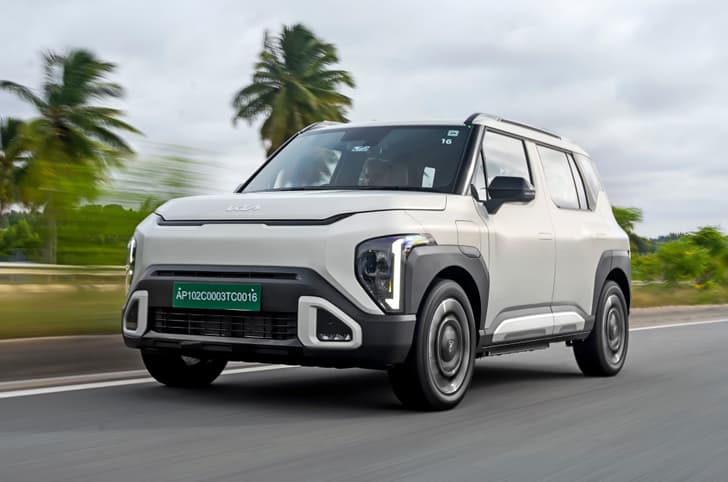
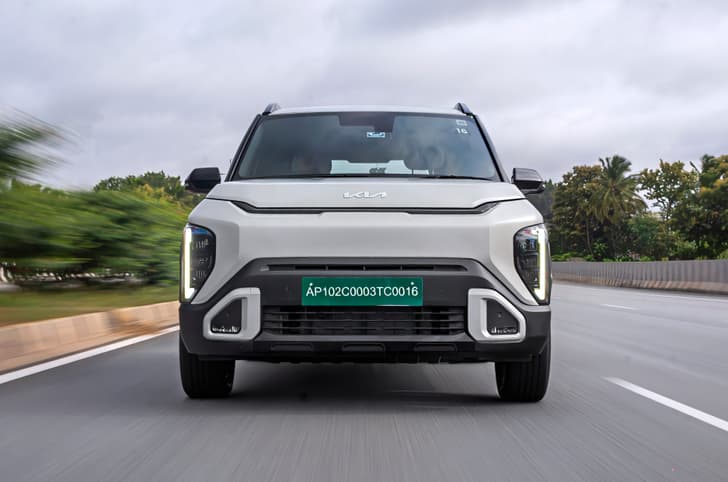
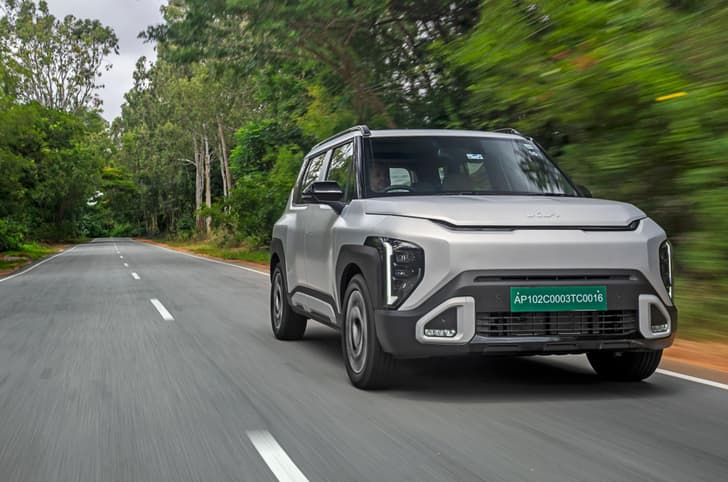
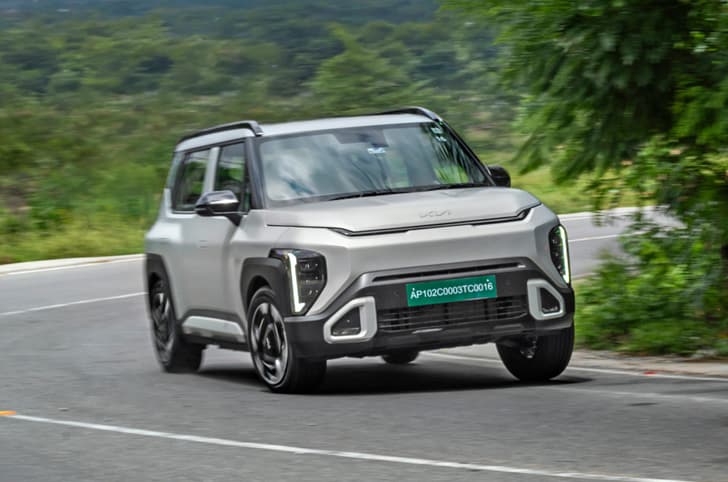
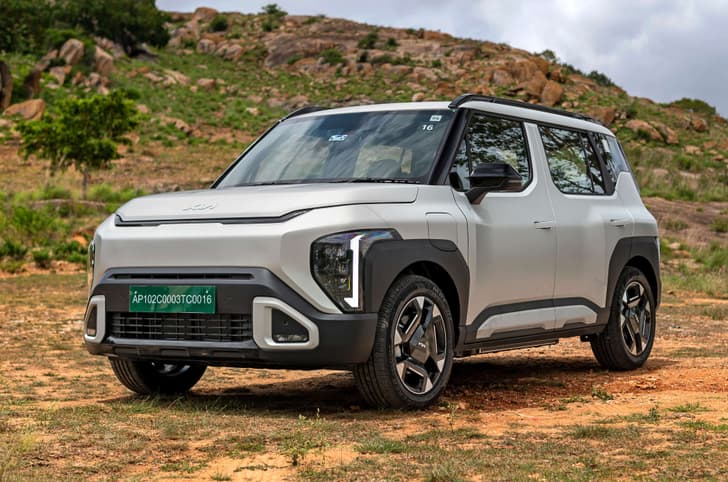
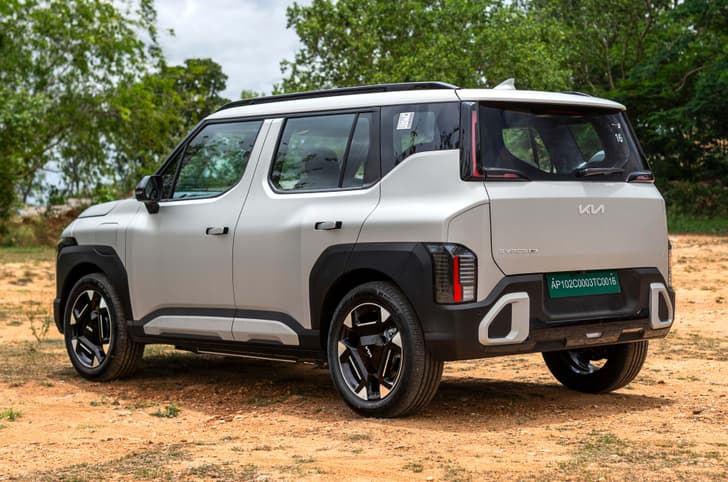
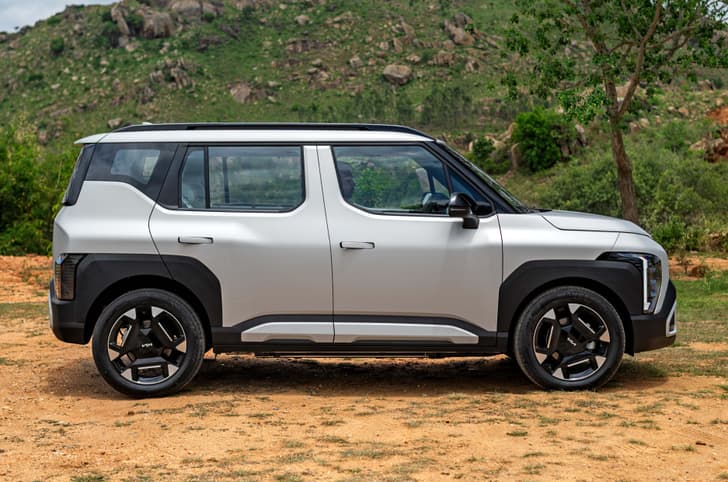
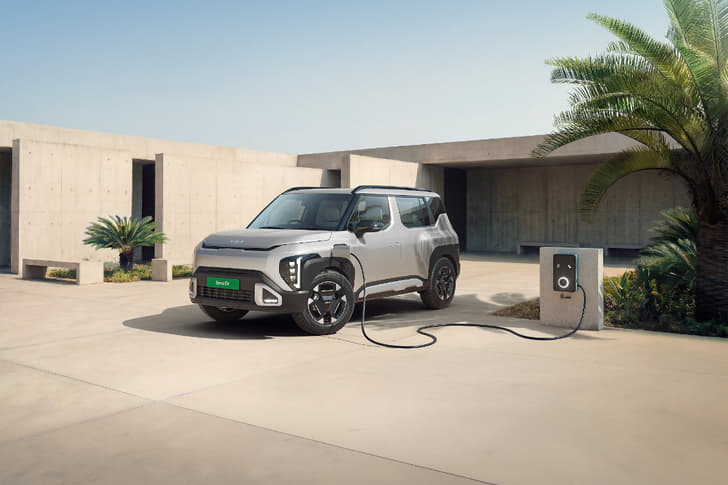
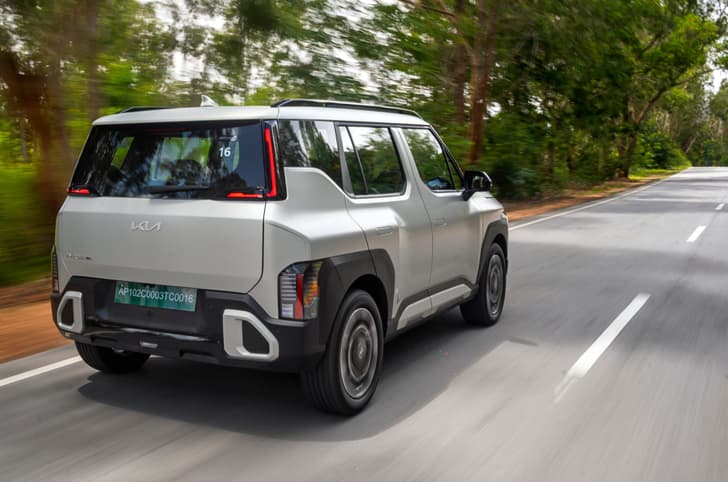
The Kia Syros EV looks largely similar to its ICE counterpart, with only subtle EV-specific changes. These include a slightly redesigned front bumper, a slimmer cooling slot, revised fog-lamp housings, a charging port on the front-left fender, and an EV badge on the tailgate. The battery pack is visible beneath the vehicle, though Kia claims 197mm of ground clearance, which is 7mm more than the ICE Syros. The upright, boxy proportions, vertical headlights and distinctive lighting elements remain.
10
Cabin space remains one of the Syros EV’s strongest attributes. Moving the drive selector to the steering column has allowed Kia to redesign the centre console with significantly more storage, including multiple cupholders, a wireless charger and a large lower storage area. The front seats are supportive and comfortable and offer heating, ventilation and four-way powered adjustment for the driver. Material quality, fit and finish are impressive despite the extensive use of hard plastics. Rear-seat space is generous, and the sliding and reclining bench remains a highlight. However, the battery raises the floor slightly, reducing thigh support compared with the ICE version. Boot capacity remains unchanged at 390 litres with the rear bench fully back and 465 litres with it slid forward, while a small 16-litre frunk provides additional storage.
9
The Syros EV is very well equipped, featuring Kia’s Trinity Panoramic Display comprising two 12.3-inch screens and a 5-inch HVAC display. The infotainment system offers dedicated EV information, charger location, battery pre-conditioning and charging schedules, along with wireless Android Auto and Apple CarPlay. Higher variants also get an eight-speaker Harman Kardon audio system, panoramic sunroof and integrated dashcam. The top-spec X-Line adds Level 2 ADAS, a 360-degree camera, ambient lighting and a three-pin household-style socket. Standard safety equipment includes six airbags, all-wheel disc brakes, tyre-pressure monitoring and Isofix mounts. The comprehensive ADAS suite includes adaptive cruise control, lane-keep assist, collision avoidance systems and a blind-spot camera.
9
The Syros EV is offered with 42kWh and 51.4kWh battery packs, both powering a single front-mounted motor. The smaller battery version produces 135hp, while the Extended Range version makes 171hp; both generate 255Nm of torque. The 51.4kWh version has a claimed 0-100kph time of 8.1 seconds and delivers brisk performance. Eco, Normal and Sport drive modes progressively sharpen throttle response, but power delivery remains smooth and linear initially before delivering stronger acceleration deeper into the pedal travel. The regenerative braking system is particularly well calibrated, with clearly differentiated levels and a seamless one-pedal driving mode. Refinement is also good, with very little motor noise entering the cabin, though some road noise is more noticeable because of the otherwise quiet powertrain.
8
The 42kWh Syros EV has a claimed MIDC range of 443km, while the 51.4kWh Extended Range version is rated at 526km. Based on experience with other models using the same battery setup, the Extended Range version should be capable of around 400km in real-world driving, though this was not verified during the short test drive. Charging from 10-80 percent using a 100kW DC fast charger is claimed to take 39 minutes. With the optional 11kW AC wallbox, the same charge takes around four hours for the Standard Range version and close to five hours for the Extended Range.
8
The Syros EV rides slightly better than the ICE version, absorbing sharp bumps more effectively, although an underlying firmness remains. This helps body control, but its tall and narrow proportions result in noticeable body roll through corners. Despite this, overall grip is strong and the car feels stable at speed. The steering has good feel and gains weight as speeds increase, improving highway confidence. Four-wheel disc brakes provide strong stopping performance. The Syros EV is not especially entertaining to drive, but it feels secure, predictable and easy to manoeuvre in urban conditions.
7
The Syros EV is priced from Rs 13.5 lakh for the 42kWh version, while the 51.4kWh Extended Range starts at Rs 17 lakh and the fully loaded X-Line costs Rs 20 lakh. A Battery-as-a-Service scheme is also offered, with prices starting at Rs 7.99 lakh plus battery rental of Rs 3.3 per kilometre. The 42kWh version makes a particularly strong case thanks to its spacious cabin, generous equipment and competitive pricing against similarly sized EVs. However, the value proposition becomes less convincing with the 51.4kWh version, which overlaps with larger electric models offering bigger batteries. While the Syros EV remains spacious, well equipped and capable, buyers at the upper end of the range may be tempted by larger alternatives available for similar money.
Reviewed by: Lenny D'sa
Kia Syros EV Official Brochure
Download the complete brochure with specs, features, and variants.

Kia Syros EV User Reviews
Tell us about your experience
Kia Syros EV reviews

Kia Syros EV comparison


Kia Syros EV Range
The Kia Syros EV gets a claimed range of 423km for the 42kWh battery pack. Meanwhile, the larger 51.4kWh battery pack gets a claimed range of 526km.
| PowertrainThe combination of engine type, fuel, and transmission that powers your vehicle and determines how it drives and what it runs on. | ARAI RangeMileage certified by the government, tested under controlled lab conditions. Real-world mileage will vary. |
|---|---|
Electric-Automatic (Auto) 42 kWh | 443 km |
Electric-Automatic (Auto) 51.4 kWh | 526 km |
Kia Syros EV news
Kia Syros EV Images
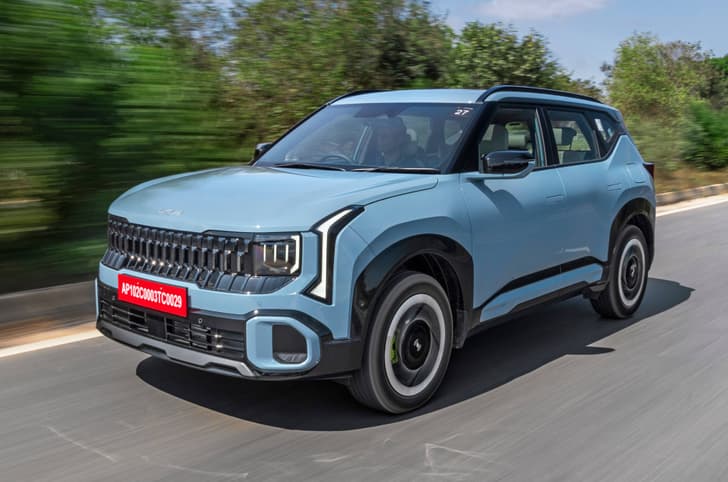
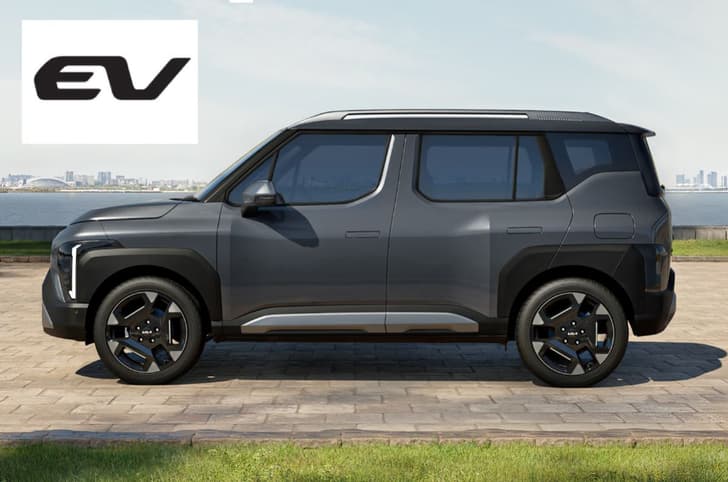
The Kia Syros EV images showcase its tall-boy design, EV-specific design bits, interior and colours on offer.
Kia Syros EV Colours
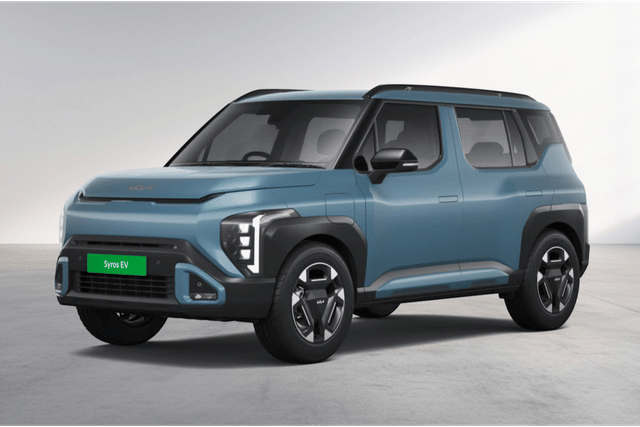
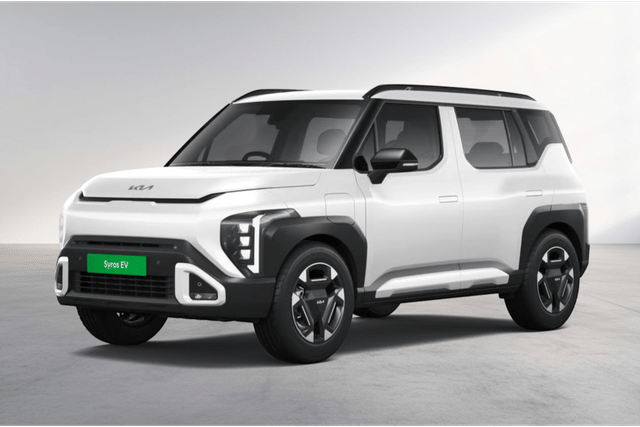
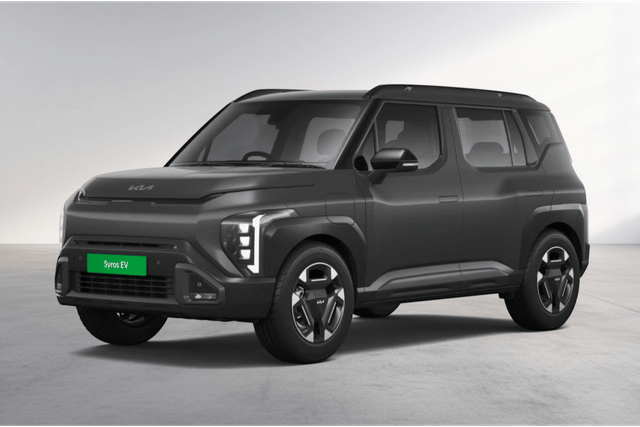
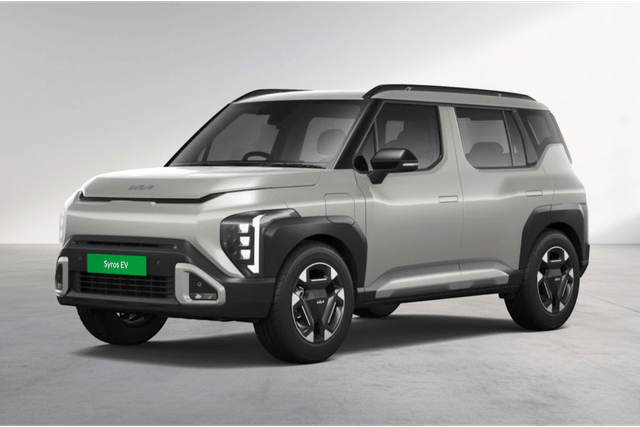
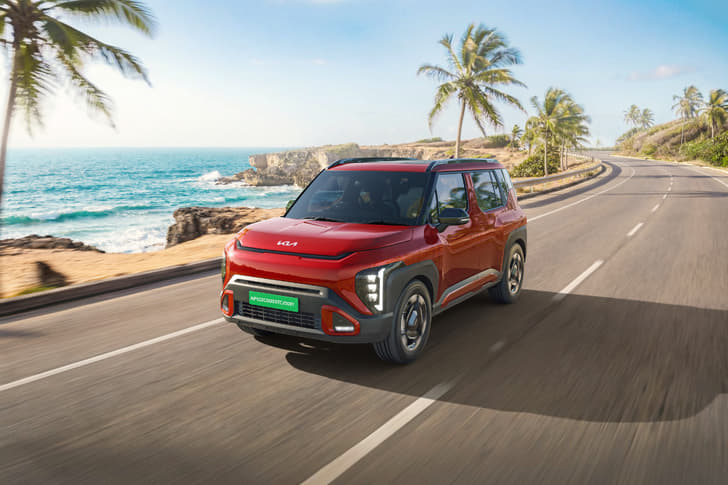
The Kia Syros EV colours include Ivory Silver Matte, Frost Blue, Gravity Grey, Pewter Olive, Magma Red, Ivory Silver Gloss, Aurora Black Pearl, Glacier White Pearl, and Xclusive Matte Graphite. Of these, the top X-Line trim is available solely in the Aurora Black Pearl and Xclusive Matte Graphite colours.
Similar Cars to Explore
Kia Syros EV FAQs
Being an EV, the Kia Syros EV features a charging flap on the front fender, different alloy wheel designs and EV badging on the tailgate.
Its interior gets a revised centre console design as the gear lever is moved to the steering column.
Additionally, the Syros EV gets more features like Level 2 ADAS, automatic flush door handles, a 360-degree camera, a digital key, puddle lamps, multi-colour ambient lighting, and metal pedals.
Yes, with the most powerful version delivering 171hp and 255Nm, the Syros EV is more powerful than the ICE Syros' 120hp, 172Nm petrol and 115hp, 253Nm diesel powertrains.
With a 51.4kWh battery pack paired to a motor producing 171hp and 255Nm and a claimed range of 526km, the Syros EV gets the largest battery, is the most powerful, and has the highest claimed range in the compact eSUV space.
While the prices of the Syros EV are yet to be revealed, it is expected to be more affordable than the Carens Clavis EV since it's a compact model. Currently, it's the Clavis EV that's the most affordable Kia EV on sale in India.
Questions you may find useful
Hi team! 🙋 Hope you are having a good day. Wanted your help in reaching an informed decision. I'm getting a used 45K Run 2024 Curvv EV Empowered+ A 55 for 16.5L . Do you think it is an okay price? I haven't negotiated yet. What will I be missing in comparison to the new SeriesX? Is the backseat of the old model comfortable for long journeys? I heard there were some complaints before n they improved it in the new one. Was there anything else bad apart from the headroom before, and how bad was it anyway, if tall passenger won't be sitting at the back? Also r there any known issues? What should I double check before buying one used? Or should I wait n buy a new Syros EV instead? Really appreciate your work in helping us out. Thanks in advance.
Hi, I am planning to buy the XUV 3XO EV AX7L but am a little confused, as many people are saying that it uses an older NMC battery pack. I am also considering the Tata Punch EV top-spec variant, but overall, I prefer the XUV 3XO EV. Please suggest which one would be a better choice and also explain the NMC battery technology.
The NMC battery chemistry is not a reason to avoid the car. NMC (Nickel Manganese Cobalt) batteries are widely used in EVs and are proven technology here in India and globally. They offer good energy density and performance, but need proper thermal management, which is what every manufacturer, including Mahindra, has engineered the battery pack for. The concerns around NMC are often overstated – the key is how the battery is managed, not just the chemistry. The Mahindra XUV 3XO EV is also a more spacious car and offers better performance; however, the overall powertrain calibration in terms of throttle response, easy drivability and power efficiency is better in the Tata Punch EV. So, keeping that in mind, if you are ok with the smaller size, we would lean towards the Punch EV. A good alternative would be the Kia Syros EV, which will offer you a very well calibrated and tuned powertrain, excellent reliability and a lot of interior space too.
I am planning to buy an EV for my daily commute. I drive around 150-180 km daily, with a 250-280 km trip once or twice a week. Which EV should I buy, and which battery pack would you recommend?
With a daily commute of 150-180 km and weekly trips of 250-280 km, you need an electric car with a real-world range of at least 350km to avoid range anxiety and frequent charging stops. In your 15-20 lakh budget, the Kia Syros EV extended range or the Maruti Suzuki E Vitara with the 61 kWh pack makes the most sense. Both of them will offer a real-world range of around 350-400 km, which comfortably covers your daily commute and your longer trips with a single charge.The key is to choose the larger battery pack in whichever model you go for. Your usage pattern demands maximum range and flexibility, and the larger battery will make a meaningful difference in your ownership experience.
I drive around 6-8 km daily in heavy traffic in Gurgaon, with a monthly running of around 220-400 km. I am looking to upgrade from an i10 CNG. I want an automatic car with Auto Hold, good suspension, and stable handling. Features such as a defogger, cruise control, and ventilated seats would be good to have. My on-road budget is around Rs. 15 lakh. I am considering the Syros EV HTK, Nexon EV Creative 45, MG Windsor Exclusive, and Victoris VXi AT. I am also considering waiting for the upcoming Bayon AT, XL6 AT, Hyundai Inster, and updated Fronx. Kindly suggest which would be the best option for my requirements.
For your usage pattern of 6-8 km daily in heavy Gurgaon traffic and a monthly running of 220-400 km, an EV is the most sensible choice. Your running is too low for a diesel or CNG to make financial sense, and the stop-start nature of your commute is where EVs really shine with their smooth, silent operation and negligible running costs. The Kia Syros EV HTK would be our top recommendation from your shortlist. This Kia car offers a well-rounded package with a comfortable ride, a good feature set and a mature ownership experience. The MG Windsor Exclusive is also worth considering if rear seat space is a priority, but the Syros EV feels like the more complete product overall. The Nexon EV Creative 45 is a good value proposition, but the Syros EV feels like the more polished and premium offering. The Victoris VXI AT is a solid petrol alternative, but given your usage and budget, the EV route makes far more sense. As for the upcoming launches, the Bayon AT and Inster are all interesting options, but none are likely to fundamentally change the equation for your specific usage pattern. The Syros EV HTK is the car that will make you happiest after five years of ownership.
I am planning to purchase my first car and am a new driver, so I am also new to driving on the roads. Budget: Rs 15 lakh Need an automatic transmission I work in Delhi, but my hometown is in Uttarakhand. My usage will be around 60% city driving and 40% highway/hill runs. Overall running will still be around 1,000 km per month. Open to both EVs and petrol/diesel cars. I don't have a home charger, but there are common AC/DC chargers in my society and office. Which car should I choose? I like the Mahindra 3XO RevX A and Skoda Kylaq Prestige+. I would also like suggestions for EVs if there are any that fit my requirements. I am open to other options as well.
Go for the Mahindra XUV 3XO RevX A. It is the better fit for your usage and budget. As a new driver with a car under Rs 15 lakh budget, you need one that is easy to drive in Delhi traffic, comfortable on highways, and capable on hill roads. This Mahindra car delivers on all three. The turbo-petrol engine is punchy enough for highway overtakes and hill climbs, while the automatic gearbox is smooth and easy to live with in the city. The car also feels solid and planted on the highway, which is important for long drives to Uttarakhand.The Skoda Kylaq Prestige+ is a good alternative if you prioritise driving dynamics, but the 3XO offers better value for money and a more spacious cabin. On the electric car front, the Tata Nexon EV and Kia Syros EV are the only realistic options within your budget, but without a dedicated home charger and with regular highway and hill driving, an EV isn’t the most practical choice right now.The 3XO RevX A strikes the right balance between city comfort, highway stability, and hill capability, making it the best first car for your needs.
Upcoming Cars


Kia Cars

Trending Cars


Latest Cars