autocar-logo
Delhi

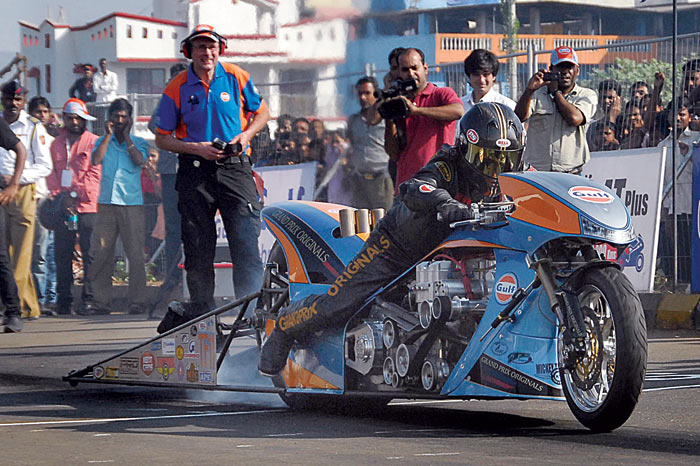
Gulf Top Fuel Drag Bike

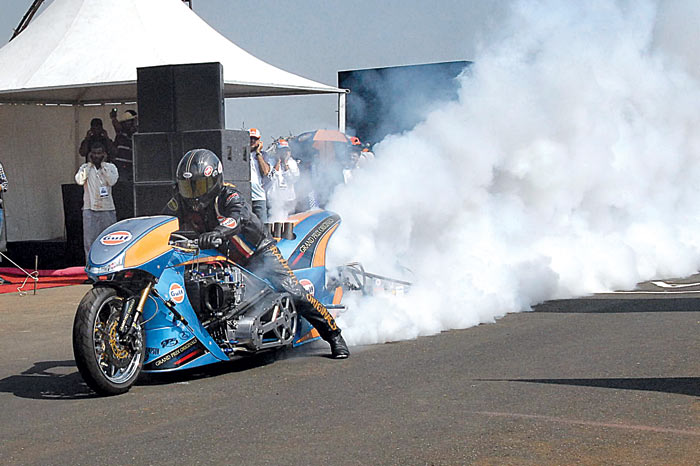
0-100 in 0.7 seconds! Think we’re joking? We’re not. It does 400kph in under six seconds. We spend a day with this surface missile.
2 min read2 Feb '12
Staff Writer

0-100 in 0.7 seconds!

Top Fuel Motorcycles are the world’s fastest drag bikes. Races take place on purpose-built tracks across the world.

Burnouts are essential to enhance grip.

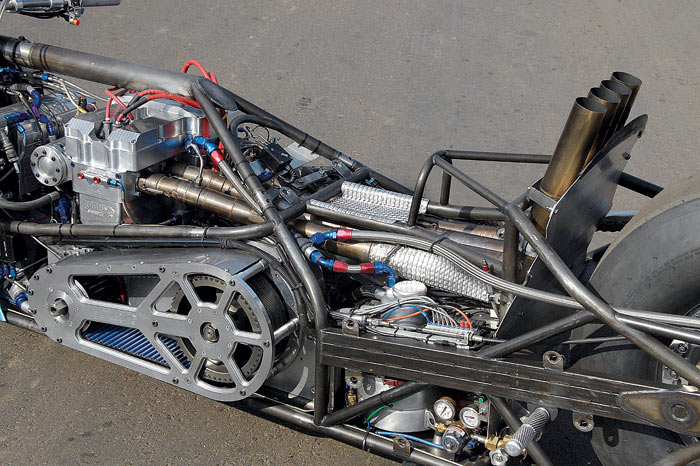
Bespoke chassis places engine and fuel tank towards front end for ideal weight distribution. The wheelbase is more than 2.5 metres long.

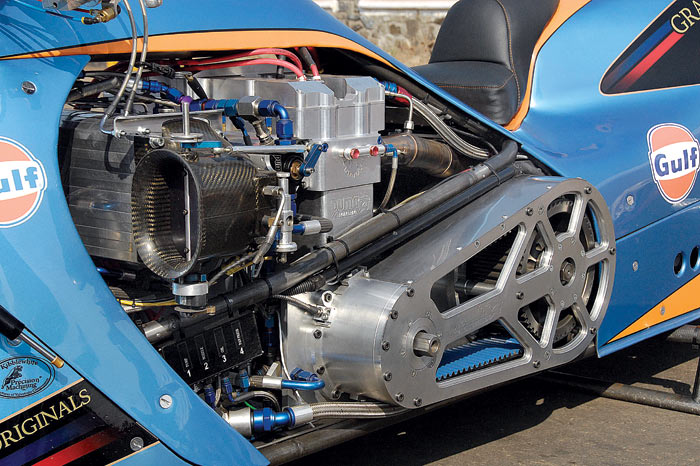
Carbon-fibre box is supercharger intake hat. At peak operating rpm, draws in 430-litres of air each second.

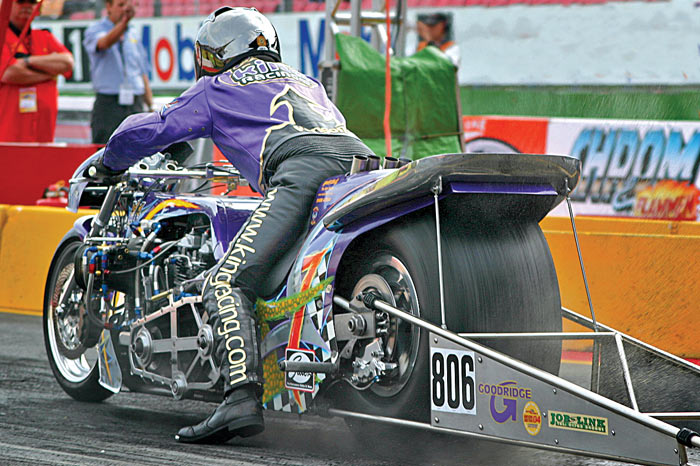
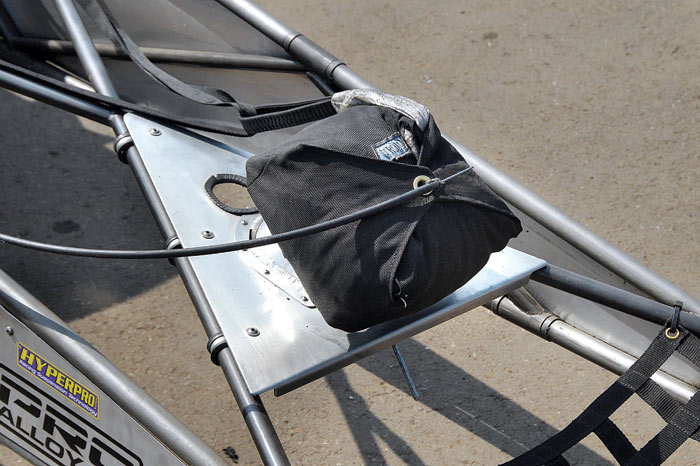
The parachute contributes as much as 20 percent to braking force. Stabilises bike during rapid deceleration.

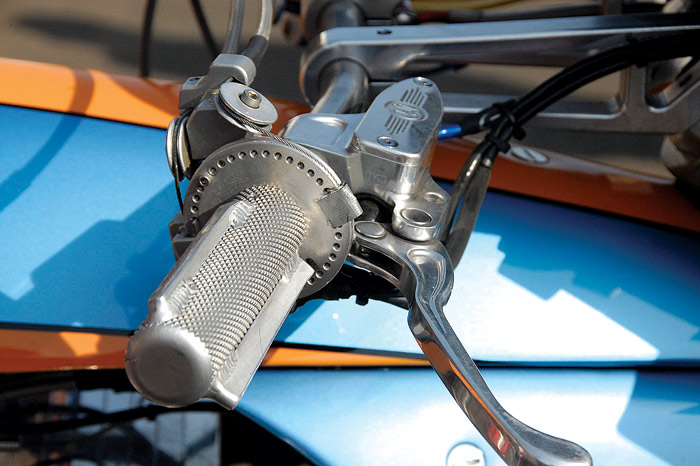
Tightly wound throttle comes with metal bars welded on for additional grip. Red button below is to change gears.

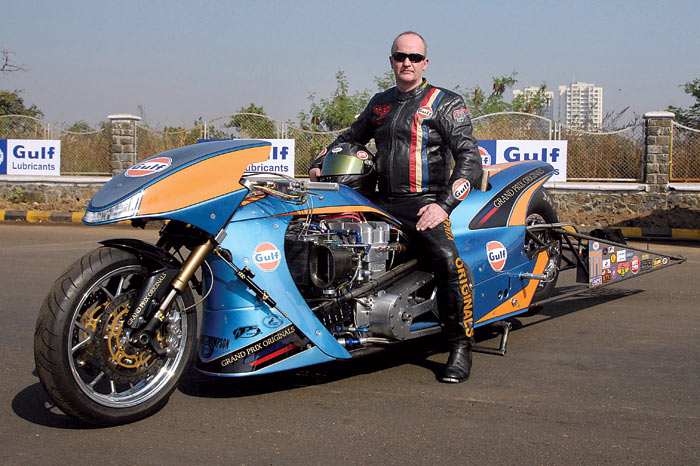
The Gulf Oil Top Fuel drag bike is piloted by 51-year old Ian King, a five-time European Top Fuel Bike Champion.

If you thought the 198bhp Suzuki Hayabusa was extreme, the bike you see here takes the madness quotient to a whole new level. It produces…hold your breath…1500bhp! But then this is not your ‘average’ superbike. This is a top fuel drag bike.

Purpose-built for speed and quarter-mile glory, the bike is low, long and seriously intimidating. The handlebar is stretched way forward and the rear set footpegs are almost at the other end of the Herculean bike. A wheelie bar that extends behind the rear wheel confirms this bike is the business. The front forks are from a Suzuki GSX-R1000, but there is little else in common with a street bike we are told.

Now an in-line four cylinder 1585cc motor sounds way too ordinary for a bike that can go from 0-100kph in 0.7sec and to 400kph in around six seconds. So what’s the secret of the bike’s space shuttle-like acceleration? Well, it’s boost. As is the norm on drag bikes, the specimen here too features a supercharger, namely the HPS 2.1 RC. However, the supercharger alone is not responsible for the engine’s mind boggling power output. The fuel is important too – a cocktail of 85 percent nitromethane and 15 percent methanol.

Fuelling is via a purpose-built fuel-injection system. If you’re wondering about mileage, top fuel drag bikes can consume as much as 57 litres of fuel each mile!

The cylinder’s feature a three valve head to supply the necessary quantity of air and fuel to the combustion chamber. The two intake valves measure 31mm while the sole exhaust valve is a gaping 41mm. Contrary to what you’d expect, the DOHC engine does not run an aggressive cam profile. And, thanks to the huge mass of air being shoveled into the combustion chamber, compression ratio is a low 6.0:1. Ignition is via a pair of spark plugs in each cylinder that are fired by twin 44A MSD magnetos. The life of each spark plug? One run or 402 metres!

Generating all that power is just one side of the story. Transmitting it to the rear wheel is a science on its own. The clutch, we are told, by rider Ian King himself, is the most important part of the package. The final piece in the drivetrain is a two-speed gearbox.

For a more detailed look of this monster on two wheels and action from its demo runs right here in Mumbai, grab your copy of the February issue of Autocar India today. 
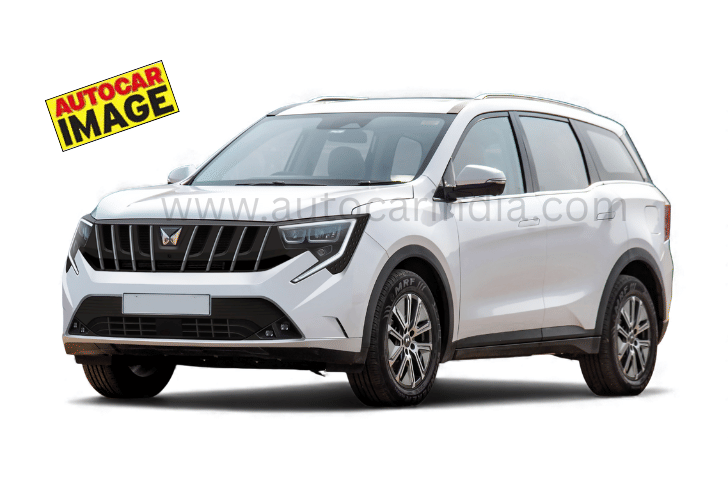
Mahindra XUV500 vs Tata Aria 4x2

Both the XUV500 and the Aria have seven seats, powerful motors and are loaded with features. But which of these should you sign on the dotted line for?
4 min read31 Oct '11
Staff Writer

M&M XUV500- Production and development insights

Mahindra & Mahindra’s ‘global’ XUV500 is the most advanced vehicle from the company’s stable since Project IDAM which birthed the Scorpio nearly a decade ago. The four-year development journey for the XUV500 (codenamed W201) was an interesting challenge for the whole team.
2 min read19 Oct '11
Staff Writer

The beginning stage of the sheet metal before it takes on the shape of the cheetah-inspired design

The beginning stage of the sheet metal before it takes on the shape of the cheetah-inspired design

Advanced press shop is highly automated. You wont see too many people here

Sixteen robots do various jobs in building the XUV500-15 are in the body shop, one in the TCF line.

Workers for XUV500 production were taken on board two months piror to actual requirements to train them.

XUV 500 is first M&M vehicle to have a six speed transmission and a VGT (Variable geometry turbocharger)

More than 30 percent of the body is made of special high strength steel.

At 450kg for the body in white, the XUV500 is the lightest body in its class

240 employees in the TCF line ensure to-notch fit and finish

Utmost car is taken to keep gaps and flushness in BIW within 4mm

M&M says XUV500 has 8-10 percent fewer parts as compared to a similar vehicle on the road

Mandatory shower test before it takes on the world

The final check. One XUV500 rolls out every six minutes from the final assembly line.

Around 350 people have been hired dealerships in metro cities to provide exclusive service to XUV500 customers

Swift vs Jazz

Jazz has been on the fringes of the small car segment for long. Can a price cut enable it to take on the segment king, the new Swift?
5 min read7 Oct '11
Staff Writer

Honda Jazz's asymmetric dash looks funky. Large dials for AC controls easy to use.

1.2-litre Honda i-VTEC engine loves to be revved and is a real joy to use.

There is a lot of Kizashi to the Swift's interiors. Quality is better than before.

Smart detailing on the Swift's dials.

Suzuki K-series engine is very refined but lacks punch of the old Swift.

The Jazz has the bigger boot of the two cars.

Affordable And Safe MPV

Looking for a safe MPV for the family, and don't want to spend more than Rs 10 lakh? Autocar has a few choices for you.
1 min read28 Sep '11
Staff Writer

Honda CBR250R vs Kawasaki Ninja250R

Honda's new CBR250R takes on the Ninja 250R
4 min read24 May '11
Staff Writer
Gulf Top Fuel Drag Bike - Introduction | Autocar India