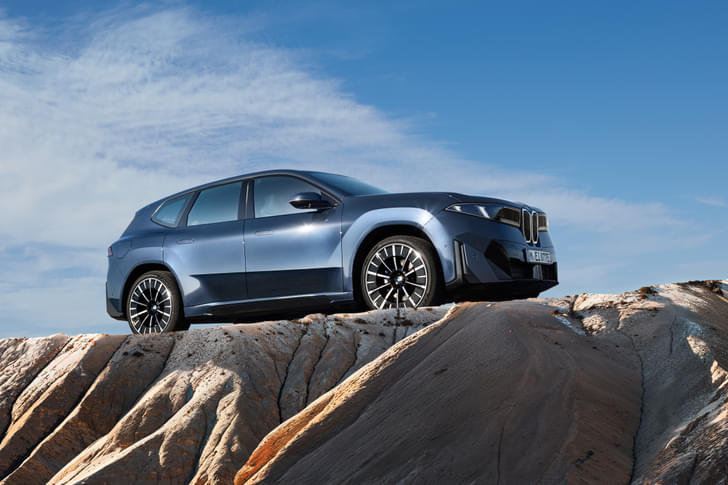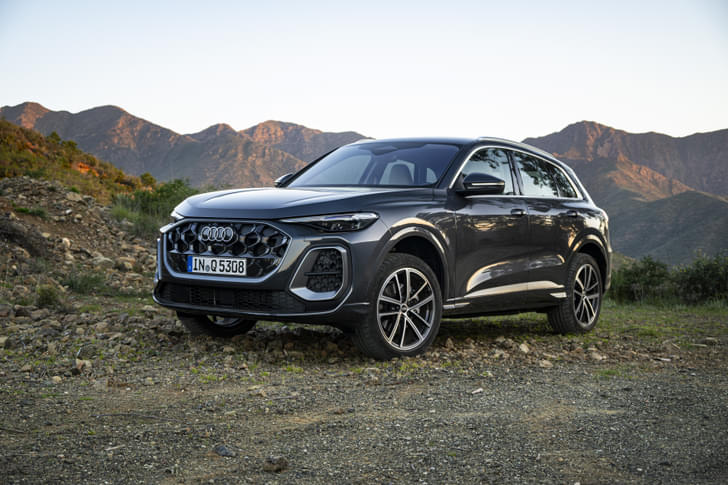

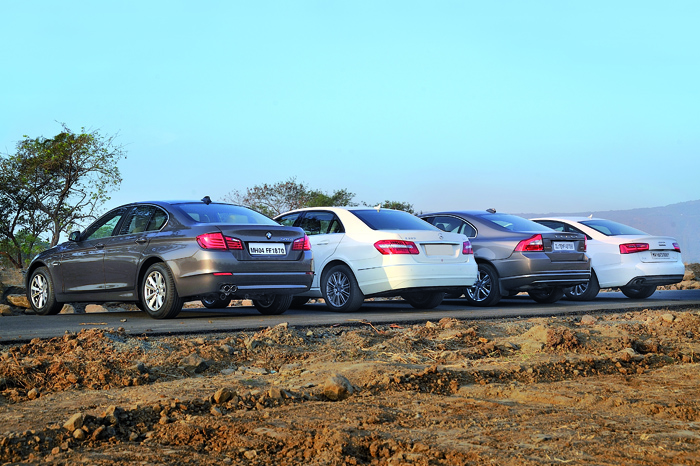
The cars you see here are for those looking to buy a big luxury car, but don’t necessarily feel the need to indulge in a big petrol or diesel motor. Buyers of these cars are more likely to give precedence to comfort, especially at the back and driving dynamics only come into focus on the occasional Sunday drive.
Until recently, the options included the BMW 520d at Rs 39.9 lakh, the Mercedes-Benz E220 CDI at Rs 40.39 lakh and the Audi A6 2.0 TDI at Rs 38.99 lakh (all ex-showroom, Delhi). But now Volvo has put a spanner in the wheels of the German trio with the introduction of an S80 with a smaller D3 engine. Prices for the Volvo start at Rs 36.8lakh, which makes the fully imported Swede a bit cheaper than its locally assembled rivals. So how does the Volvo compare with its more established competition? We find out.
Different strokes
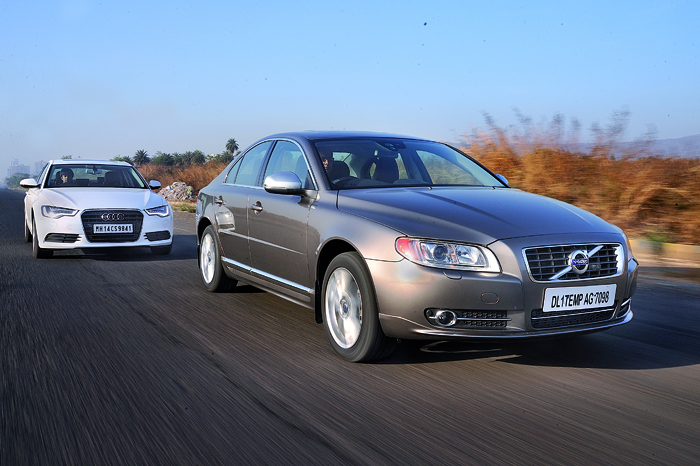
The S80 is the oldest car here and that is visible in its design. It’s conservative, but does have an understated elegance about it. The clearly defined ‘V’ on the bonnet looks great and the broad-shouldered stance gives the S80 a good presence.
The A6 is the longest and widest car here. However its slim pillars and tight skinning do well to mask its size. Details like the tightly cut grille, sweeping roof and elongated taillights work to give the A6 its distinct design. It’s a pity the brilliantly detailed full-LED headlamps cost a whopping Rs 2.79 lakh extra.
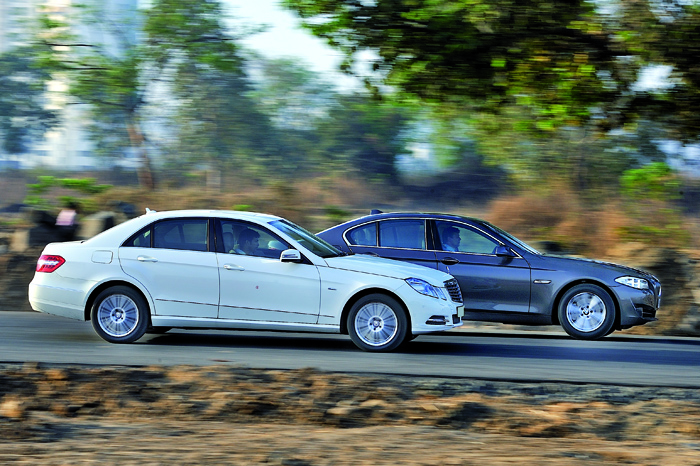
The E-class’ quartet of headlamps have been carried over and adapted from the W210 model, meaning you can identify the car from a mile away. However, the tipped-forward stance makes the big E look uncharacteristically athletic. That said the Merc still somehow manages to look the most elegant here.
The kidney grille, ringed lights, kinked quarter glass and L-shaped taillight are traditional BMW cues on the latest 5-series. It may make it look like a shrunken 7-series, but by no means is that a bad thing.
Quality inequality
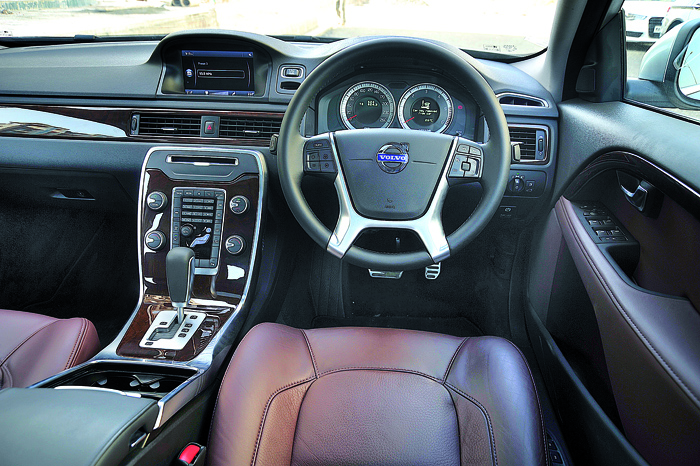
The S80 cabin is a nice place to be, but in this company it just doesn’t feel special enough. The glovebox opening for example, lacks the damped movement of the German cars here. There are some nice bits to speak of though. The wafer-thin ‘floating’ centre console is unique, and the buttons for directing airflow, shaped like a human figure, are intuitive to use.
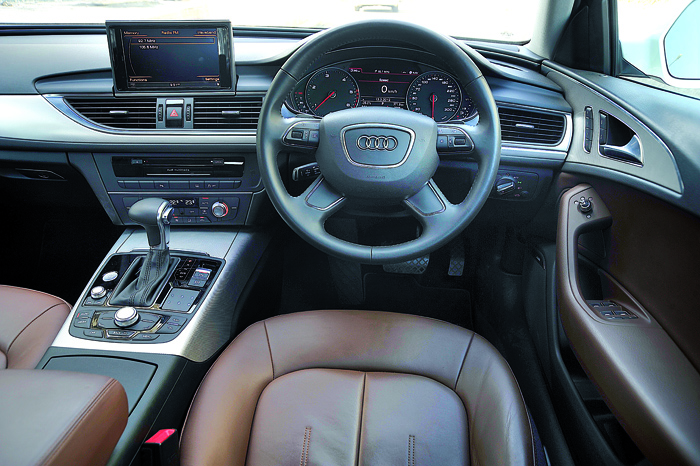
The A6’s wraparound dash on the other hand is reminiscent of a luxury yacht. All surfaces are swathed in quality materials that feel superior to even what’s on offer in the Bimmer and the Merc. The multimedia screen also has the best resolution here and what’s neat is the way it tucks behind the AC vents when not in use.
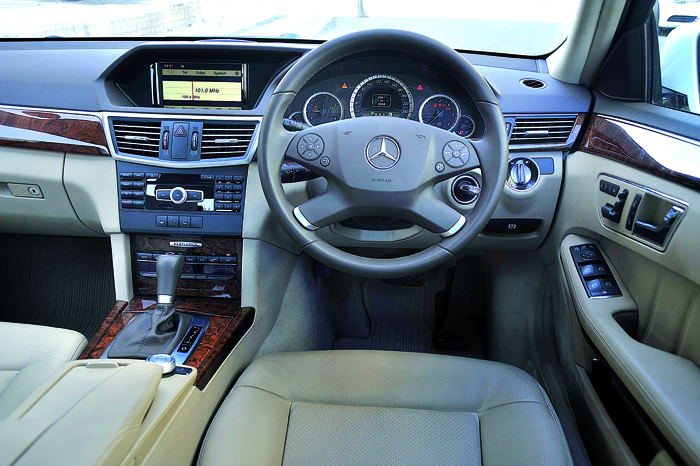
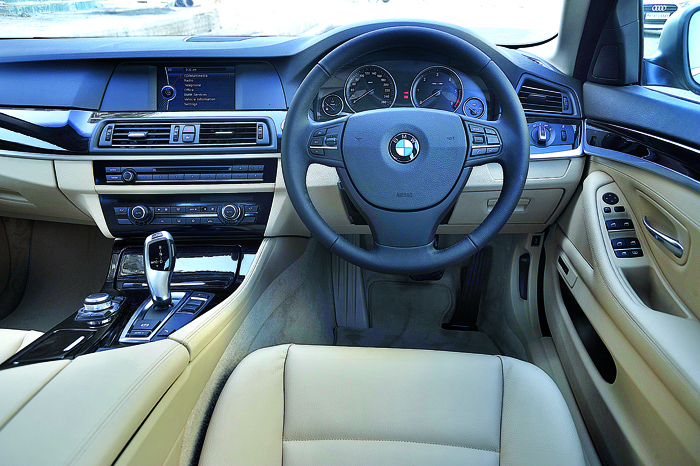
The Mercedes cabin may not look as contemporary as the Audi’s, but it does have a solid feel. Its dashboard is neat, though there is a mishmash of buttons on the centre console. In stark contrast to the Merc, BMW follows a more minimalist theme. There are fewer buttons and many functions are controlled by the iDrive system. If anything, it’s the high dashboard that takes some getting used to.
It’s when you take the wheel that you realise that the Volvo’s front seats are positioned a bit too high up even on their lowest setting. The smartly bolstered seats however are really comfortable. Finding a comfy driving position in the A6 however is really easy and the front seats, though not too large, offer great support. The slim pillars and low dash also translate to excellent visibility out of the cabin. The three-pointed star seen from the driver’s perch in the E is always a special sight and what adds to the experience here are the terrific seats. Drivers will also love the snugness and comfort on offer at the helm of the Bimmer.
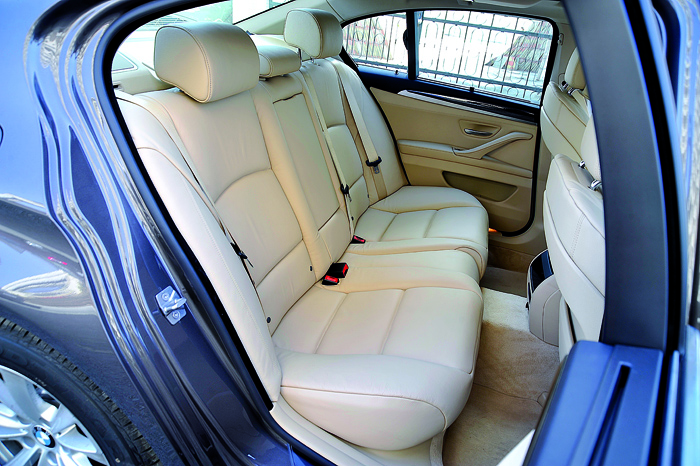
Sadly, it’s also the BMW that is least comfortable for rear passengers. And that’s got nothing to do with the seats. It’s the front seat-backs that are too in-your-face, the protruding central hump on the roof and rising window line that are to blame for the claustrophobic feeling here. And that’s a shame, as the 5 actually has the longest wheelbase of these cars.
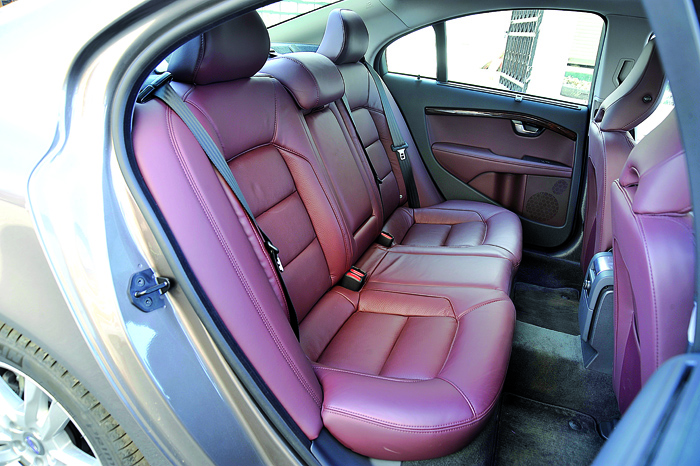
The Volvo on the other hand feels really airy in the back. It’s got ample width along with a low central tunnel so it is the most comfortable for the middle-seat passenger. The nicely contoured seat also offers great support to your back, though thigh support isn’t all that good.
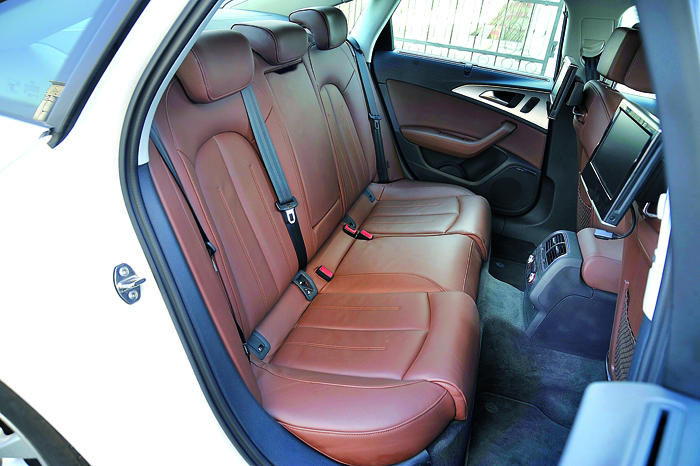
The Audi is the only car here to feature a separate dual-zone climate control for the back and there is also good space to be had here. The seat is a touch too low, which compromises thigh support and also makes getting in and out a bit of a task.
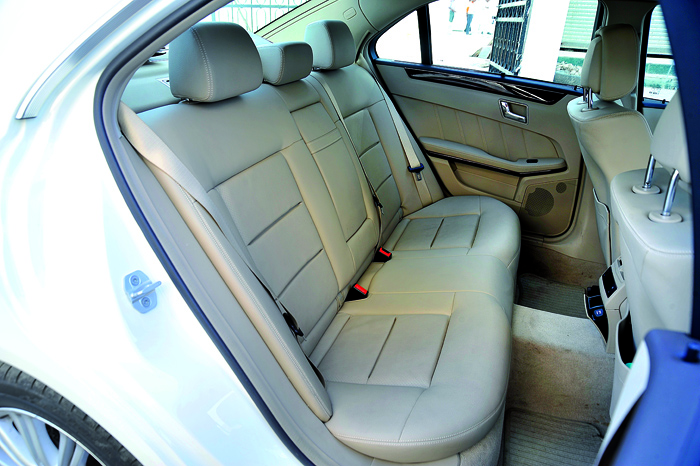
The Merc’s rear seats as always are very supportive and there is also more than ample leg, head and shoulder room. What Mercedes needs to look into with urgency is the air conditioning for the rear seat. It just doesn’t cool quick enough and that’s a big letdown on hot days.
In terms of equipment, the Audi comes with the longest list of standard equipment, followed by the BMW, Merc and Volvo. All these cars also come with a whole lot of safety features.