
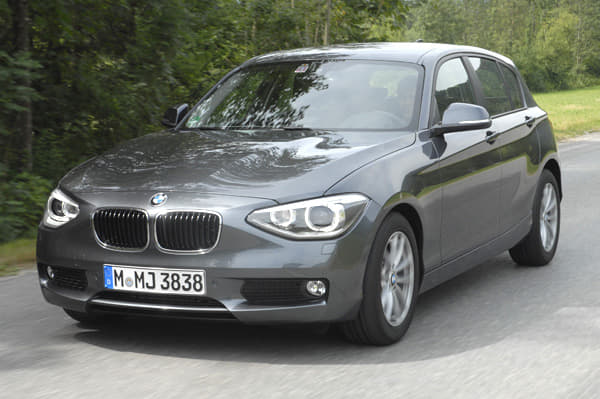
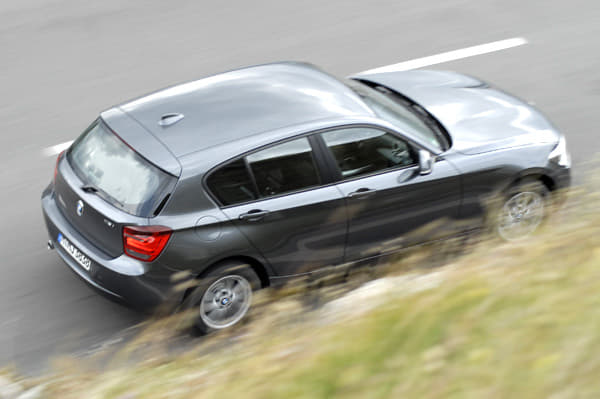
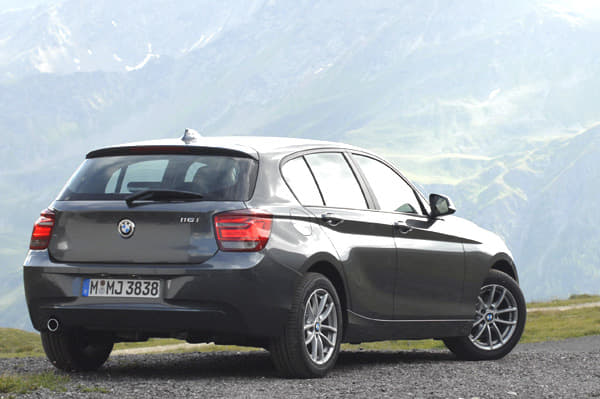
It may look like a regular hatchback from the outside, but the 1-series is unique. It’s the only hatchback around that uses a longitudinally placed, front-engine, rear-wheel drive layout – a layout that offers more driving thrills than a regular front-wheel-drive hatchback. We’ve driven the 1-series from Germany to Austria before its September 3 launch in India, to get a feel of what you can expect.
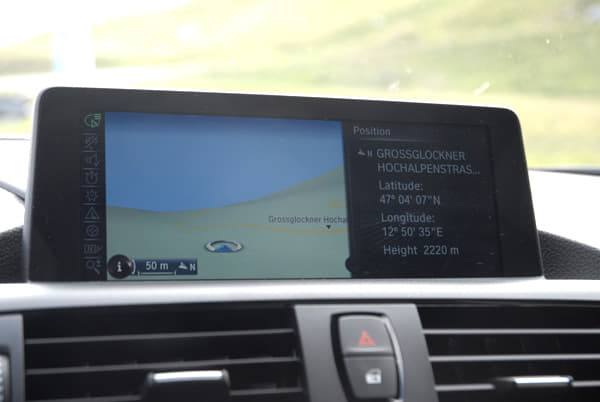
The seats are low, so you slide down into them. Once seated in the particularly sporty driver’s seat (it has adjustable bolsters and thigh support), you’ll see a typical BMW dashboard that’s dominated by a smart-looking 8.8-inch screen on the centre console. Build quality, as expected, is almost faultless and the driving position, as is with all BMWs, is spot on. The problem, then, is that the 1-series’ dash doesn’t feel special like a Merc A-class cabin does. There’s also precious little storage space in the centre console, although the door pockets are generous. Our test car didn’t have powered seats or electric steering adjustment, but there was still quite a bit of kit on offer, including a lane-departure warning system and a rear-end collision warning system. We don’t think the last two will make it to India though. BMW is also keen to point out that the iDrive system that, once paired to your phone, lets you tweet and update your Facebook status without having to touch your phone.
Still, if you're expecting the 1-series to be spacious, think again. It's quite cramped at the rear and the high transmission tunnel (thanks to the rear-wheel-drive layout) eats into the middle passenger's legroom. Headroom is decent though, and the bigger windows (in contrast to the A-class's thick pillars) don't make you feel as hemmed in as you would in the Merc. The 1-series has a usefully big 360 litres of boot space and the rear seats split 40:20:40, which is useful.
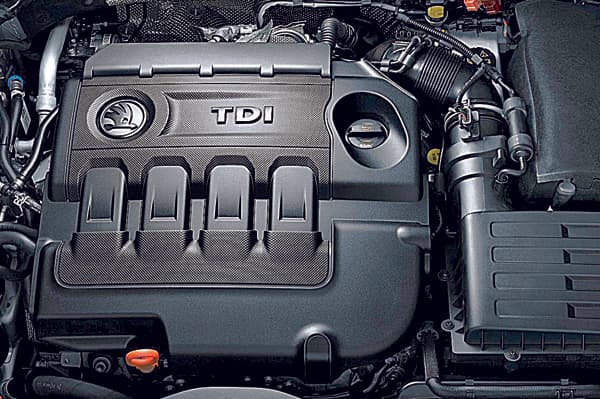
BMW has said that, to start with, there will be two engines on offer in India – a 136bhp, 1.6-litre turbo-petrol and a 143bhp, 2.0-litre turbo-diesel – both mated to the ZF eight-speed automatic transmission. The cars we are driving, however, have manual gearboxes and this is, at least mechanically, the only difference from what you will soon be able to buy in India.
The initial impression of the petrol is that it is a peppy engine. The mid-range is strong, it revs rather freely to almost 7,000rpm and there’s good top-end performance to be had too. Add to that a snappy gearshift and a progressive clutch and it’s a car that is a lot of fun to drive. The only fly in its ointment is the weak bottom end. Below 1,500rpm, especially if you have to start off on a slope, you really have to slip the clutch and feed in lots of throttle to get going. This, however will be less noticeable on the automatic that we will get here. It also gets quite thrummy near the redline, so you tend to up-shift early. Do that and the engine, like most direct-injection petrols, runs smoothly and quietly.
It’s a similar story with the diesel. There’s a bit of lag you have to work around initially, after which there’s strong acceleration from an engine that will happily rev to 5000rpm. It is surprisingly quiet too and it’s like that even when you accelerate hard. Both engines are reasonably smooth, although there are some vibes from the gearlever when you rev them hard, and though they aren’t particularly quick, neither will disappoint in a straight line. More importantly, both engines offer more power than what you get in an A-class. The diesel and the petrol we drove came with selectable driving modes that alter throttle response characteristics, among other things.
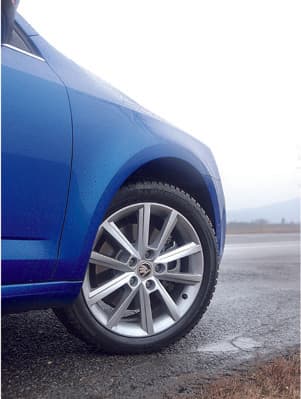
The 1-series is a lot of fun to drive – the steering on both cars is quick and well weighted, and there is lots of grip. That said, there some body roll and the car tends to understeer when you drive it hard. The diesel, as expected, feels slightly more nose-heavy than the petrol, but both have lots of grip and come alive when you drive them hard. As for the ride, a drive over German roads is no test for a suspension – they are just too smooth. Still, it does feel pliant enough save for a few jiggles over lumpy tarmac, and the relatively high-profile tyres on 16-inch rims do their part as well. Sadly, BMW will continue to offer the 1-series with run-flat tyres when it comes to India.
BMW is assembling the 1-series in India and is expected to price it at around Rs 20-25 lakh. For that price, it’s a fun to drive and fundamentally sound car. The question is, how many of its potential customers in India will really want what the extra driving thrills it offers? It doesn't look as special as a Mercedes A-class, though, and when you're this much money for a hatch, special is what you want, isn’t it?
 Soham Thakur
 Lenny D'sa
 Sergius Barretto
 Nikhil Bhatia
 Saumil Shah