
autocar-logo
Delhi

Last Updated on: 23 Feb 2026

Hyundai Venue

Autocar score
8
₹9.07 - ₹18.38 Lakh
On road price, Delhi
Delhi
Starting₹13,193 /month
EMI calculator

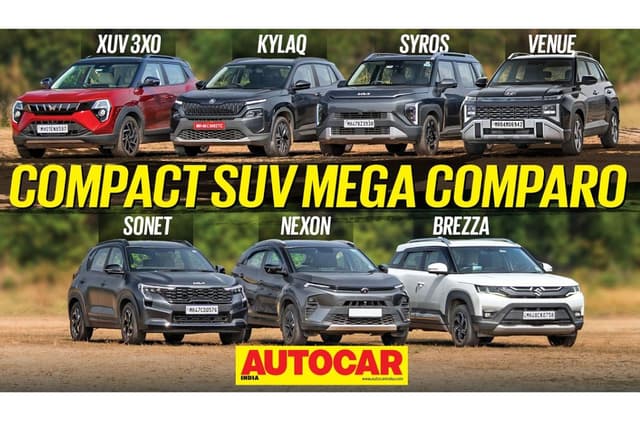
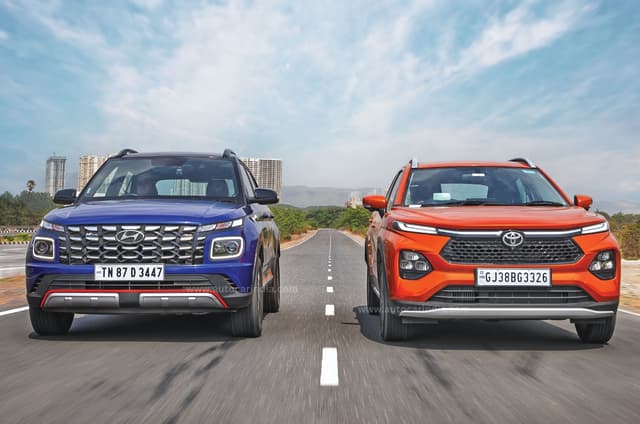
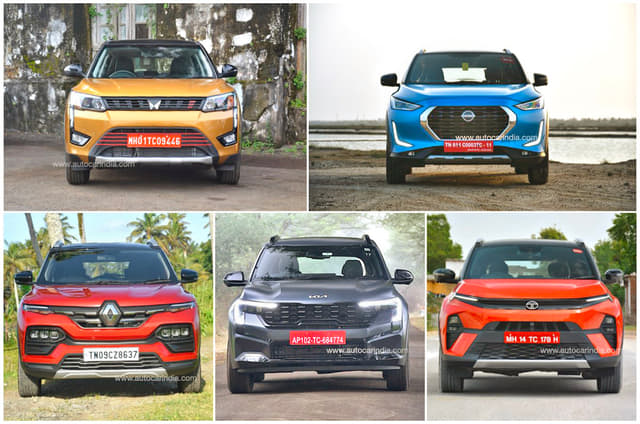
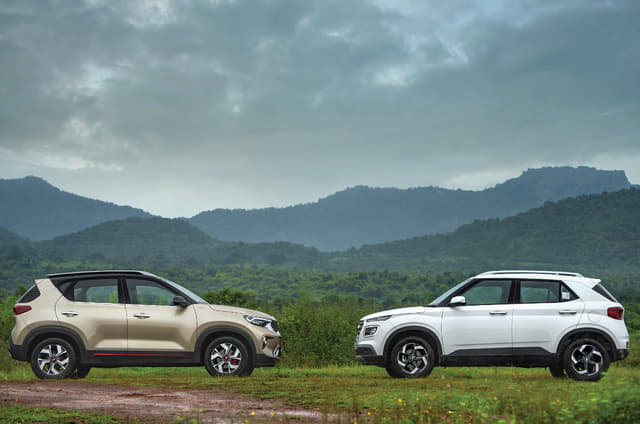
The Hyundai Venue price in India starts from ₹8.00 lakh and rises to ₹15.51 lakh (ex-showroom), with 21 variants on offer. The Hyundai Venue rivals the likes of compact SUVs like the Maruti Brezza, Tata Nexon, Mahindra XUV 3XO, Kia Sonet, Tata Punch and Skoda Kylaq.

The New Hyundai Venue is sold with 3 engine options. The 2025 Venue comes with an 83hp 1.2-litre naturally aspirated petrol engine paired with a 5MT, a 116hp 1.5-litre diesel engine with 6MT/ 6AT and a 120hp 1.0-litre turbo-petrol engine with 6MT/ 7DCT. 

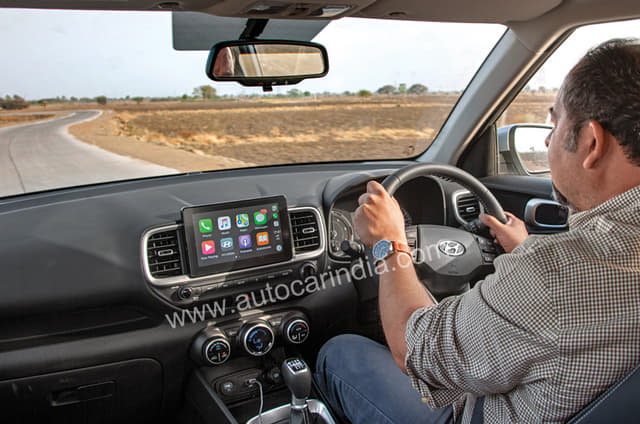
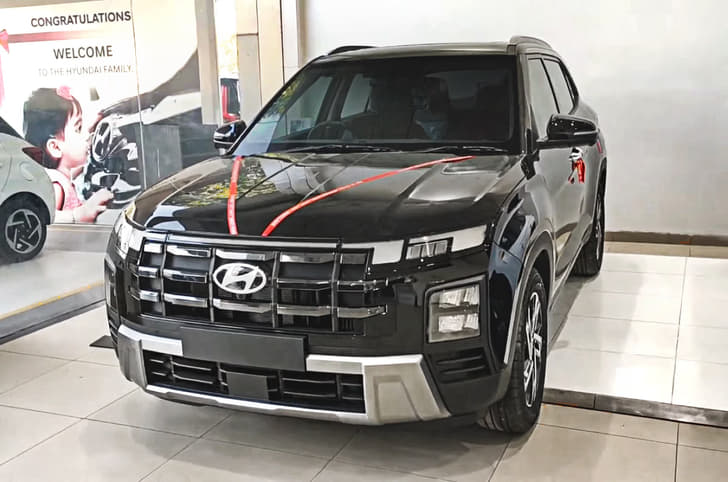
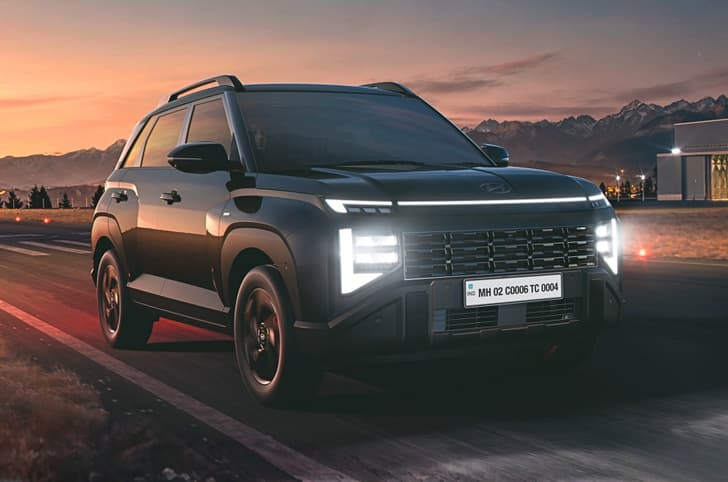
Hyundai has equipped the 2025 Venue with features like quad LED headlights, 16-inch alloy wheels, twin 12.3-inch screens, wireless Apple CarPlay and Android Auto, over-the-air (OTA) updates, Level 2 ADAS, ventilated front seats, an 8-speaker Bose sound system, an electronic parking brake with auto hold (DCT only), a 4-way powered driver’s seat and a 360-degree camera.

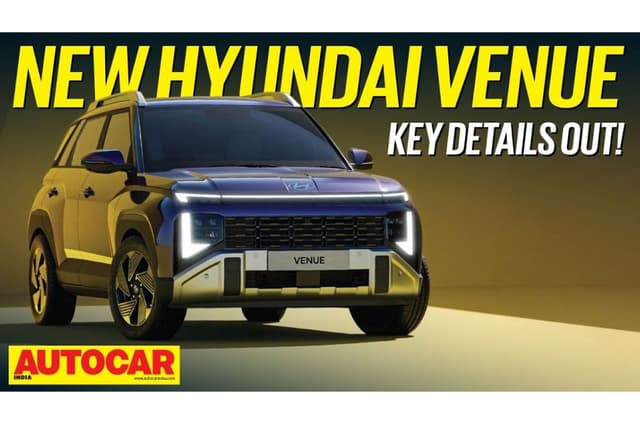
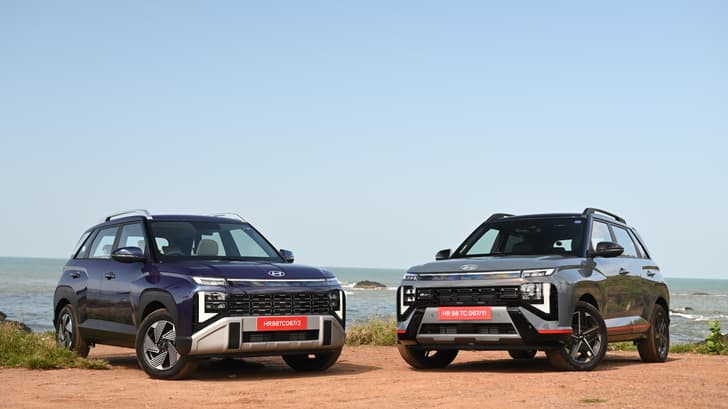
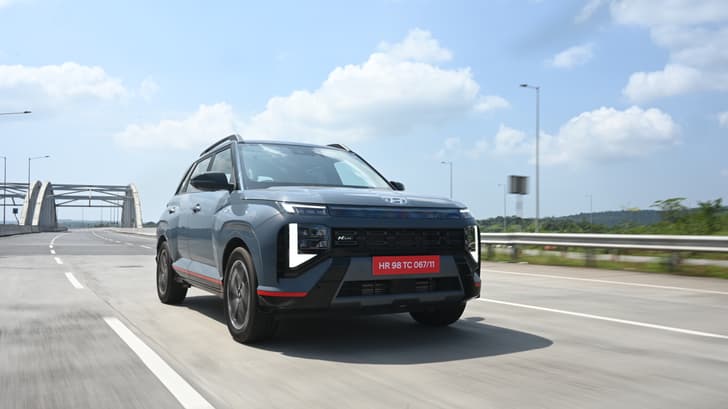
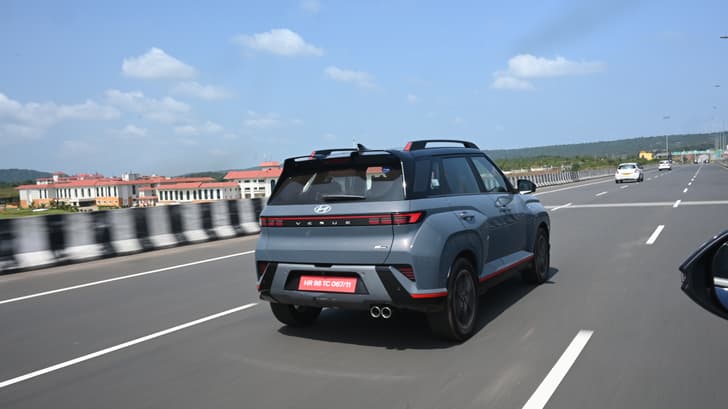
The 2025 Venue also gets a sportier N Line version that’s gets a unique exterior and interior cosmetic treatment, dual-tone exhaust tips and a sportier suspension setup. It is powered by the potent 120hp, 1.0-litre turbo-petrol engine, and is offered with both manual and DCT gearboxes. 


Hyundai Venue Highlights
 

  • Compared to the first-generation model, the new Venue is 48mm taller and 30mm wider.
  • The wheelbase has also grown by 20mm, now measuring 2520mm.
  • New Venue diesel adds a torque converter automatic gearbox option, alongside a manual gearbox. 
  • There are 2 petrol engines on offer: an 83hp, 1.2-litre naturally aspirated engine and a 120hp, 1.0-litre turbo-petrol engine. 
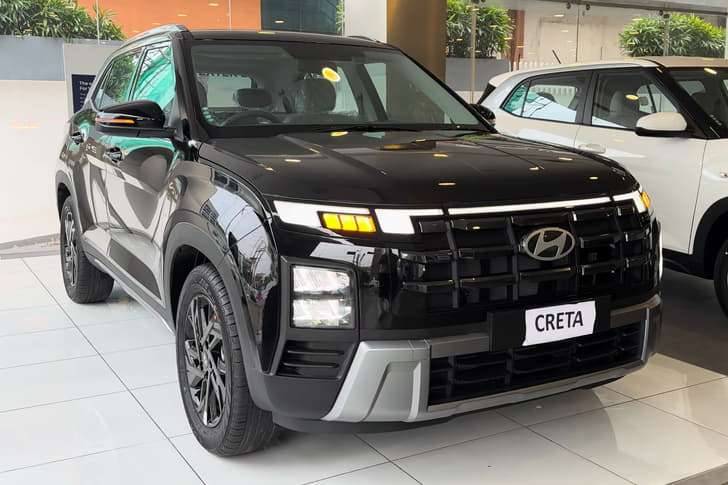
  • It gets a curved display comprising two 12.3-inch screens (larger than even the Creta), a new steering wheel, 360-degree camera and ventilated seats. It also gets a Level 2 ADAS suite on the HX10 1.5 Diesel AT trim. 
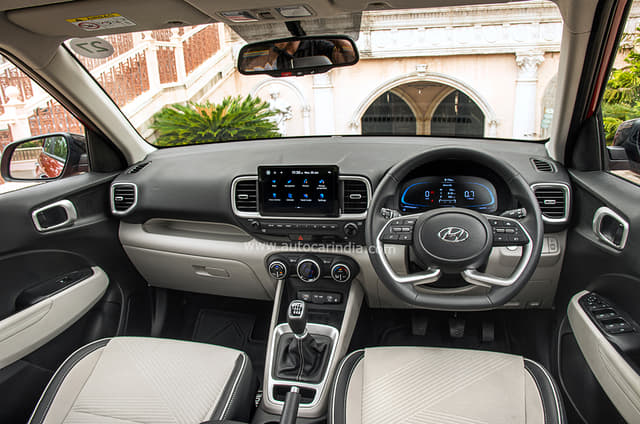
  • Hyundai has kept physical controls for HVAC and media in the Venue interior. The rear seats also get a 2-step reclining feature. 
  • The sportier N Line version of the Venue is powered by the 120hp, 1.0-litre turbo-petrol engine, and is offered with both manual and DCT gearboxes. 
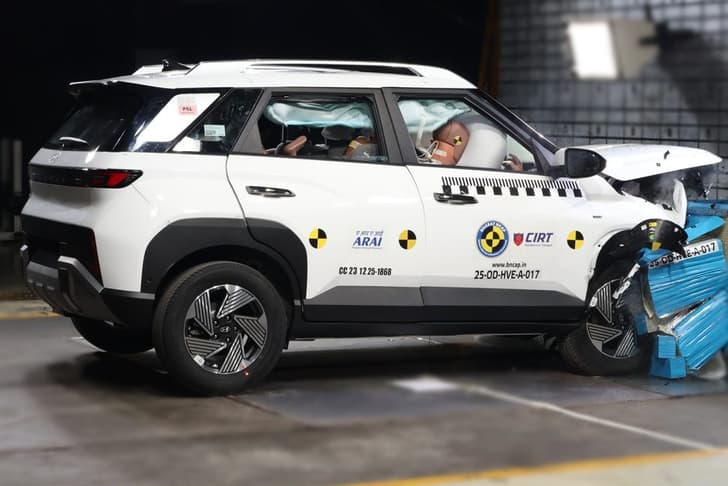
  • The first generation Hyundai Venue scored 4 stars at the Australasian New Car Assessment Program (ANCAP). Bharat NCAP rating of the new Hyundai Venue is yet to be announced. 
  • Hyundai has equipped the latest Venue SUV with six airbags (standard), disc brakes for all wheels, a tyre pressure monitoring system (TPMS) and an electronic parking brake with auto hold. The 2025 Venue also gets a Level 2 ADAS suite.


Show more

Hyundai Venue Latest Updates

Show more

Hyundai Venue Features and specifications

Our Rating
8
Mileage
17.9 kmpl - 20.99 kmpl
Engine
998 cc - 1493 cc
Fuel Type
Petrol, Diesel
Transmission
Dual-Clutch Auto, Torque Converter Auto, Manual
Seats
5
Body Style
SUV
Doors
5
Max Power
116hp at 4000
Max Torque
250Nm at 1500-2750
View all specifications

Hyundai Venue price & variants

The 2026 Hyundai Venue price starts at Rs 8.00 lakh (ex-showroom). New Venue on road price in Delhi for the HX2 1.2 Petrol MT variant begins at Rs 9.07 lakh. On-road 2026 Venue price will vary from city to city depending on RTO charges, insurance and other factors, but depending on the variant chosen, it will roughly range between ₹9.07 lakh and ₹18.38 lakh.


The Hyundai Venue is offered in 21 variants, from HX2 1.2 Petrol MT to HX10 1.5 Diesel AT. Depending on the trim level, the Hyundai Venue comes equipped with features like 16-inch alloy wheels, two-tone leatherette upholstery, twin 12.3-inch screens, which are larger even than the Hyundai Creta SUV, front ventilated seats, 2-step recline function for the rear seats, rear window sunshades, front parking sensors and Level 2 ADAS. Top variants of the Venue also get drive and traction modes (Normal, Mud, Sand and Snow). 

Show more
VariantsOn road price
Hyundai Venue HX2 1.2 Petrol MT
1197 cc | Petrol | Manual
₹9.07 Lakh
Digital cockpit
Airbags
Integrated (in-dash) music system
Touch screen infotainment system
Steering mounted controls
Hyundai Venue HX2 1.0 Turbo Petrol MT
998 cc | Petrol | Manual
₹9.97 Lakh
Digital cockpit
Airbags
Integrated (in-dash) music system
Touch screen infotainment system
Steering mounted controls
Hyundai Venue HX4 1.2 Petrol MT
1197 cc | Petrol | Manual
₹9.97 Lakh
Digital cockpit
Airbags
Integrated (in-dash) music system
Touch screen infotainment system
Rear camera
Hyundai Venue HX5 1.2 Petrol MT
1197 cc | Petrol | Manual
₹10.36 Lakh
Sunroof
Digital cockpit
Keyless start
Airbags
Integrated (in-dash) music system
Hyundai Venue HX5 1.0 Turbo Petrol MT
998 cc | Petrol | Manual
₹11.02 Lakh
Cruise control
Sunroof
Digital cockpit
Keyless start
Airbags
Hyundai Venue HX2 1.5 Diesel MT
1493 cc | Diesel | Manual
₹11.14 Lakh
Digital cockpit
Airbags
Integrated (in-dash) music system
Touch screen infotainment system
Steering mounted controls
Hyundai Venue HX5+ 1.2 Petrol MT
1197 cc | Petrol | Manual
₹11.30 Lakh
Sunroof
Digital cockpit
Keyless start
Airbags
Wireless phone charging
Hyundai Venue HX6 1.2 Petrol MT
1197 cc | Petrol | Manual
₹12.15 Lakh
Sunroof
Digital cockpit
Keyless start
Airbags
Wireless phone charging
Hyundai Venue N Line N6 1.0 Turbo Petrol MT
998 cc | Petrol | Manual
₹12.29 Lakh
Electronic parking brake
Cruise control
Digital cockpit
Airbags
Integrated (in-dash) music system
Hyundai Venue HX5 1.0 Turbo Petrol DCT
998 cc | Petrol | Dual-Clutch Auto
₹12.43 Lakh
Cruise control
Sunroof
Digital cockpit
Keyless start
Airbags

Hyundai Venue Official Brochure

Download the complete brochure with specs, features, and variants.
Hyundai Venue expert review

Autocar score
8

We like

  • Cabin looks and feels premium

  • Slick infotainment system

  • Refined diesel and smooth auto combo.

We don't like

  • Ride still has an underlying firmness

  • N Line mechanically identical to standard version.

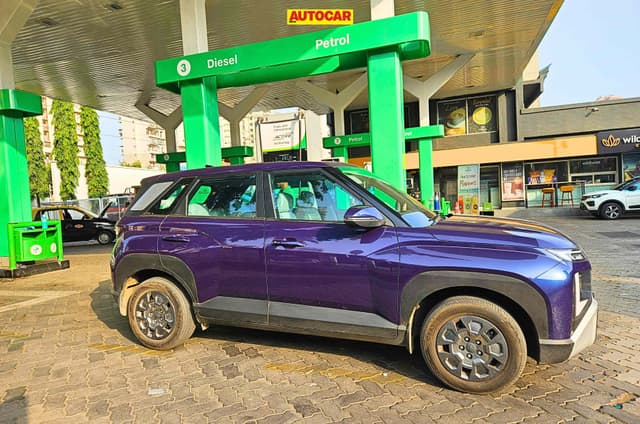
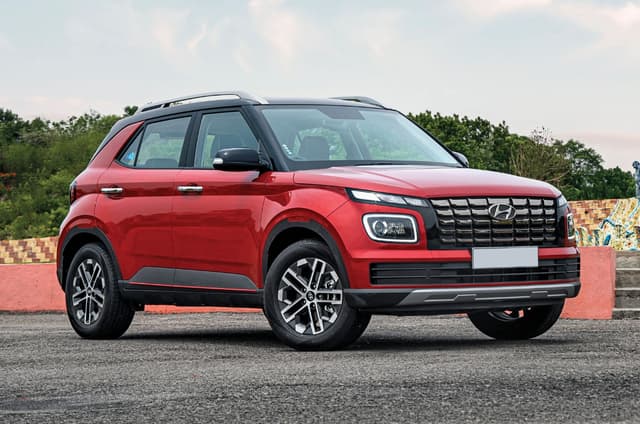
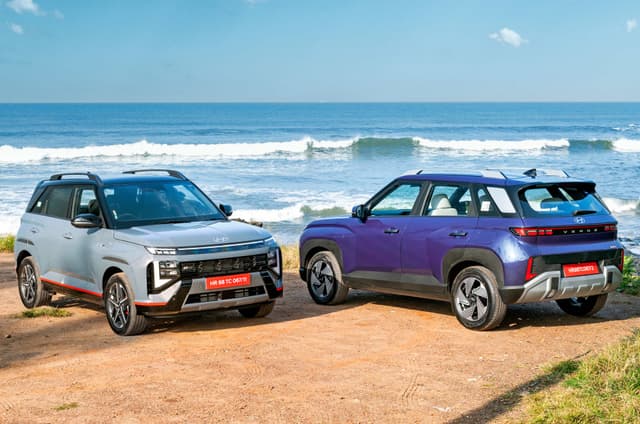
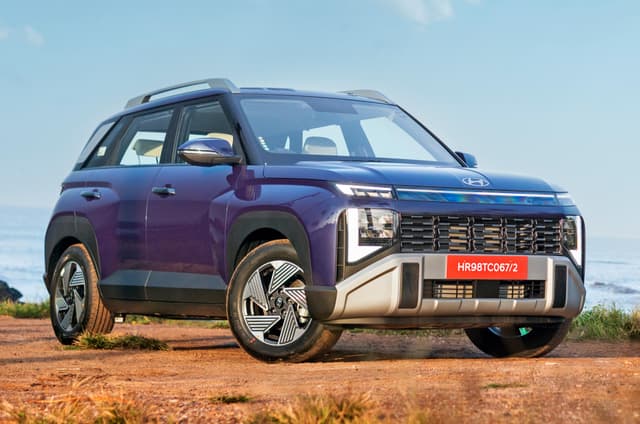
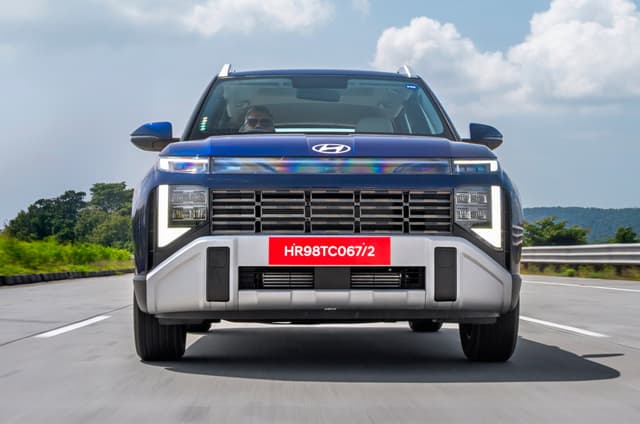
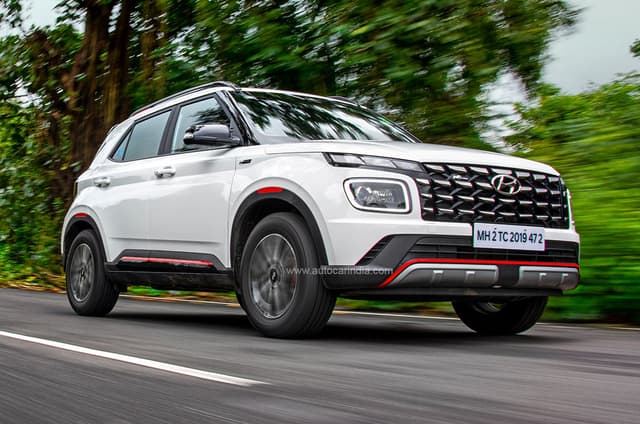
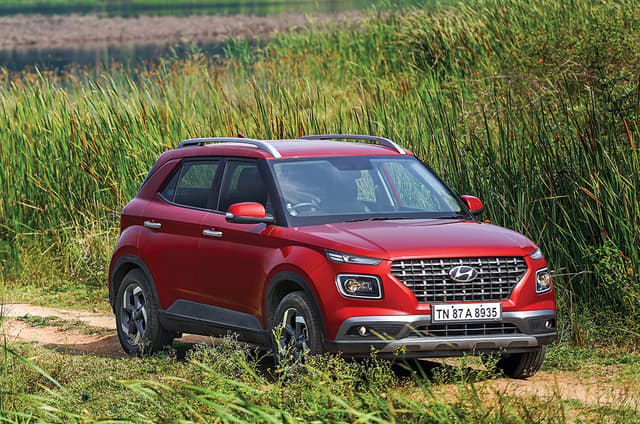
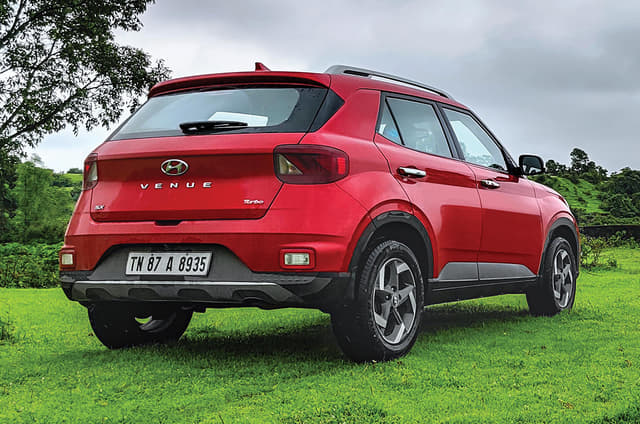
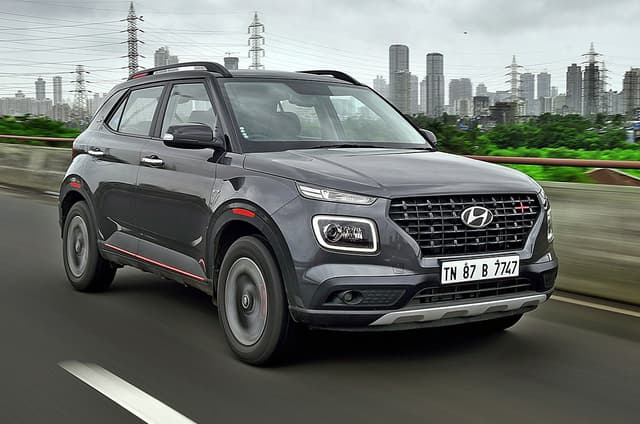
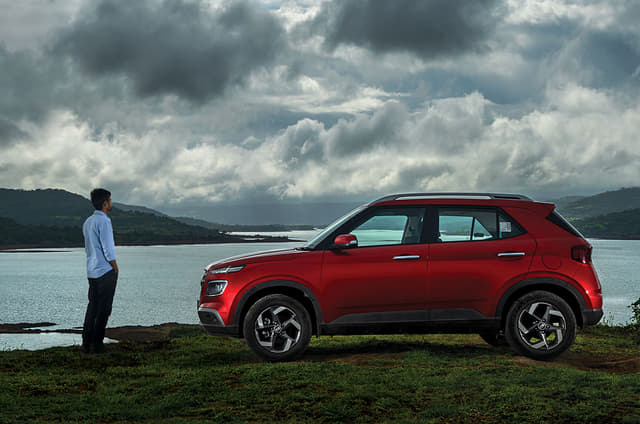
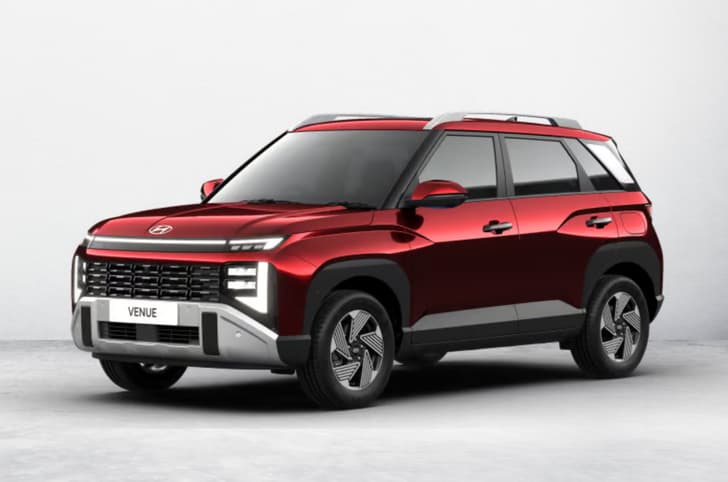
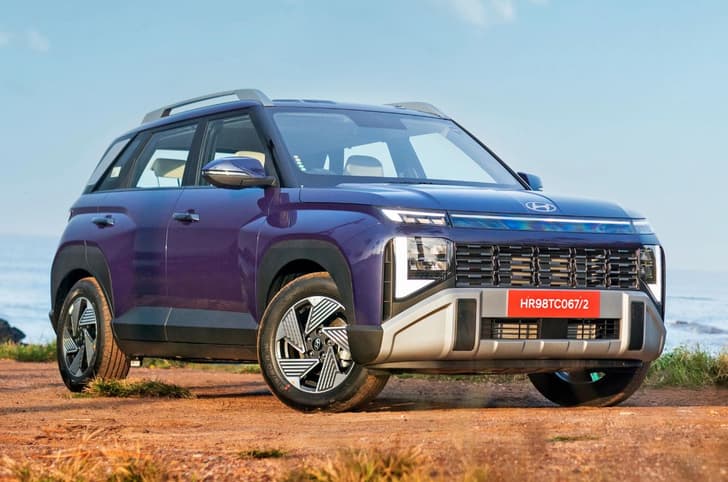
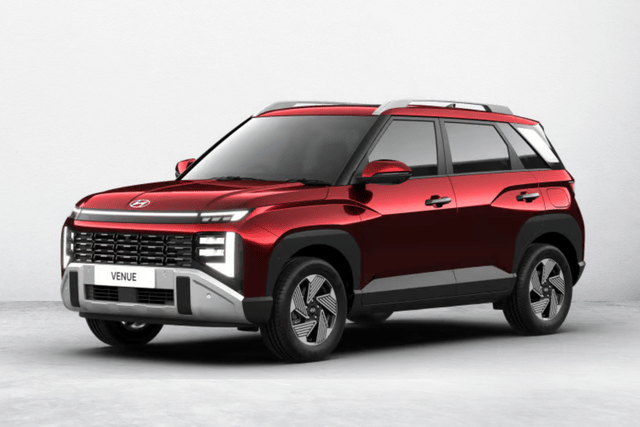
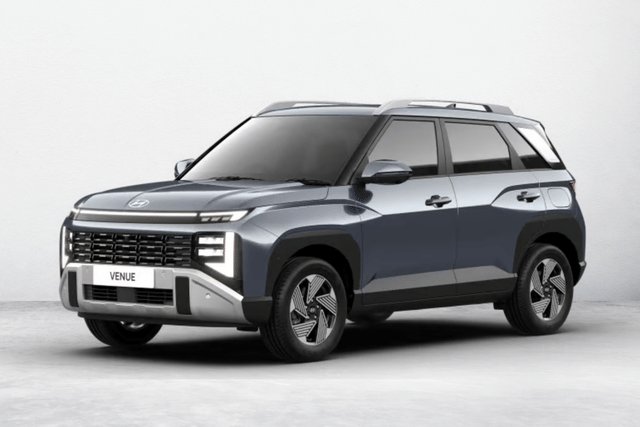
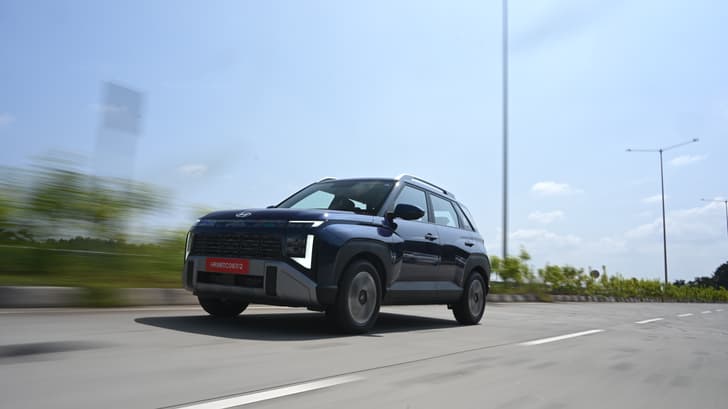
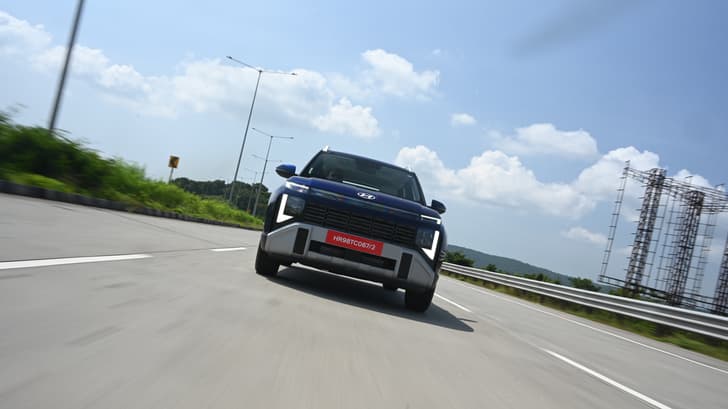
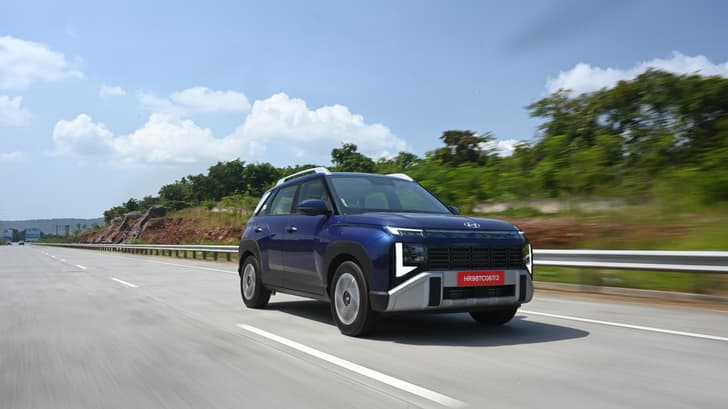
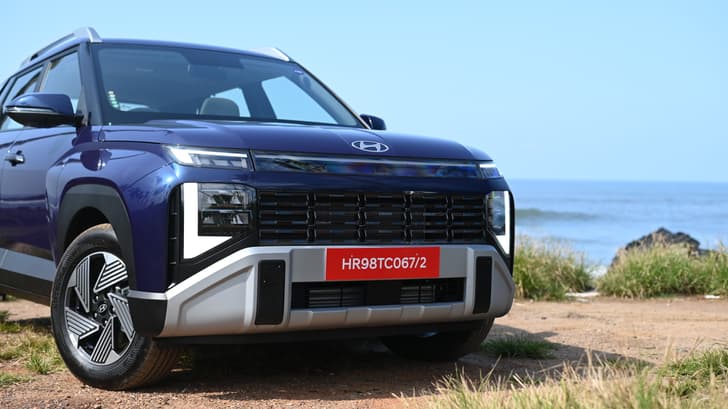
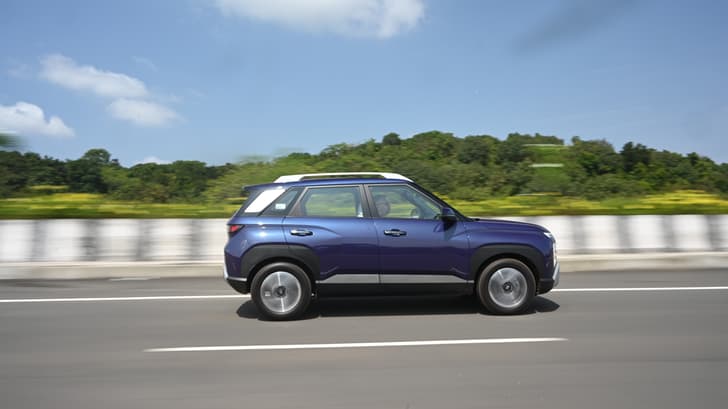
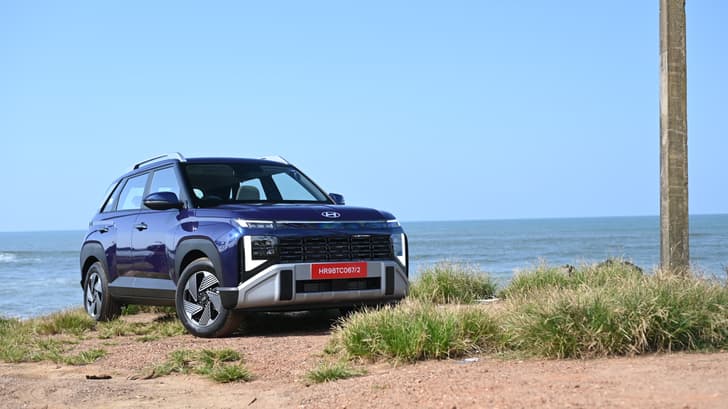
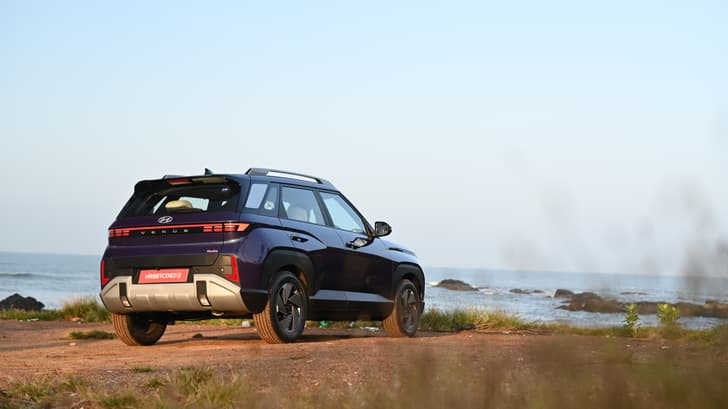
The new Venue sits on the global K1 platform shared with the Kia Syros. It’s more rigid and slightly larger – 30mm wider, 48mm taller, and with a 20mm longer wheelbase. The platform also makes it a software-defined vehicle capable of OTA updates for new features and fixes. Hyundai has nailed the proportions, avoiding the undertyred look some rivals suffer from, while giving the N Line a distinct identity. The front end borrows cues from the Creta, Exter and even the Palisade, while sharp creases, flared fenders and a new C-pillar quarter glass define the side. The standard car runs on 16-inch wheels, while the N Line gets striking 17s with red brake calipers. Overall, it’s an edgy design that stands out, even if it won’t appeal to everyone.

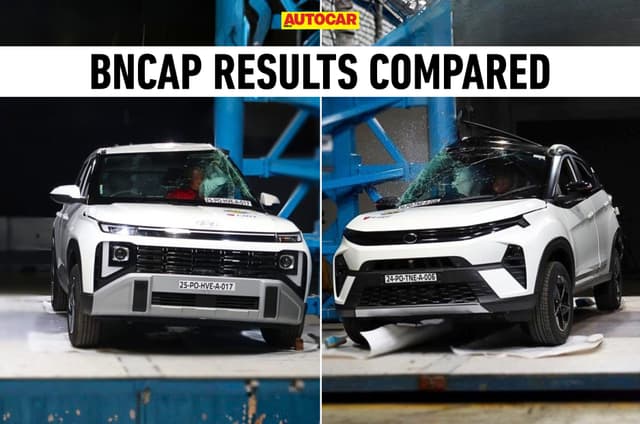
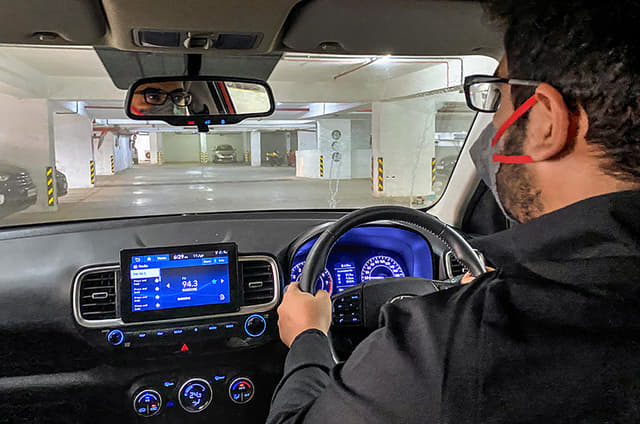
The dual 12.3-inch screens for the infotainment and digital driver’s display are larger than even the Creta’s and on par with the Syros. Powered by NVIDIA tech, the infotainment system is quick, responsive and has superb resolution – best seen in the 360-degree camera view. Features include ventilated front seats, a wireless charger, smart key with push-button start, an 8-speaker Bose system and a single-pane sunroof. The Venue also gains Hyundai’s SmartSense Level 2 ADAS, up from the earlier Level 1 setup. Safety kit is comprehensive, with six airbags, ABS, ESC, VSM and ISOFIX mounts standard from the HX2 trim. It hasn’t yet been crash-tested, but Hyundai expects a 5-star Bharat NCAP rating, given the Kia Syros’ strong performance.

The rear seat now offers more knee room thanks to the 20mm longer wheelbase and scooped-out front seat backs, though thigh support could be better. Shoulder room is slightly improved, but seating three abreast remains tight. Boot space has grown from 350 to 375 litres. Up front, the cabin feels cleaner and more modern, with a curved display neatly integrating the infotainment and digital instruments. A new steering wheel with four dots (Morse code for H) replaces the Hyundai logo, while automatic versions get a “coffee-table” centre console. Despite the hard plastics, quality and detailing impress. The dual-tone blue-and-white upholstery adds airiness, while the N Line gets an all-black interior with red accents and a sporty Ioniq 5 N–style steering wheel. Rivals like the Syros and Nexon offer more space, but the Venue’s design and finish stand out.

The ARAI mileage figure for the 1.2-litre petrol engine is 18.05kpl, while the turbo manual and DCT better that, delivering 18.74kpl and 20kpl respectively. The 1.5-litre diesel achieves 20.99kpl with the manual, however this drops significantly to 17.9kpl with the optional automatic.

The base engine is a 1.2-litre four-cylinder petrol producing 83hp and 115Nm, paired with a 5-speed manual. Above that sits the 1.0-litre turbo-petrol with 120hp and 172Nm, offered with a 6-speed manual or 7-speed DCT. The diesel option is a 1.5-litre unit with 116hp and 250Nm, now available with a 6-speed torque converter auto alongside the manual. The turbo-petrol is the most engaging, with mild lag below 2,000rpm before strong mid-range punch. The N Line’s exhaust adds a sporty burble, while both transmissions suit the engine well. The DCT is mostly smooth, with only mild hesitation at crawling speeds. The diesel impresses with refinement – barely audible below 2,000rpm – but runs out of steam past 3,500rpm. The auto’s smoothness complements it, though initial throttle response feels a bit dull.

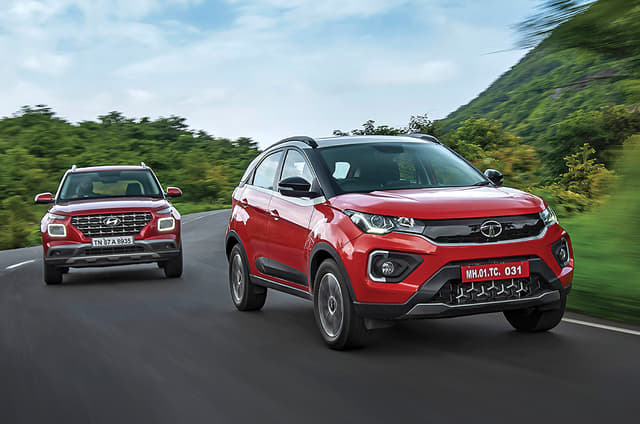
The new Venue is slightly more softly sprung than its predecessor with a noticeable improvement in low-speed bump absorption. However, the damping is still not totally sorted with an underlying firmness coming through. Come across a sudden pothole or even worse a series of them, and the Venue will thud through. The ride also felt a tad too busy on the rippled concrete highways of Goa. While the Venue’s ride is not inherently uncomfortable, rivals like the Tata Nexon and Mahindra XUV 3XO do a better job of ironing out imperfections. The Venue N Line runs exactly the same setup as the regular car with only a slight firmness coming from the larger 17-inch wheels. All versions of the Venue steer almost exactly the same, with a direct but light and somewhat lifeless steering that never really weighs up at speed. 

Despite the generation shift, it’s been priced keenly to start with – from Rs 7.89 lakh (ex-showroom). Move up the range though and prices climb sharply, reaching Rs 14.74 lakh for the turbo DCT, Rs 15.48 lakh for the top-spec N Line and Rs 15.69 lakh for the diesel automatic, putting it among the priciest in the segment, but it still represents solid value for what it offers. The design is edgy and modern with plenty of wow factor in N Line guise, while the tech-laden cabin looks and feels genuinely premium. It’s not perfect, but then nothing in this segment is.

Reviewed by: Lenny D'sa

Hyundai Venue reviews

Hyundai Venue comparison

Hyundai Venue
Hyundai Venue
₹8.00 - ₹15.51 Lakhs
8
Transmission
Dual-Clutch Auto, Torque Converter Auto, Manual
Engine
998 cc - 1493 cc
Fuel type
Petrol, Diesel
Mileage
17.9 kmpl - 20.99 kmpl
Kia Sonet
Kia Sonet
₹7.30 - ₹14.00 Lakhs
8
Transmission
Manual, Torque Converter Auto, IMT, Dual-Clutch Auto
Engine
998 cc - 1493 cc
Fuel type
Petrol, Diesel
Mileage
18.6 kmpl - 19.2 kmpl
Maruti Suzuki Brezza
₹8.26 - ₹12.86 Lakhs
8
Transmission
Manual, Torque Converter Auto
Engine
1462 cc
Fuel type
CNG, Petrol
Mileage
17.80 kmpl - 25.51 km/kg
Tata Nexon
Tata Nexon
₹7.32 - ₹14.15 Lakhs
8
Transmission
Manual, AMT Auto, Dual-Clutch Auto
Engine
1199 cc - 1497 cc
Fuel type
CNG, Diesel, Petrol
Mileage
17.01 kmpl - 24 km/kg

Hyundai Venue mileage

The Hyundai Venue mileage figures range between 17.9 kmpl - 20.99 kmpl. Hyundai claims the 1.2-litre petrol-MT returns 18.05kpl, while the 1.0-litre turbo-petrol engine has a claimed mileage figure of 18.74kpl and 20kpl for the manual and DCT gearboxes, respectively. Meanwhile, the Venue diesel mileage with the manual gearbox is 20.99kpl, while the automatic variant returns 17.9kpl. That makes it one of most efficient diesel cars on sale in India. 

Show more
Fuel typeDisplacementTransmissionMileage
Petrol998 ccDual-Clutch Auto20 kmpl
Diesel1493 ccTorque Converter Auto17.9 kmpl
Petrol998 ccManual18.74 kmpl
Petrol1197 ccManual18.05 kmpl
Diesel1493 ccManual20.99 kmpl

Hyundai Dealers in Delhi

Planning to buy Venue? Here are a few dealers in Delhi

Bagga Link Hyundai - East Patel Nagar

1/8 East Patel Nagar, Opposite Pillar No 177, New Delhi, Delhi 110008

4.9

10:00 AM - 7:00 PM

8800010374

[email protected]

Deep Hyundai-Mangolpuri

C-5, Mangolpuri industrial area, Phase -1, Paschim Vihar, New Delhi, Delhi 110083

10:00 AM - 7:00 PM

9999990910

[email protected]

Deep Hyundai-South Side

Plot No. 1, Lane No. 1, Mundka Industrial Area (South Side), Rohtak Road, New Delhi, Delhi 110041

10:00 AM - 7:00 PM

8860606033

[email protected]

Fortune Hyundai-Upsidc Site

D-74, UPSIDC Site, Greater Noida, Site - IV, Greater Noida, Uttar Pradesh 201308

4.7

10:00 AM - 7:00 PM

7878477000

[email protected]

Frontier Hyundai-Rajapuri

K-1/36, KH-107/17/1, Rajapuri, Opp Sector-5,Main Rajapuri, Dwarka, New Delhi, Delhi 110059

4.9

10:00 AM - 7:00 PM

9811249980

[email protected]

View all dealers

Hyundai Venue Images

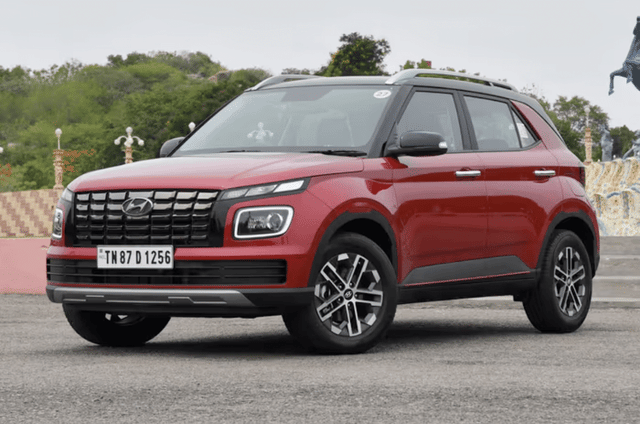
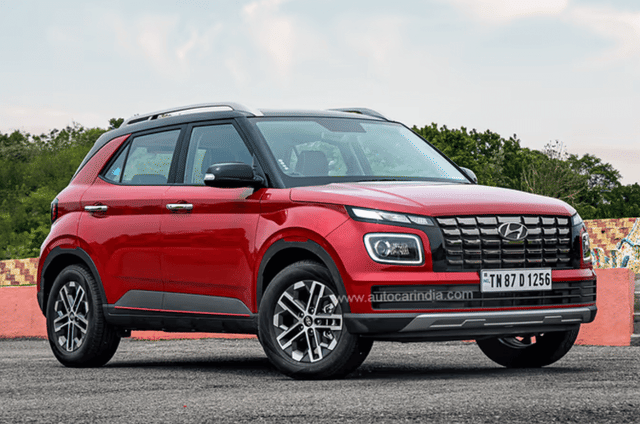
The second-gen Venue comes with quad-LED headlamps, connected DRLs and 16-inch alloy wheels and a lot more. Check out the Hyundai Venue image gallery to see the compact SUV from several angles. 

Show more
Front Right Three Quarter Image - 29527
Front Right Three Quarter Image - 29534
Front Left Three Quarter Image - 29535
Front Right Three Quarter Image - 29556
Alloy Wheels Image - 29529
Front Left Three Quarter Image - 29555
Rear View Image - 29605
Front Left Three Quarter Image - 29554
Front Left Three Quarter Image - 29532
Rear View Image - 29533
Rear View Image - 29549
Steering Wheel Image - 29559
Steering Wheel Image - 29601
Steering Wheel Image - 29593
Dashboard Image - 29360
Steering Wheel Image - 29557
Steering Wheel Image - 29558
Steering Wheel Image - 29538
Steering Wheel Image - 29539
Dashboard Image - 29568
Dashboard Image - 29569
Dashboard Image - 29572
Dashboard Image - 29591
Dashboard Image - 29571
Color White Image - 29536
Sound System Image - 29566
Open Bonnet Engine Shot Image - 29567
Console Storage Image - 29570
Rear View Image - 29573
Dashboard Image - 29574
Steering Wheel Image - 29575
Rear View Image - 29576
Car Roof Image - 29577
Rear Logo Image - 29578
Rear View Image - 29579
Co Passenger Ventilated Seat Image - 29580
Console Storage Image - 29581
Front Row Seats Image - 29582
Second Row Seats Image - 29583
Open Bonnet Engine Shot Image - 29584
Instrument Cluster Image - 29586
Steering Wheel Image - 29587
Dashboard Image - 29588
Console Storage Image - 29589
Ac Vents Front Image - 29592
Dashboard Image - 29594
Console Storage Image - 29595
Dashboard Image - 29596
Door Controls Image - 29597
Dashboard Image - 29598
Dashboard Image - 29599
Dashboard Image - 29600
Steering Wheel Image - 29602
Dashboard Image - 29603
Dashboard Image - 29604
Rear View Image - 29528
Front Left Three Quarter Image - 29398
Hazel Blue With Abyss Black Roof color Image - 29470
Steering Wheel Image - 29530
Console Storage Image - 29531
Dashboard Image - 29537
Steering Wheel Image - 29540
Rear View Image - 29541
Rear View Image - 29542
Color Gray Image - 29543
Front View Image - 29544
Interior Colours White Image - 29545
Rear View Image - 29546
Rear View Image - 29547
Rear View Image - 29548
Rear View Image - 29550
Closed Bonnet Image - 29551
Alloy Wheels True Image - 29552
Color Purple Image - 29553
Mystic Sapphire color Image - 29471
Titan Grey color Image - 29472
Atlas White color Image - 29465
Abyss Black color Image - 29466
Atlas White With Abyss Black Roof color Image - 29467
Dragon Red color Image - 29468
Hazel Blue color Image - 29469
Front View Image - 29397
Front Right Three Quarter Image - 29356
Front View Image - 29353
Rear View Image - 29396
Rear View Image - 29352
Rear View Image - 29355
Antenna Image - 29362
Alloy Wheels Image - 29354
Center Console Cup Holders Image - 29363
Dashboard Image - 29358
Second Row Seats Image - 29361
Dashboard Image - 29359

Hyundai Venue videos

Our Hyundai Venue review covers its exterior design, seat and ride comfort and performance in great detail. Explore walkarounds and more in our Venue video gallery.

Hyundai Venue Colours

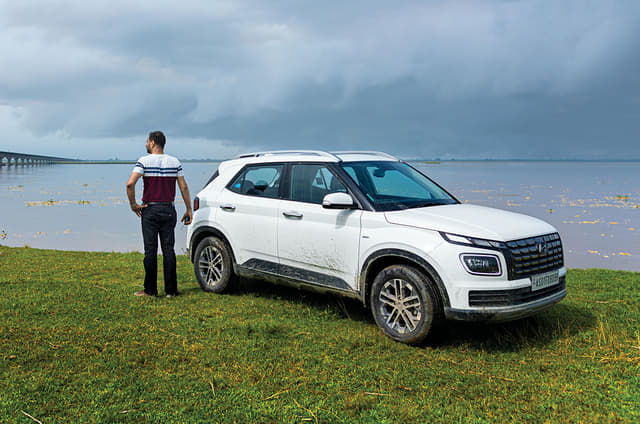
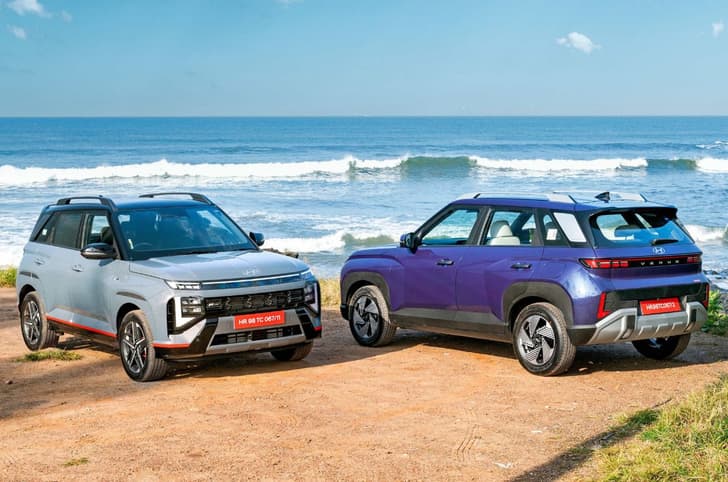
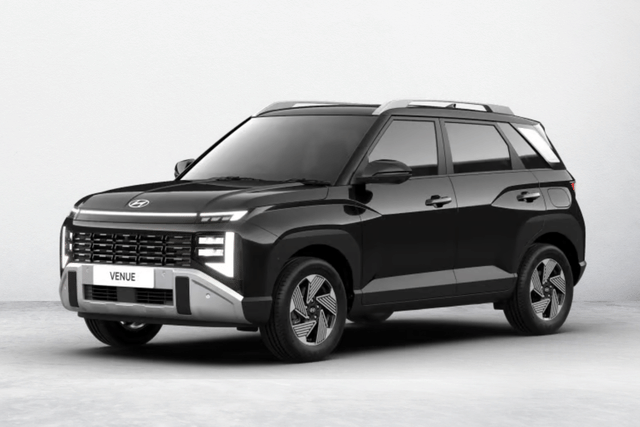
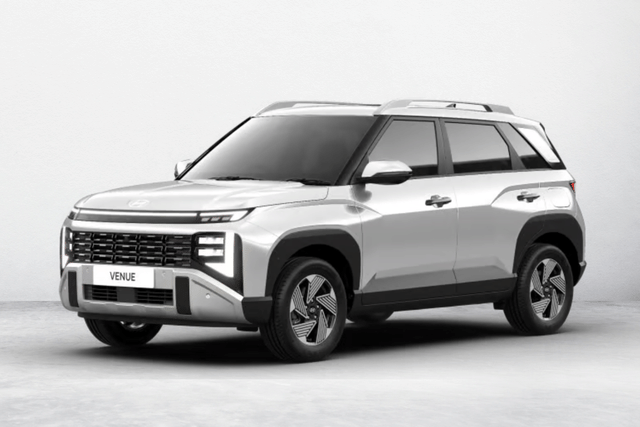
The Venue comes with 8 colour options. These include Mystic Sapphire, Hazel Blue, Dragon Red, Atlas White, Titan Grey and Abyss Black. Atlas White and Hazel Blue are available as a dual-tone option with an Abyss Black roof from the HX 6 trim onwards. The HX2 1.2 Petrol MT trim is available only with Abyss Black and Atlas White themes, and the HX 4 introduces Mystic Sapphire and Titan Grey colours to the mix. The HX 5 comes with all the monotone colour options.

The N Line versions miss out on the Mystic Sapphire colour option, but all other colour options, including the dual-tone themes, are available on both N Line trims. 

Show more

Hyundai Venue FAQs

No, Hyundai Venue is a 5 seater.

New Hyundai Venue has a 5-speed, a 6-speed MT and a 7-speed DCT gearbox options with the petrol engine. Meanwhile, the diesel gets a 6-speed MT or a 6-speed AT gearbox option. 

There are 6 airbags available in all the variants of Hyundai Venue.

No, the New Hyundai Venue is not available in CNG, it is available in petrol and diesel engines.

No, the Hyundai Venue offers a sunroof only in the mid to top variants. 

Yes, the Hyundai Venue is a good choice for long drives and highway use as the turbo petrol and diesel variants offer good cruising ability, stability at high speeds, and features like cruise control and reclining rear seats, making it comfortable for long drives.
 

The ADAS features available in the New Hyundai Venue are of Level 2 proficiency in selected variants. T
 

No, the Venue 2026 comes with a single-pane sunroof in mid to top variants.
 

The Hyundai Venue N-Line sits above the standard Venue top model in the line-up.
 

The Venue and the Nexon are similar in length, but differ in other dimensions.

Unlike the Creta EV, the Hyundai Venue 2026 does not get an EV option.
 

Hyundai Venue 1.0 turbo petrol mileage is 18.74kpl for the manual and 20kpl for the DCT.

Hyundai claims 20.99kpl for the diesel manual, while the diesel-automatic returns 17.9kpl. 

The Hyundai Venue price in India starts at ₹8.00 lakh and goes up to ₹15.51 lakh, ex-showroom.
 

Need an expert opinion on your car related queries?

Trending Questions on Hyundai Venue - Answered by Autocar Experts

S
Asked by: Sharathon Mar 1, 2026

Hi, I am confused between buying the Hyundai Venue HX6 DCT and the Mahindra REVX A AT. My monthly usage is around 500 km, and I prefer a petrol variant. Please advise which would be a better choice.

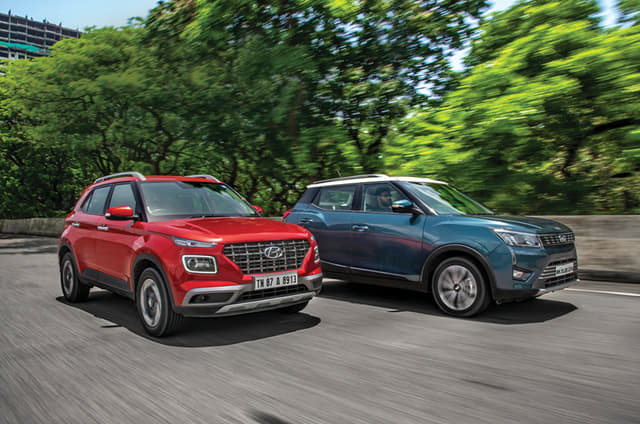
Both the Hyundai Venue and Mahindra XUV 3XO, in their HX 6 DCT and RevX AT guise, are extremely close when it comes to price and what they offer. The Venue is the newer, more modern-looking car on the inside and out, but the 3XO is more powerful with a 131hp engine. 

The 3XO is also more spacious in the rear seat, while the Venue gets a slightly bigger boot. Features on the 3XO are better, boasting a panoramic sunroof, leatherette upholstery and dual-zone climate control, to name a few. 

When it comes to ride and handling, too, it is the 3XO that pips ahead of the Venue. We would recommend the 3XO in this case as it offers a lot more for the money and is the better value proposition. 

M
Asked by: Mson Mar 1, 2026

Hi, I am planning to buy a new car and need help choosing between the Skoda Kylaq Signature+ and the Hyundai Venue N6 N Line. I drive to work every day in Delhi. Luckily, my timings are non-office hours, so that should be factored in, plus a few road trips we take during the year. Please suggest.

The Skoda Kylaq is a fun-to-drive compact SUV. Its 1.0-turbo engine delivers strong performance, and the chassis feels well-balanced, resulting in tight body control and a compliant ride quality. If you enjoy driving, the Kylaq should be on top of your list.
The cosmetic enhancement certainly makes the Hyundai Venue N Line N6 look much sportier, and it is definitely going to stand out in a crowd. If you're considering their manual versions, then the Venue N Line N6 has a much smoother gearbox with a fantastic gear knob, and its clutch is a bit lighter than the Kylaq's, which adds to the driving experience. Both cars have light steering, but with drive modes, the N Line's steering gets a bit heavier to give you a sportier feel.
Engine performance and handling aren't too far behind the Kylaq's, whereas rear seat space is actually better than the Skoda's, which your passengers will appreciate on road trips. Lastly, the Venue N Line N6 is more affordable than a Kylaq Signature+, and overall, it is the Hyundai that makes you feel more special - and for that reason, we'd recommend you go for the Venue N Line N6 (MT).
G
Asked by: GIRISH SAHAREon Feb 28, 2026

My budget is around ₹12-14 lakh. I want to buy a sub-4-meter SUV. My weekly driving is around 100-120 km. I am considering the Kia Syros HTK Plus Turbo Petrol Manual variant and the Hyundai Venue HX5 Turbo Automatic Petrol variant. Which will be the better option?

In this comparison, we would recommend the Kia Syros as you get more car for your money. The Syros gets the same powertrain as the Hyundai Venue but gets the DCT gearbox, as it makes driving in city traffic a lot easier. 

The Syros is also a bigger car overall with more space in the cabin, rear seat and also a bigger boot. You also get premium features like a panoramic sunroof and alloy wheels in the Syros. 

The one area where the Venue is ahead of the Syros is the ride comfort, but apart from that, in every aspect, the Syros is a better choice. The HTK+ with the DCT will fit in your budget and is our recommendation. 
 

O
Asked by: Omar Moghalon Feb 28, 2026

I have a budget of ₹14 lakh and wanted to buy the Kia Seltos Petrol HT e-Ornate variant. I went for a test drive but felt the car was underpowered, and I got disappointed. The features and finish are top-class, but the power is lacking. What are my options?

For a budget of Rs 14 lakh, it is admittedly difficult to find a mid-size SUV automatic that offers genuinely strong performance. The 1.5 petrol in the Kia Seltos HTE is smooth and refined, but it isn’t particularly punchy, which explains why it felt underpowered on your test drive.

If you are primarily driving yourself and rear seat space isn’t a top priority, it would make sense to look at the compact SUV segment instead. This is where you’ll find turbo-petrol engines that feel noticeably more energetic.

Since you liked the Seltos’ fit, finish and feature list, the Kia Sonet HTX is worth considering. It comes with the 1.0-litre turbo-petrol (118hp), which feels much more responsive in everyday driving. The Hyundai Venue (particularly the higher variants with the same 1.0 turbo engine) offers similar performance with a slightly different interior feel and feature mix.

Another very strong option is the Mahindra XUV 3XO. Its 1.2 TGDi engine (up to 131hp) is the most powerful in this class, and it combines strong performance with a spacious cabin and generous features for the money.

In short, if power is high on your priority list, moving to a turbo-petrol compact SUV will give you a much more satisfying driving experience within your budget.

L
Asked by: Lokesh Aon Feb 27, 2026

During my test drive, the torque-converter gearbox felt smoother, and both the gear shifts and overall ride quality were noticeably better in the Mahindra XUV 3XO. In the Hyundai Venue, I could clearly feel turbo lag at lower speeds, and the DCT did not feel as smooth as the 3XO’s gearbox. However, from a long-term ownership perspective, Hyundai’s service network is more reliable and hassle-free, and the resale value is generally stronger compared to Mahindra. I’m also slightly concerned that the 3XO might develop rattles or increased engine noise over time, whereas the Venue, if maintained well, may remain more refined. I also doubt fuel efficiency: will the Venue’s DCT deliver better mileage compared to the 3XO’s torque-converter? I would appreciate guidance from the community based on real-world usage and long-term ownership experience.

You’ve summed up the driving difference quite accurately.

A torque-converter automatic, like the six-speed Aisin unit in the Mahindra XUV 3XO, uses hydraulic fluid between the engine and gearbox. That fluid coupling cushions the initial take-off and smoothens out power delivery, which is why it feels more progressive and less jerky in traffic. There’s a slight build-up of torque before full engagement, and that’s what gives it that fluid and easy feel. 

A DCT, like the dry-clutch unit in the Hyundai Venue, uses two clutches to pre-select gears. Shifts are quicker and more direct. But at low speeds, especially with a small turbo engine, you can feel turbo lag followed by a slightly sharper clutch engagement. That’s the “snappier” sensation you experienced. In crawling traffic, a torque converter generally feels more natural.

On long-term ownership, Hyundai does have a very strong service network and typically excellent resale value. Mahindra has improved significantly in recent years, and the 3XO’s platform (derived from the globally developed SsangYong Tivoli architecture) is fundamentally robust, so we wouldn’t be overly concerned about structural quality. Minor rattles over time depend more on usage and maintenance than brand alone.

On fuel efficiency, the Venue’s DCT may be marginally more efficient in ideal conditions. But in real-world city driving, the difference is unlikely to be dramatic. It shouldn’t be the deciding factor.

Where the Venue clearly scores is in overall polish, its user interface, feature integration and ergonomics feel more mature. The 3XO, on the other hand, gives you stronger performance and a smoother automatic experience.

S
Asked by: Sanjay Subhash Patnion Feb 27, 2026

Namaskar, sir. I wish to upgrade from my current Baleno to a proper automatic vehicle. My overall running is around 8 to 10k per year (25% city & 75% highway). My budget is ₹15 to ₹18 lakh. Which car will you suggest? Your response & expertise will help me reach a conclusion.

There are multiple options within your budget. You can either look at the top variants of compact SUVs or the mid variants of midsize SUVs.
In the compact SUV segment, considering your usage and requirements, the new Hyundai Venue with the turbo petrol DCT in the top HX10 variant is a good option. It gets a proven turbo petrol engine and DCT gearbox that offers good punch for highway driving while still being smooth enough for city use. The cabin feels premium and is loaded with features in comparison to your Baleno. Opting for this Hyundai car will feel like a definite step up in terms of driving position, refinement and overall quality.
If you prefer a bigger and more comfortable car and are okay with sacrificing a few feel-good features, the Kia Seltos HTK petrol IVT makes a lot of sense. The Seltos offers a more premium cabin, more space and better overall comfort. The IVT automatic is silky smooth, especially in traffic, and the 1.5-litre naturally aspirated engine has enough performance for relaxed highway cruising.
M
Asked by: Mohammed Sirajuddinon Feb 27, 2026

I am an NRI based in Dubai, looking to purchase an automatic SUV for my home in Kasaragod, Kerala. I will be using when I visit couple of times in a year and the car will be primarily used by my sister for local shopping and local commutes, but will also remain idle sometimes. Between the Skoda Kylaq Prestige Plus (1.0 TSI with 6-speed Torque Converter) and the Hyundai Venue HX8 (1.0 Turbo with 7-speed DCT), which powertrain is more mechanically durable for a 10-year ownership cycle? Is buying new punch ev also makes sense? I’m open to other suggestions as well.

All modern cars today, if maintained well, are engineered to last 10 years or more. Over that period, you should budget for both scheduled services and some wear-and-tear replacements. Given your usage pattern with limited annual running and long idle periods, the way the powertrain behaves when used sparingly becomes more important. Since most of your trips are short and local in Kasaragod, outright performance is less critical than smooth and reliable operation.

Between the Skoda Kylaq Prestige Plus (1.0 TSI with 6-speed torque converter) and the Hyundai Venue HX8 (1.0 Turbo with 7-speed DCT), both should serve you well if maintained properly. However, purely from a mechanical durability standpoint, a conventional torque converter automatic, like the one in the Kylaq, is generally more tolerant of stop-go driving and long-term ownership than a dual-clutch transmission (DCT).

DCTs offer quicker shifts and better efficiency, but they are more complex and can be sensitive to heat and crawling traffic. This is something your sister is likely to encounter in town driving. Over a 10-year horizon, especially with intermittent usage and possible long idle periods, the simpler torque converter setup is typically the safer bet.

That said, both cars use small turbo-petrol engines. Modern turbo engines are reliable, but they are inherently more complex than naturally aspirated (NA) engines. It is due to additional components like the turbocharger and intercooler. If absolute long-term peace of mind is your priority, you could also consider the Maruti Suzuki Brezza, which comes with a 1.5-litre naturally aspirated petrol engine paired to a 6-speed torque converter. An NA engine is mechanically simpler and, in theory, better suited to low annual running and long ownership.

As for the Tata Punch EV, it is an excellent value for money as an EV. However, in your specific case, it may not make complete sense. Your annual usage appears limited, so you won’t significantly benefit from the lower running costs of an EV. 

Additionally, the Punch EV is compact with a smaller boot, which may restrict practicality during family visits. Long idle periods are also not ideal for EVs unless the battery state of charge is managed carefully.

P
Asked by: Pradeepon Feb 26, 2026

Hi, I’m using a Ford EcoSport AT petrol. I’m very happy with the car’s build quality, handling, and performance, but I’m concerned about the mileage. In Bangalore city, I get about 8 km/l, and on the highway it’s about 14 km/l. I want to upgrade to a similar SUV with greater mileage (over 20 km/l), good safety, and durability, costing between ₹10 L and ₹15 L on-road. Please suggest suitable options.

Unfortunately, there's no petrol automatic compact SUV today that will achieve anywhere near 20kpl in the real world, in the city or on the highway. The most efficient petrol compact SUVs are the Maruti Suzuki Fronx or Toyota Urban Cruiser Taisor
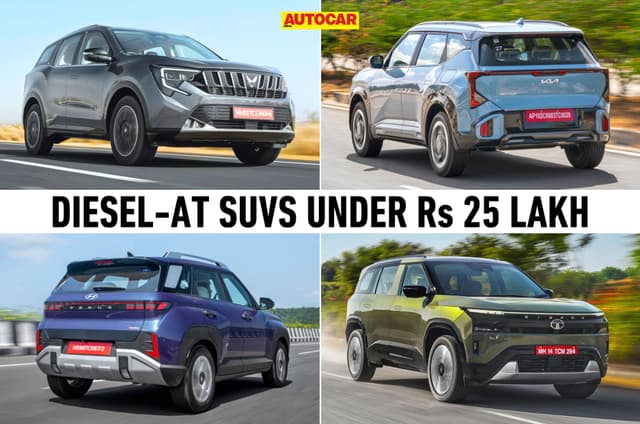
If you want something more spacious, consider the Maruti Suzuki Brezza, though it is slightly less efficient. If you want more efficiency still, though, consider a diesel compact SUV like the Hyundai Venue or Kia Sonet. They are the smoothest and most efficient in the segment, and are more likely to get close to or surpass 20kpl. 

T
Asked by: Thiyakeshon Feb 25, 2026

Hi, I am planning to buy a compact SUV in one or two months. I am a bit confused between two options: the new Venue HX5+ and the Sonet HTK Plus. Both have the same 1.2 NA engine. I am looking for long-term ownership with good mileage and stability. Can you suggest?

Between the Hyundai Venue and the Kia Sonet, for long-term ownership, we would recommend you go for the new Venue.
The Hyundai Venue was recently launched and is a much newer product, whereas the Sonet has been around for nearly six years and is expected to be replaced or significantly updated next year. Buying a car that is closer to the beginning of its lifecycle generally makes more sense if you plan to keep it for many years, because it will stay relevant.
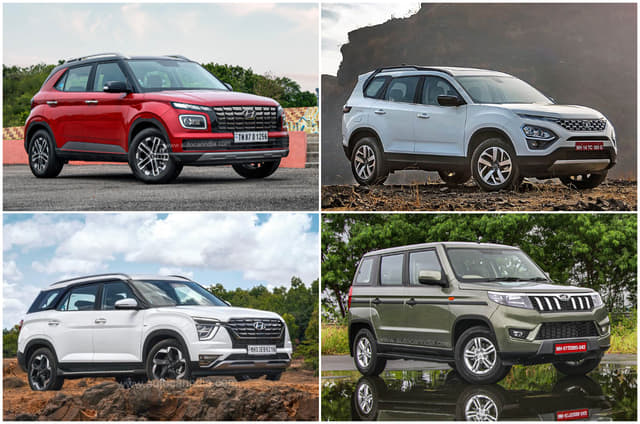
Another advantage the Venue has is rear seat space. The Kia Sonet has always been a bit cramped in the back, whereas the Venue offers better accommodation for rear passengers. If you often travel with family or friends, the extra space and comfort at the back will be noticeable over time.
G
Asked by: Gokul Subramanianon Feb 25, 2026

I currently own two cars: a 2025 XUV700 and a 2012 Tata Vista. The Vista is now having AC issues and brake failures, so it’s time to replace it with a 5-seater. While searching for cars under ₹10 lakh, I found many petrol options, but both my dad and I are diesel engine lovers, so we decided to increase our budget to ₹12 lakh. In that range, we considered: Tata Nexon - high-end model (but we’ve had customer and service issues with Tata before) Mahindra XUV 3X0 - MX2 Pro variant or base variant Hyundai Venue - 1.5 MT diesel variant Kia Sonet - base diesel variant Finally, my dad and I had a dramatic idea to get a Mahindra Thar RWD. Is that okay for comfortable city use and short-range driving, or should I consider other diesel cars under ₹12 lakh? Please suggest.

Yes, you are correct, there are very few diesel options in the lower segment today. From your shortlist, we would recommend the Hyundai Venue. The diesel engine is refined and smooth, and is coupled to a torque convertor gearbox, which is the smoothest type of autobox to have, thus you will appreciate this in the city traffic. The powertrain also delivers a good balance of performance and efficiency. 

As for the Mahindra Thar, we would not recommend this for you, as you are primarily looking for a comfortable city car, and the Thar ride is far too bumpy over bad city streets, and refinement levels will also not be as good as the Venue. 

Can't decide which car to buy?
Ask our experts and get answers to all your car related queries.