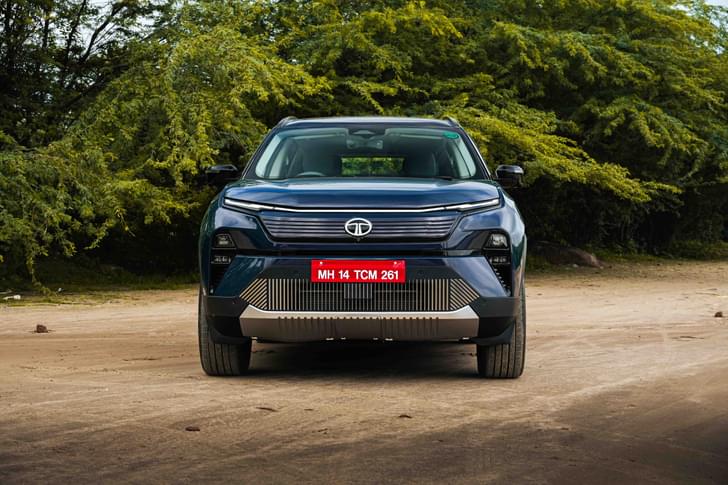
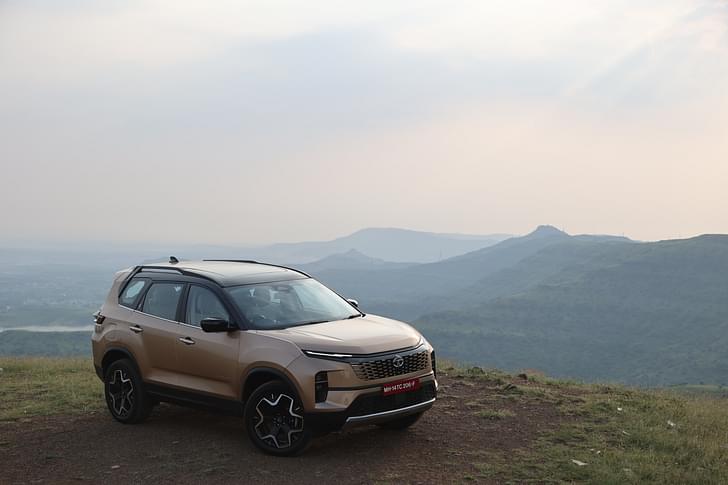
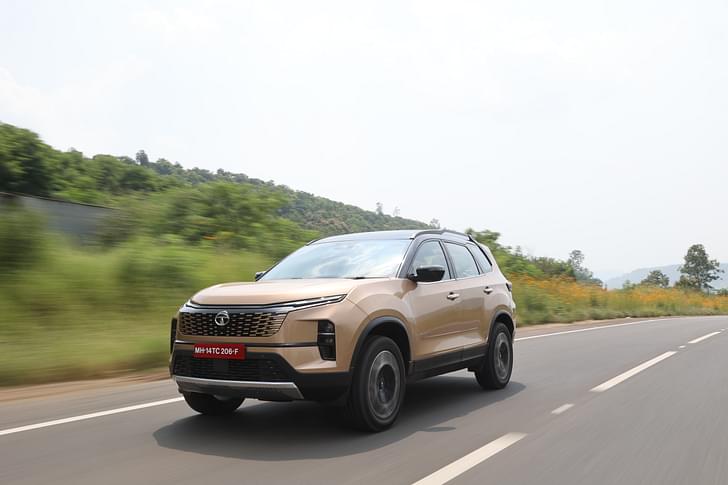
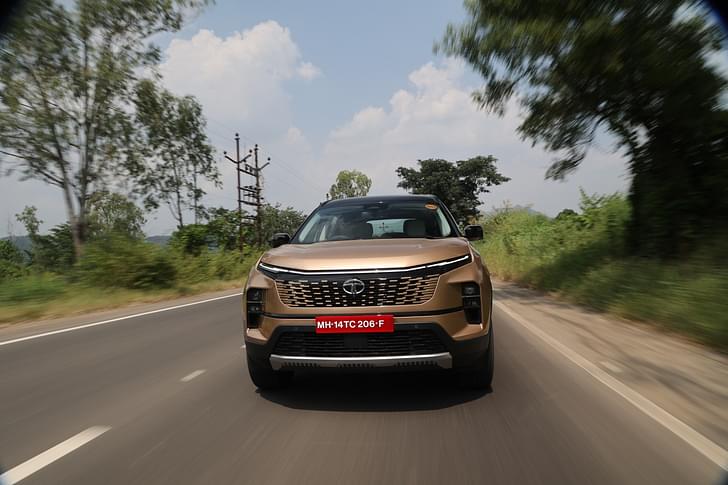
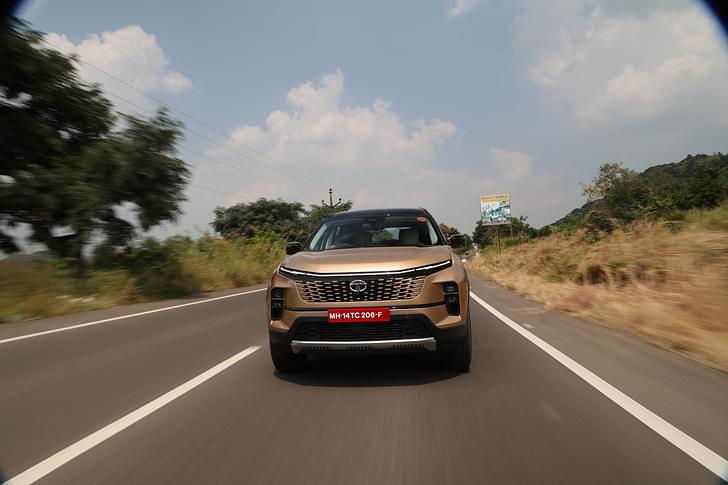
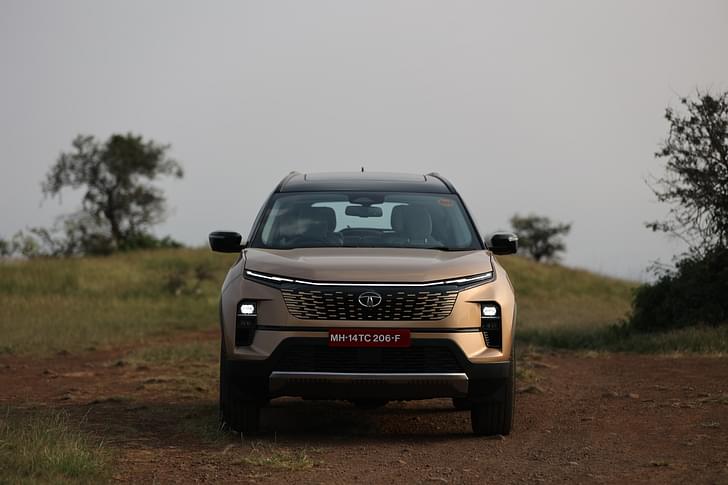
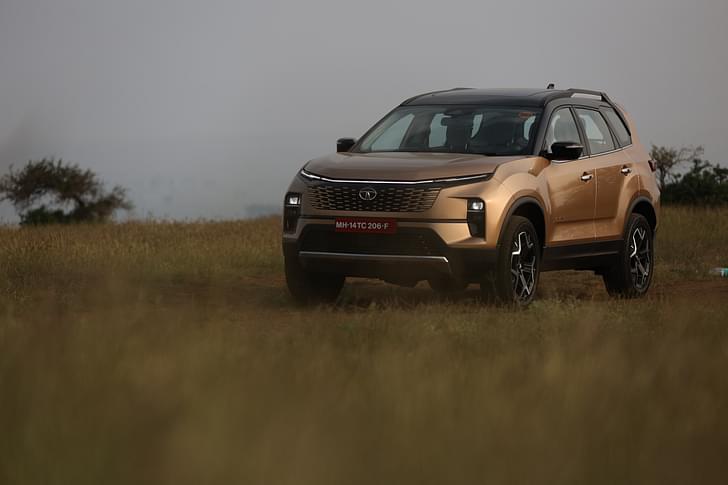
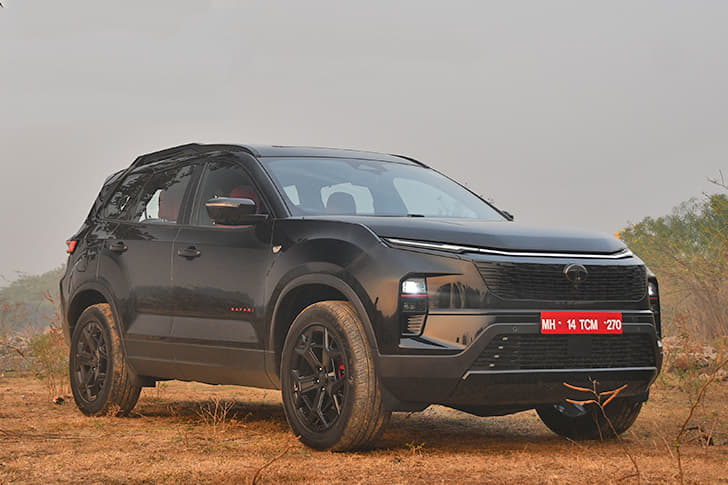
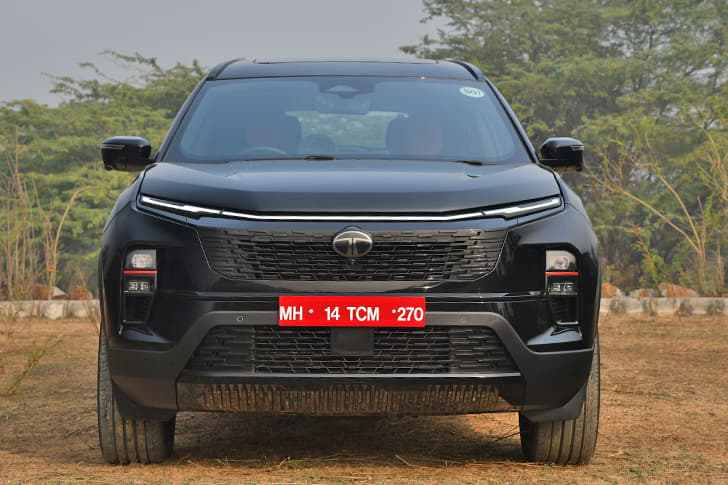
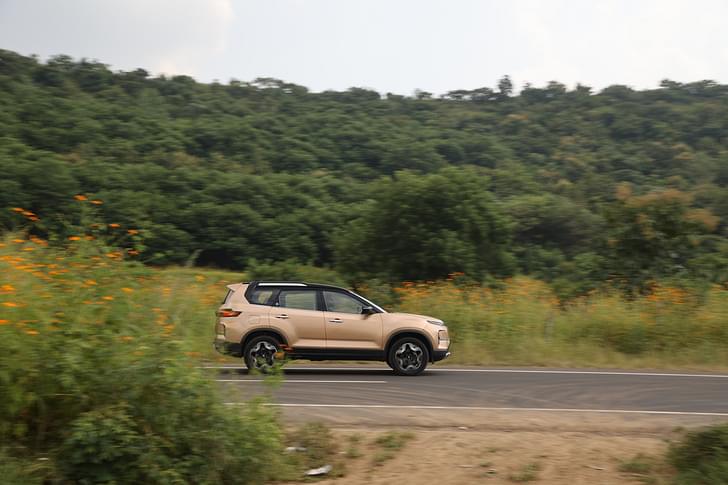
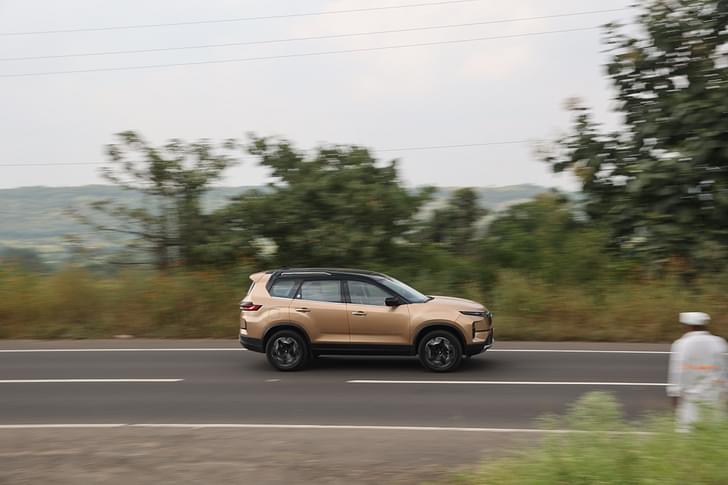
Tata Safari Adventure X + Dark 7 seat 2.0 Diesel AT
Tata Safari Adventure X + Dark 7 seat 2.0 Diesel AT specifications
Engine & Transmission
Fuel Type/ Propulsion | Diesel |
Engine Installation | Front |
Engine Displacement | 1956 cc |
Engine Type | 4 cyls, Turbocharged |
Max Engine Power | 170hp |
Max Engine Torque | 350Nm |
Drive Layout | Front-Wheel Drive |
Gearbox Type | Torque Converter Auto |
Number of Gears | 6 |
Lockable Differential/s | No |
Sport Mode for Automatic Gearbox | No |
Manual Shifts via Gear Lever on Automatic Gearbox | No |
Paddle Shifters for Automatic Gearbox | Yes |
Fuel & Performance
Fuel Tank Capacity | 50 litres |
Official Fuel Economy | 14.1 kmpl |
Auto Start/Stop | No |
Suspension & Steering
Front Brakes | Discs |
Rear Brakes | Discs |
Type of Power Assist | Electric |
Steering Adjust | Tilt and Telescopic |
Steering Adjust type | Manual |
Front Suspension Type | Independent, MacPherson Strut |
Front Springs | Coil Springs |
Rear Suspension Type | Semi-independent, Torsion Beam |
Rear Springs | Coil Springs |
Damper Control | No |
Ride Height Adjust | No |
Wheels | Alloys |
Wheel Size | 19-inches |
Front Tyre Size | 245/55 R19 |
Rear Tyre Size | 245/55 R19 |
Spare Wheel | No |
Dimensions
Length | 4668 mm |
Width | 1922 mm |
Height | 1795 mm |
Wheelbase | 2741 mm |
Boot Capacity | 73-1550 litres |
Doors | 5 |
Tata Safari Adventure X + Dark 7 seat 2.0 Diesel AT features
Comfort
| Power Windows | Front and Rear |
| Power Windows with One Touch-Down | Driver's Window Only |
| Power Windows with One Touch-Up | Driver's Window Only |
| Exterior Mirrors Electric Adjust | |
| Exterior Mirrors Electric Fold | |
| Remote Locking |
Safety
| Crash Test Rating | 5 |
| Airbags | 6 |
| Anti-Lock Brakes (ABS) | |
| Electronic Brakeforce Distribution (EBD) | |
| Brake Assist (BA) | |
| Electronic Parking Brake |
Exterior
| Body Coloured Bumpers | |
| Projector Headlamps | |
| Headlight Type | LED |
| Daytime Running Lights | LED |
| Front Fog Lamps |
Interior
| Speedometer | Digital |
| Tachometer | Digital |
| Trip Meter | |
| Average Fuel Consumption | |
| Average Speed | |
| Distance to Empty |
Entertainment
| Audio System | |
| CD Player | |
| USB Input | |
| AUX Input | |
| Bluetooth Audio Streaming | |
| Bluetooth Telephone Function |
Tata Safari variants
Tata Safari comparison
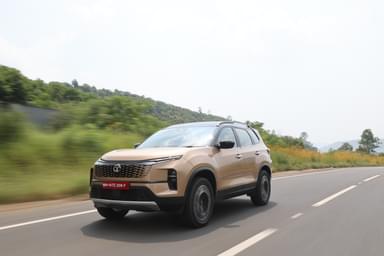
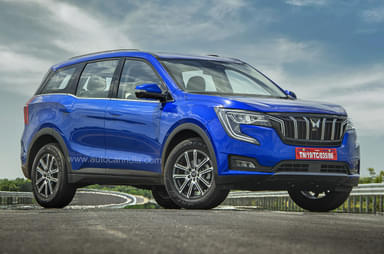
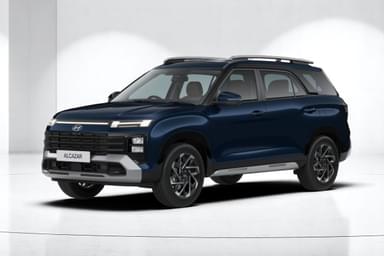

Trending Questions on Tata Safari - Answered by Autocar Experts
I’m looking for a diesel SUV and am torn between the Force Gurkha, Tata Safari, and Scorpio N. It will be my second car, mainly for highway trips and some city driving. Which one should I choose?
Out of the three options, the Tata Safari is the one to go for, for its excellent ride comfort, both on the highway and in urban conditions. It feels tough, and flattens bad roads very nicely.
Moreover, it is more comfortable in all three rows than the Mahindra Scorpio N. Tata's 2.0-litre diesel engine is punchy, although the Mahindra car has an edge in terms of refinement.
The Force Gurkha is the most rugged of the three, and the most capable off-road. But since you want a car for on-road driving, it is also the least comfortable, feels utilitarian, its diesel engine lacks performance, and there is a lot more body roll than the other two cars.
I am looking for a petrol 7-seater and am considering the Tata Safari and the Skoda Kodiaq. My objective is to buy the best value-for-money car. My overall driving will be mostly on highways and nearby areas of Delhi NCT, with city driving only for short distances on weekends, contributing about 25-30% of total driving. So far, my average annual driving has been limited to around 8,000 km.
Yes, the Tata Safari petrol is a good option to consider. The 170hp petrol engine is smooth and punchy, making it a lovely car to drive.
However, if you have the budget to opt for the Skoda Kodiaq, then, quite frankly, the Safari petrol, other than a much more spacious third row, can’t match the Kodiaq, which is in a different class altogether.
It is better engineered, has a quality feel and is superbly equipped. Also, for your driving, which is mainly on weekends and on highways, where there is less traffic, you can really enjoy the Kodiaq, which is a perfect car. The only compromise you will have to make is with the third row, which is best for kids.
I currently own a 2017 Honda Jazz Petrol VX, which is now 9 years old and has covered 50,000km. I do not drive daily. Usage is mostly within the city (60%) with occasional highway trips (40%). We are a family of 4 adults and 2 kids. I am planning to upgrade to a 7-seater and have shortlisted the Mahindra XUV7XO and Tata Safari. I am confused about choosing between petrol and diesel. Please advise.
I already own a Creta Electric and am now a fan of electric vehicles. I need a new 7-seater for around ₹22-24 lakh. My running will be very low - about 500 km per month, plus 3-4 long trips a year of around 350 km one way. I’m confused between the Mahindra 7XO and the 9S (2P pack, 70 kWh), as they seem very similar, and the decision will mostly depend on final pricing. Which one should I buy? Are there any other options you can suggest?
The Mahindra XEV 9S is a large car, but its last row isn't comfortable for adults over long drives. Hence, if you need a comfortable seven-seater for long drives, consider the Turbo petrol versions of the Kia Carens Clavis and Tata Safari instead.
There's also the Kia Carens Clavis EV in this range, which shares its battery+motor with the Creta Electric. However, on your 350km+ highway drives, you will have to stop and charge once, as its real-world highway range is about 345km as per our tests
I have been using Tata Punch for a year. For me, this car met all my expectations being a new driver as well as a first-time owner. Now, I want to move towards a more premium segment and comfort with more latest features available in the market. Which car should I buy? I bought the Punch under 10 lakh (on-road). This time, my budget is under 20 lakh. I prefer Indian brands only.
I’m looking for a car, either an SUV or a sedan. My budget is up to ₹25 lakh. The car must-have: a 5-star safety rating and excellent ride comfort; priority is the best suspension in this price bracket for a mix of highway cruising and rough roads.
We currently own a Nexon diesel and are very happy with it, but we now want to buy a seven-seater - most likely the Tata Safari - in a petrol version since the vehicle will be used rarely. The petrol variants of the Harrier and Safari were expected to launch today, but seem to have been delayed. Why was the launch postponed, and when can we expect the petrol models to be released?
The launch of the petrol versions of the Tata Harrier and Tata Safari will happen this December for sure.
We will also be driving both Harrier and Safari this month, and our full review will be out on our website and YouTube channel towards the 3rd week of this month, so do look out for that.
I am very happy with my Ertiga diesel and want to buy a new diesel car within a budget of ₹15-18 lakh. Which is the best option among Kia, XUV700, or Safari? I need the car for city as well as urban travel.
Whether to buy the Tata Safari or XUV700 for a daily 30km ride in busy streets and twice-a-year tours to a neighbouring state of around 1,200km?
I’m confused between the Tata Safari and the Mahindra XUV700 - which should I choose?
Between the Tata Safari and the Mahindra XUV700, it’s the Mahindra car that we would recommend. It is more comfortable, has strong engines, offers a more refined driving experience and has better features.
The Safari scores well on design, feels a bit tougher over bad sections and has the more spacious third row, but all things considered, the Mahindra XUV700 is better. It might be worth waiting for a few months, however, as the XUV700 facelift is just around the corner.