
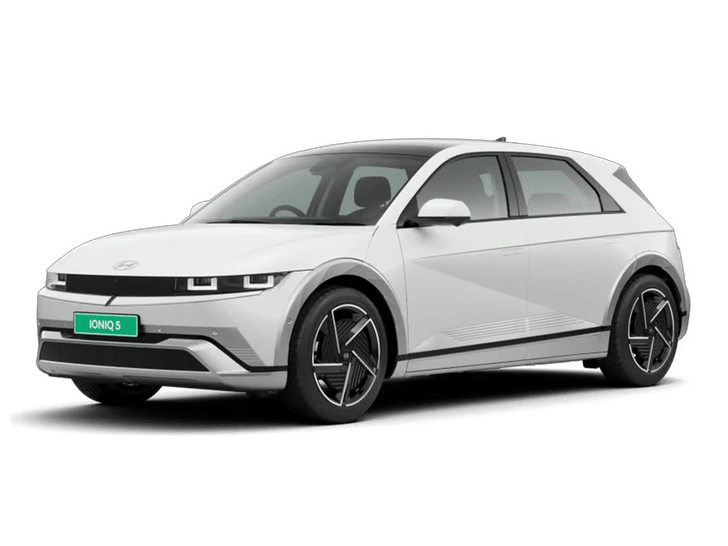
The 2026 update for the Hyundai Ioniq 5 brought with it some cosmetic updates and a larger 84kWh battery. More significantly, its pricing and positioning have changed. While the previous model, with its 72.6kWh battery, was priced at Rs 45 lakh and was considered the value king of its segment, that claim is harder to justify for the new model, which now costs Rs 55.7 lakh.
Hyundai says the larger battery helps the 2026 Ioniq 5 deliver an ARAI-certified range of 690km. We put that claim to the test to determine its real-world efficiency.
- Weighs 2,165kg; 150kg more than before
- 20-80 percent took 16 minutes on a 360kW DC fast charger
Hyundai Ioniq 5 real-world range and charging tested
The 2026 Hyundai Ioniq 5 is powered by a rear-mounted PMSM motor producing 229hp and 350Nm. Paired with a larger 84kWh lithium-ion battery pack using Nickel Manganese Cobalt (NMC) cell chemistry, it now boasts a claimed ARAI range of 690km, up from 631km in the previous 72.6kWh version. The Ioniq 5 offers four drive modes — Eco, Normal, Sport and Snow. For our tests, we used Eco mode, with regenerative braking set to Level 2 in the city and Level 1 on the highway.

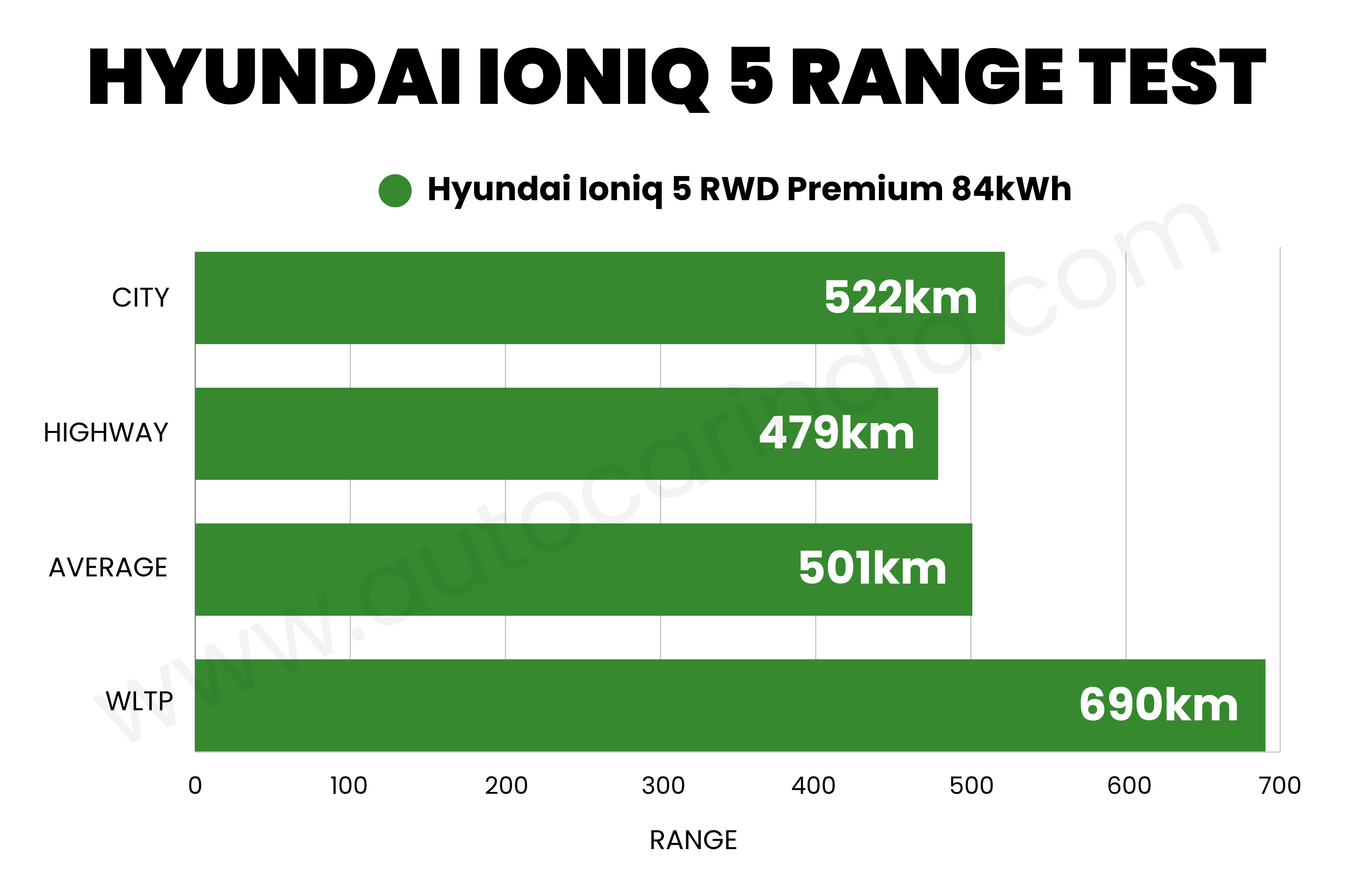
In city conditions, the Ioniq 5 returned an efficiency of 6.22km/kWh, translating to an estimated range of around 523km. On the highway, efficiency dropped slightly to 5.71km/kWh, resulting in an extrapolated range of 479km. With an overall efficiency of 5.96km/kWh, the Ioniq 5 can realistically deliver about 501km on a full charge.
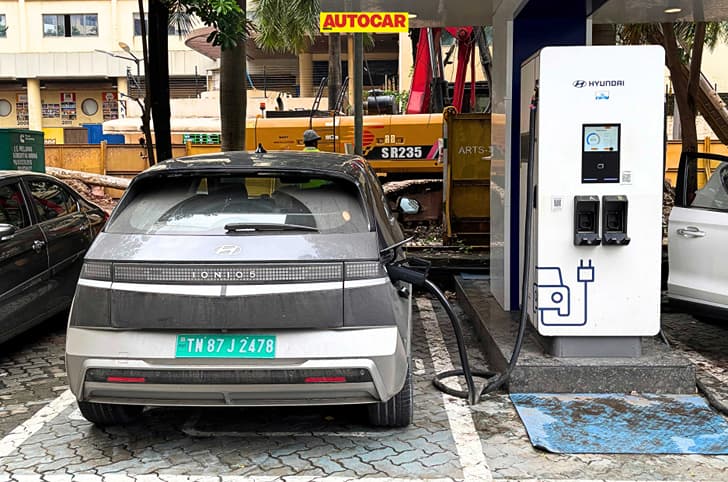
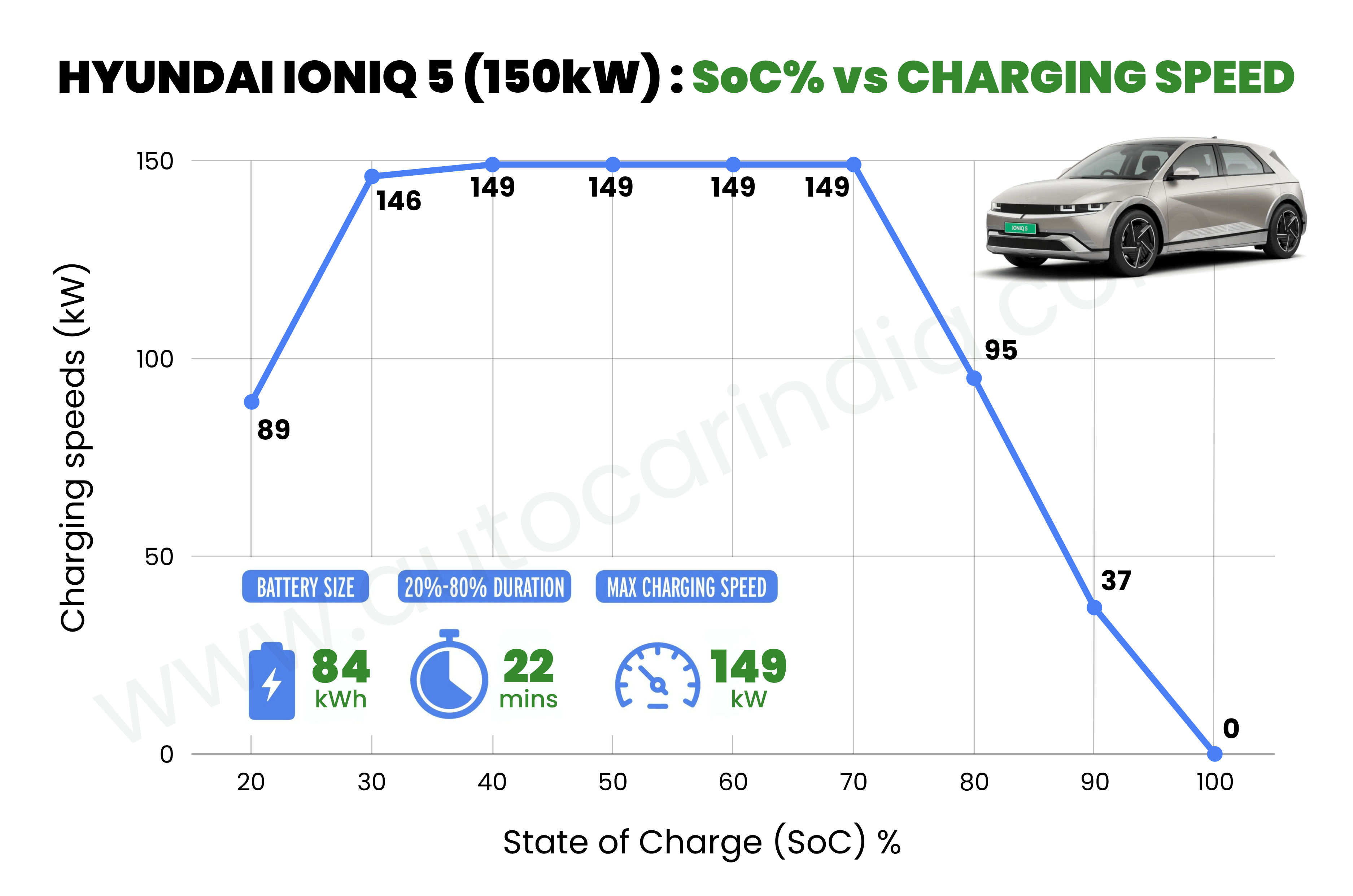
We charged the Ioniq 5 using a 150kW DC fast charger and recorded a peak charging rate of 149kW. Impressively, the charging speed remained close to its peak from 30 percent to 70 percent state of charge, before tapering off rapidly. In terms of charging times, the Ioniq 5 took 22 minutes to charge from 20 to 80 percent, and a further 32 minutes to reach 100 percent.
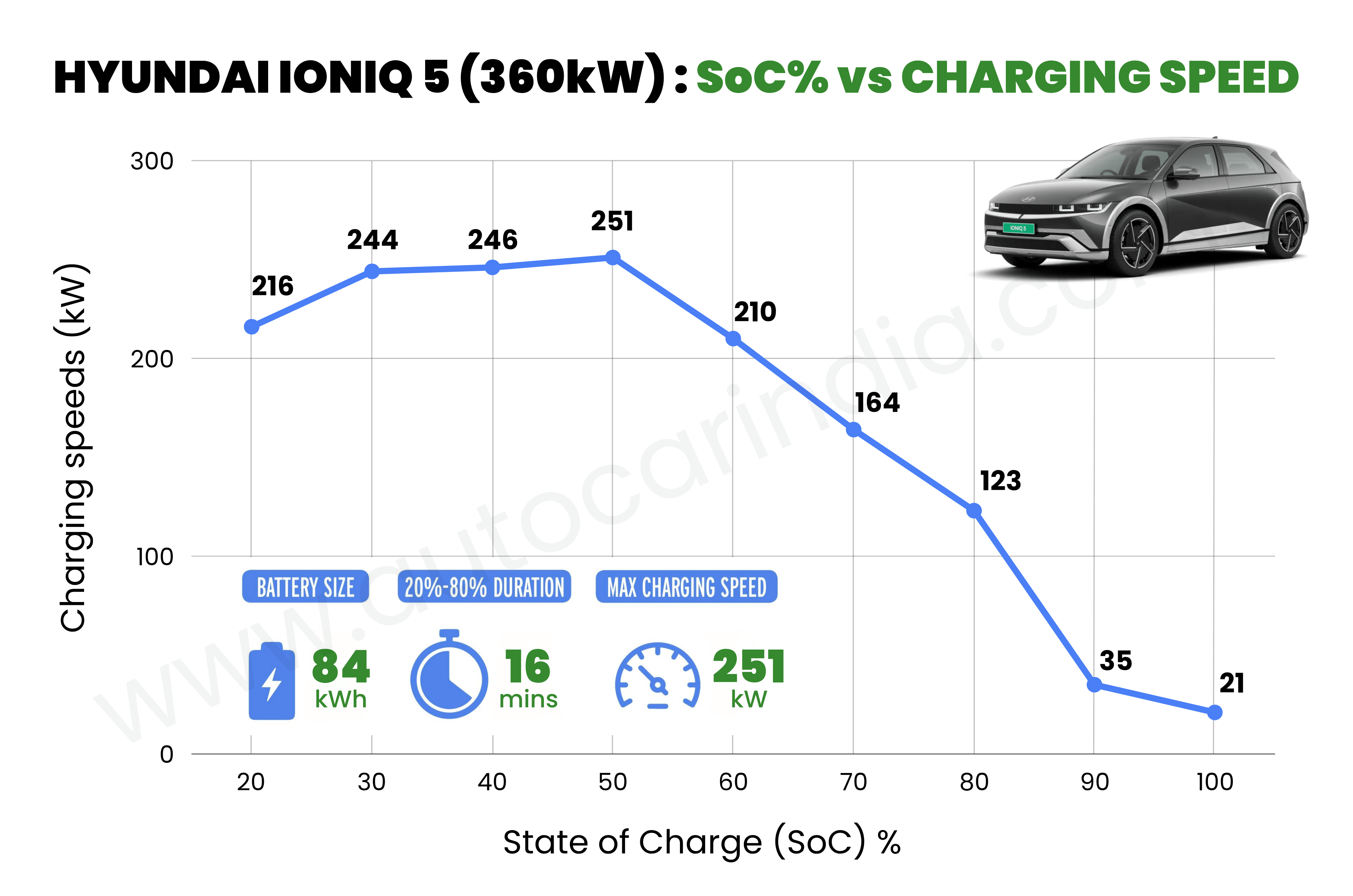
On a different occasion, we plugged the Ioniq 5 to a faster 360kW DC fast charger and noted peak charging speeds of about 251kW. Duration wise, it took 16 minutes to charge from 20 to 80 percent, whereas 80 to 100 percent took another 33 minutes.
Autocar India’s range testing
Before our real-world range tests, the battery of our test car was fully charged, and we maintained tyre pressures in accordance with the manufacturer’s recommendations. The car was driven on a weekday in Navi Mumbai city and on the adjoining state highway in a fixed loop, and we maintained the set average speeds. At the end of each cycle, we calculated the range based on the percentage charge consumed.
Throughout our tests, the climate control was set to 22deg C in a full-auto setting, and other electricals, such as the audio system, indicators and ventilated front seats, were used when required, just as a regular user would. We take pride in our testing data, which isn’t merely consistent but also gives users an accurate indication of what they can expect in the real world.

 Uday Singh
 Dipan Sur

 Glenn Noronha