
Last Updated on: 15 Aug 2026
Hyundai i20
Hyundai i20 is a premium hatchback with a 311-litre boot, sold in 15 variants that run from the 1.2 Petrol Era manual up to the 1.0 Turbo Petrol N-Line N8 dual-clutch. Two petrol engines are offered, a 1197cc naturally aspirated unit and a 998cc turbo producing 120hp and 172Nm of pulling power.
i20 Key Features
Here is what you get across the range.
Category | Key Features |
Engine and gearbox |
|
Screens and audio |
|
Safety |
|
Comfort and convenience |
|
Practicality |
|
i20 Road Test Findings
What we liked
Rear seat room is a big step up on the older car, with enough knee room and head room for six-footers to sit comfortably behind a tall driver.
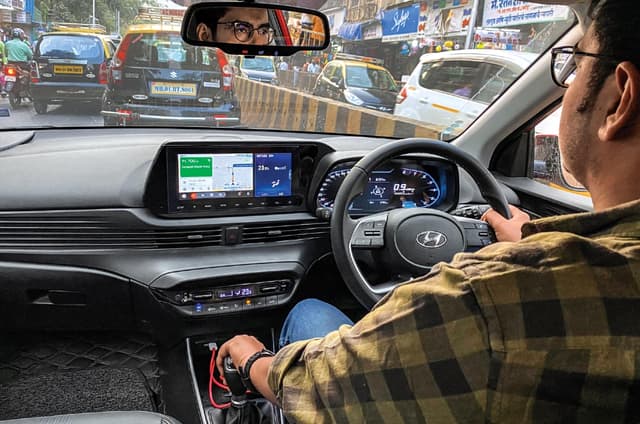
The 10.25-inch touchscreen is the largest in this class and also the slickest to use, which matters more day to day than the size alone suggests.
The car takes a clear step up over its predecessors in the way it drives, with a smoother and nicer feel at the wheel.
What we did not like
The turbo is not as quick as it sounds, because we recorded 12.56 seconds from 0 to 100kph against the 9.9 seconds claimed for it.
The rush of power at the top of the rev range that you expect from a sporty car simply is not there.
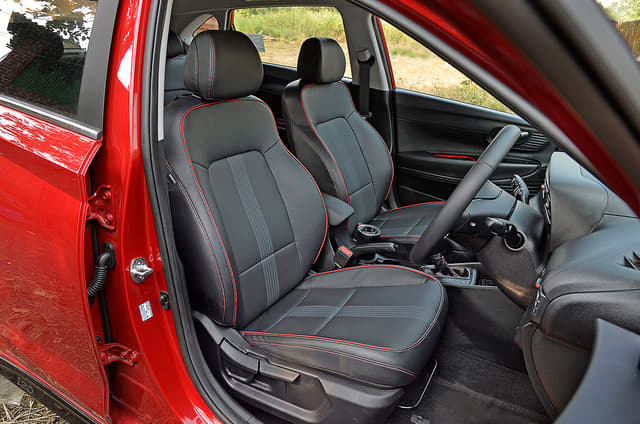
There are quite a few ordinary surfaces inside, with scratchy plastics on the glovebox and window sills and no soft-touch material on the door pads.
Push hard through a corner and the turbo tends to run wide, so it is not the sporty car it is presented as.
Who should buy the i20?
Based on our review, this hatchback suits five kinds of buyers.
Buyer type | Why it fits |
If you carry adults in the back | Knee room and head room are genuinely enough for six-footers, which is unusual in this class. |
If screen and sound matter to you | A 10.25-inch touchscreen, a Bose sound system and a built-in dashcam on the higher variants. |
If you want an easy automatic | The CVT with the 1197cc petrol is certified at 20kpl by ARAI, matching the turbo dual-clutch exactly. |
If you drive mainly in the city | Ride comfort is a strength here, and the suspension absorbs urban potholes without much fuss. |
If safety kit matters | Six airbags, stability control and tyre pressure monitoring across the range. |
The buyer it suits least is the enthusiast, since neither engine is thrilling, the handling is not especially sharp, and our own testing showed the turbo is slower than its claimed figure.
Hyundai i20 Price Details
1.2 Petrol Era MT (base model): 6.00 lakh (ex-showroom)
1.2 Petrol Sportz IVT (mid variant): 8.81 lakh (ex-showroom)
1.0 Turbo Petrol N-Line N8 DCT (top model): 11.59 lakh (ex-showroom)
Hyundai i20 Latest Updates
- July 24, 2026: Hyundai i20 crosses 15 lakh unit sales milestone; the premium hatchback took nearly 18 years to achieve the feat since it was first launched in 2008.
- June 22, 2026: Hyundai confirms plans underway for new i20 N; upon its arrival, the new-gen i20 N will become the most affordable N model in the brand’s portfolio.
- June 17, 2026: Hyundai sends off i20 N with limited-run Shadow Edition; the special-edition i20 N will be limited to 100 units.
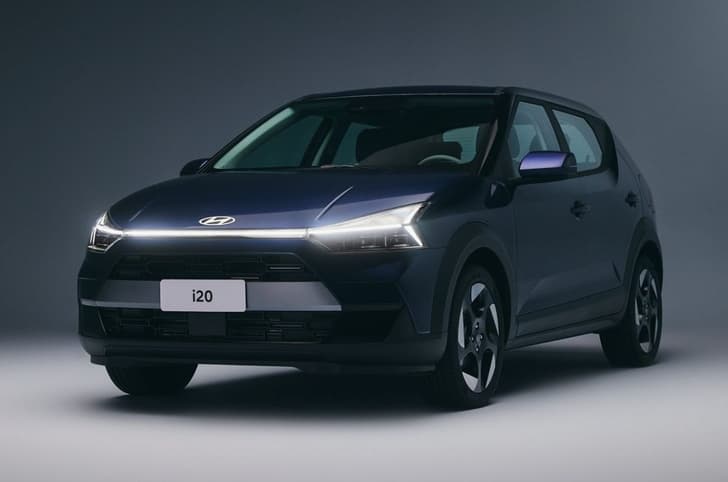
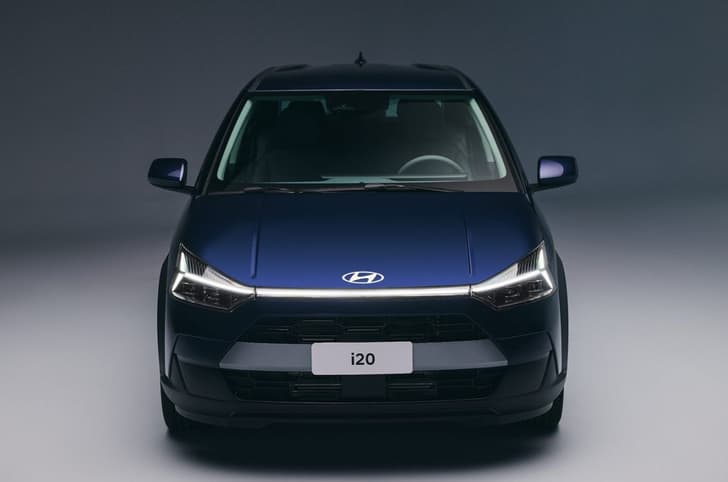
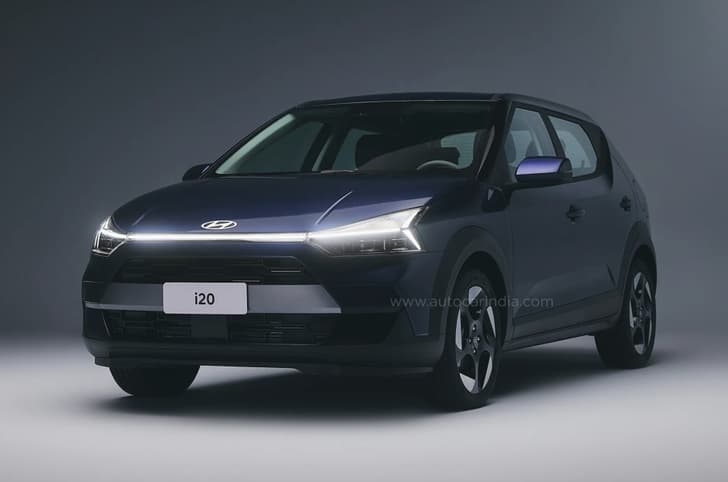
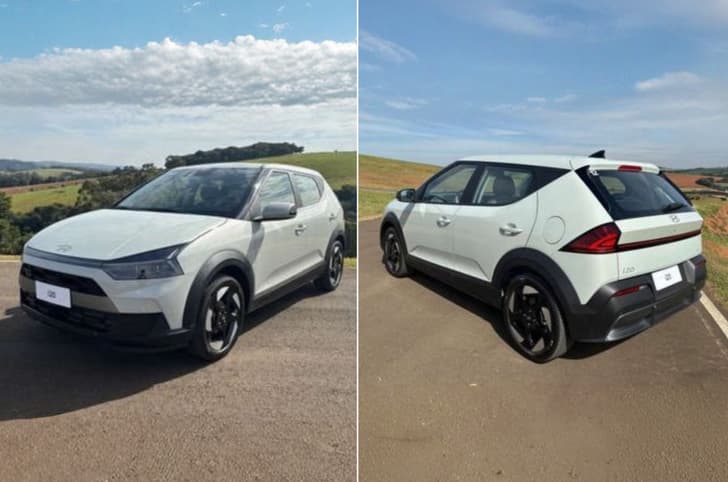
- June 13, 2026: Next-gen Hyundai i20 debuts in Brazil; the Brazil-spec model gets two petrol engines and two transmission options, spread across six variants.
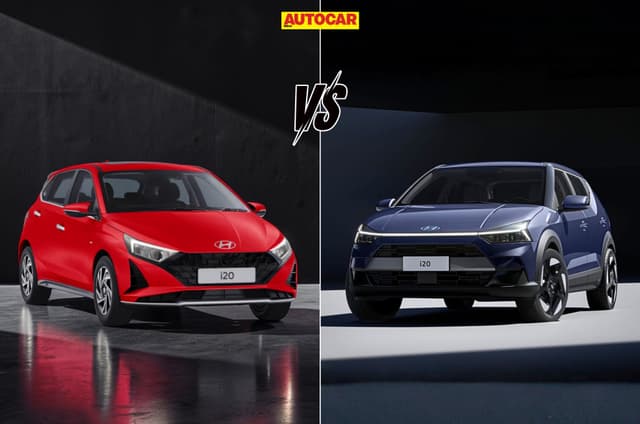
- June 12, 2026: New fourth-gen Hyundai i20 leaked in full
The new i20 adopts a crossover-esque look and gets twin connected screens on the inside.
Hyundai i20 Features and specifications
Our Rating | 8 |
Mileage | 16 kmpl - 20 kmpl |
Engine | 998 cc - 1197 cc |
Fuel Type | Petrol |
Transmission | Manual, DCT, CVT |
Seats | 5 |
Body Style | Hatchback |
Doors | 5 |
Max Power | 120 hp at 6000 rpm |
Max Torque | 172 Nm at 1500 - 4000 rpm |
Warranty Distance | 100000 km |
Warranty Duration | 3 Years |
| Engine Type | Turbocharged |
| Engine Displacement | 998 cc |
| Number of Cylinders | 3 |
| Engine Installation | Front |
| Fuel Supply System | Direct Injection |
| E20 Compatibility | Yes |
| Emission Standard | Bharat Stage VI |
| Auto Start/Stop | No |
| Front Suspension Type | Independent, MacPherson Strut |
| Front Springs | Coil Springs |
| Rear Suspension Type | Non-independent, Torsion Beam |
| Rear Springs | Coil Springs |
| Length | 3995 mm |
| Width | 1775 mm |
| Height | 1505 mm |
| Wheelbase | 2580 mm |
| Power Windows | Front and Rear |
| Bluetooth Connectivity | |
| Cabin Boot Access | |
| Cooled Glovebox |
| Airbags | 6 |
| Anti-Lock Brakes (ABS) | |
| Blind Spot Collision Avoidance Assist | |
| Boot Open Warning |
| Body Coloured Bumpers | |
| Antenna | Shark Fin |
| Cornering Headlights | |
| Door Handle Finish | Body Coloured |
| Speedometer | Digital |
| Tachometer | Digital |
| Trip Meter | |
| Average Fuel Consumption |
| Audio System | |
| Branded Music System | Bose |
| CD Player | |
| Front USB port | Type C |
| Alexa Compatibility | |
| Auto Crash Alert | |
| Car Light Flashing & Honking via App | |
| Check Vehicle Status via App |
Hyundai i20 price & variants
Hyundai i20 price in India starts at 6.00 lakh for the 1.2 Petrol Era MT and rises to 11.59 lakh for the 1.0 Turbo Petrol N-Line N8 DCT, both ex-showroom, while the on-road price in Mumbai runs from 6.93 lakh to 13.68 lakh. The 15 variants cover two petrol engines and three different gearboxes.
Which one to pick:
The 1197cc petrol with the CVT is certified at 20kpl by ARAI, which is the joint-best figure in the range and suits city driving well.
The 120hp turbo is the more flexible engine on the highway, though our testing found it slower than the figure claimed for it.
Both manual versions are certified at 16kpl, so choosing an automatic here does not cost you anything in mileage.
EMIs for the 1.2 Petrol Era MT start at 9,975 a month.
Hyundai i20 expert review
We like
Space and comfort
Long equipment list, powertrain choices
We don't like
Price
8.0
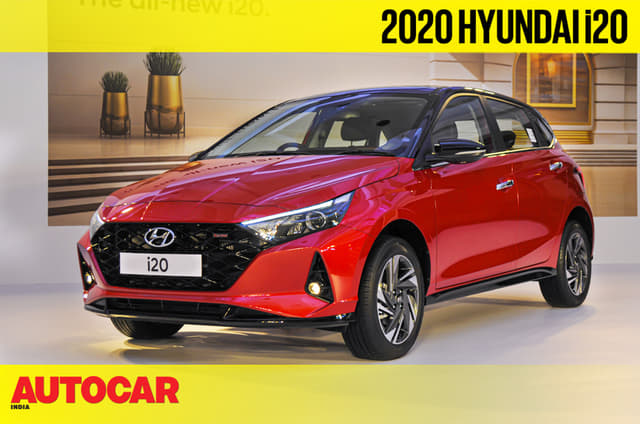
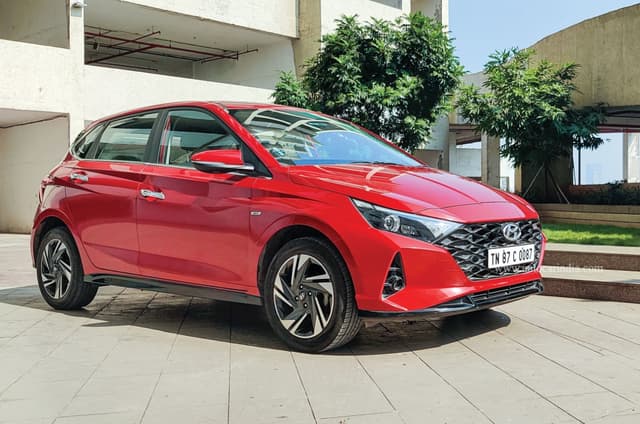
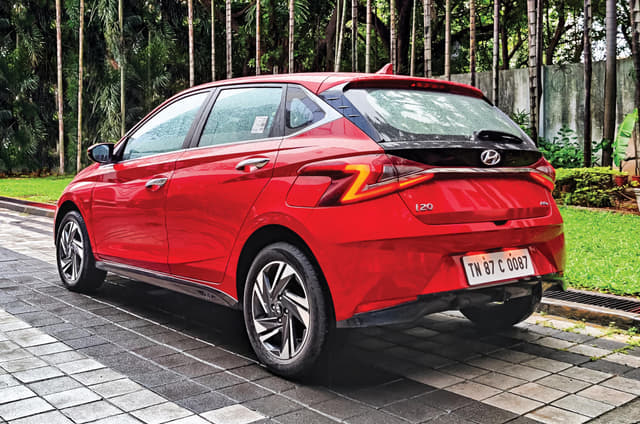
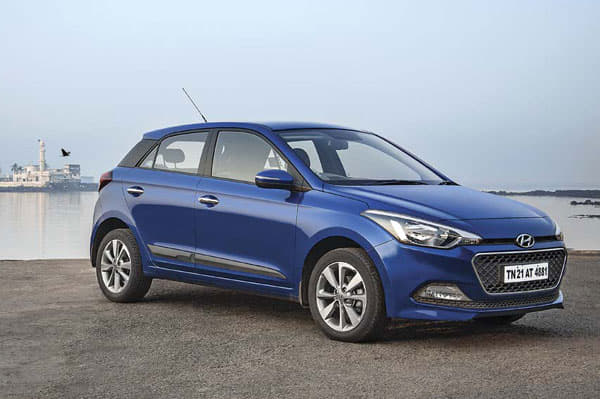
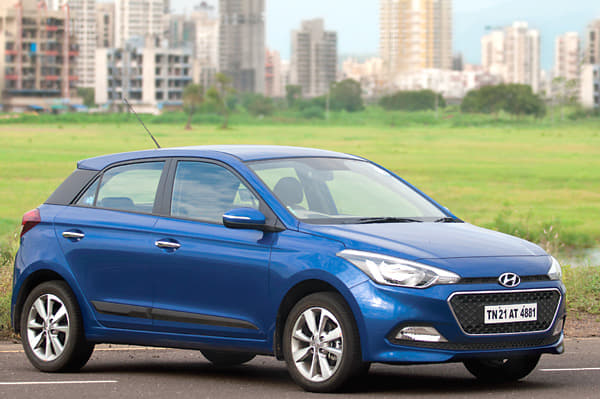
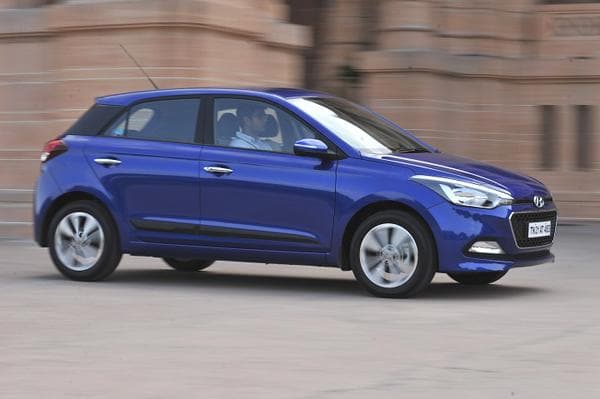
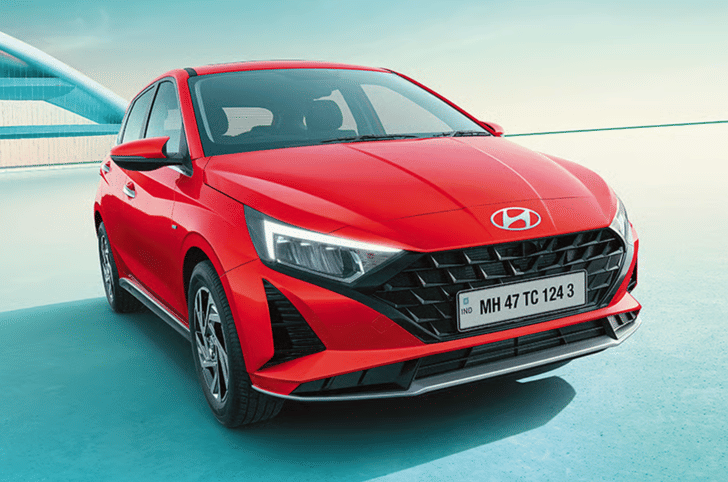
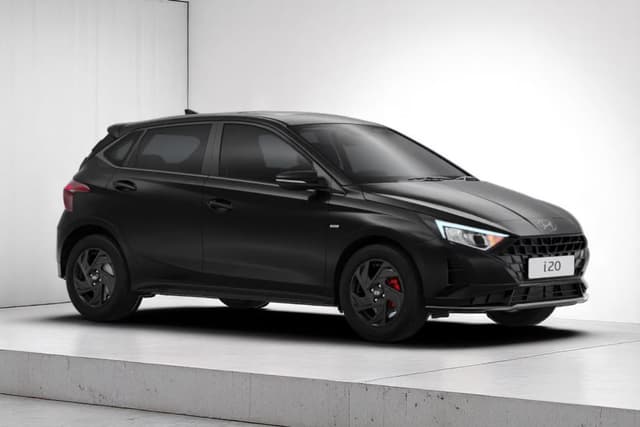
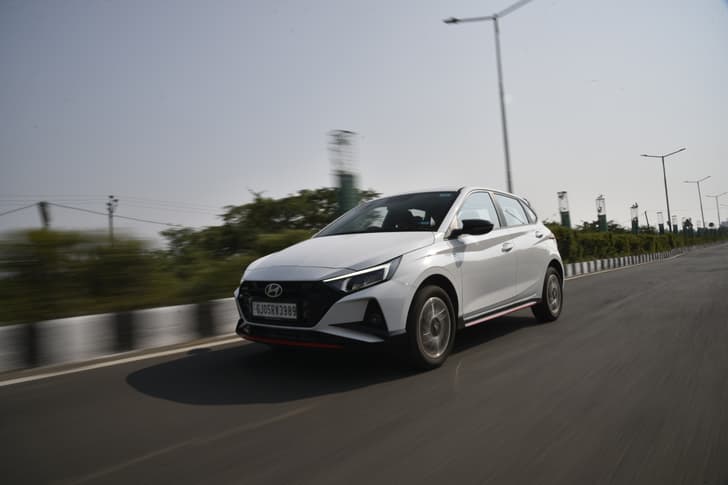
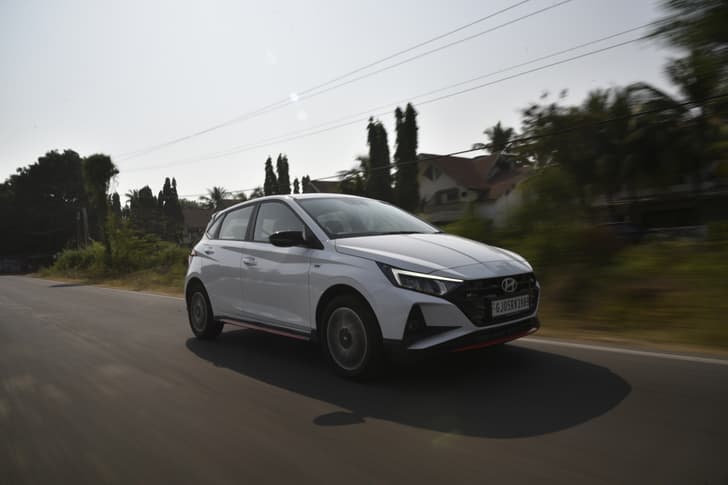
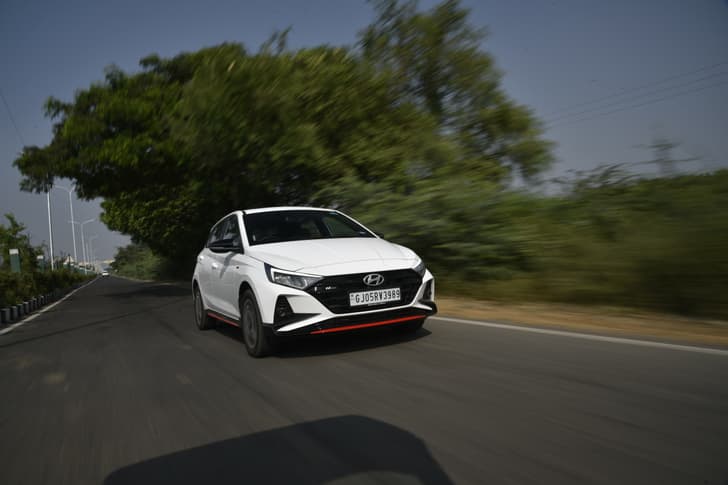
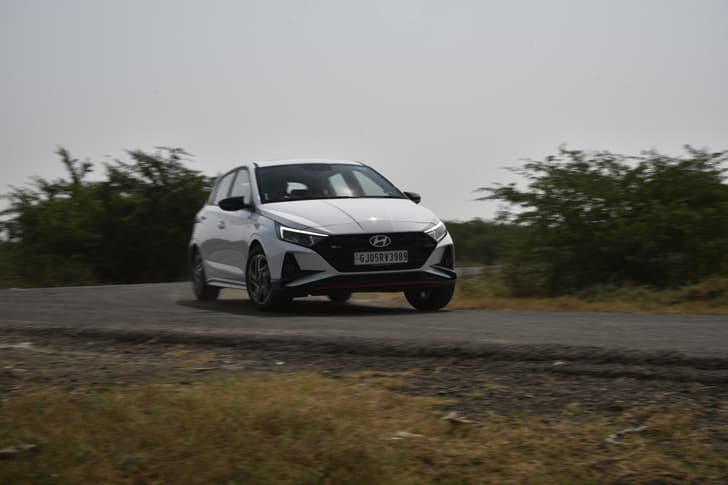
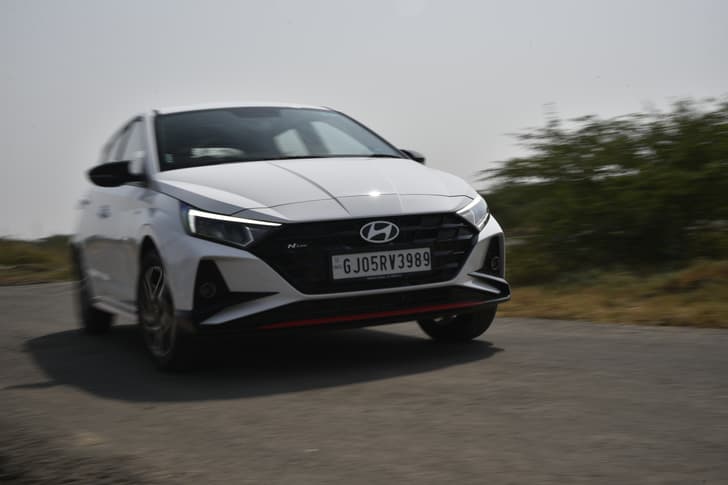
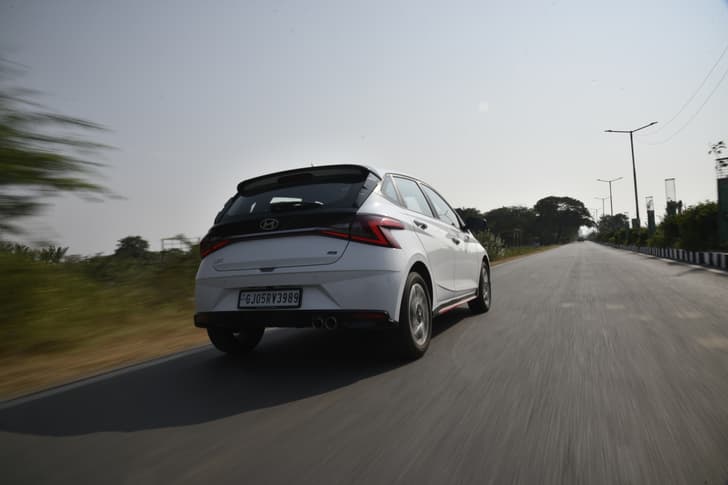
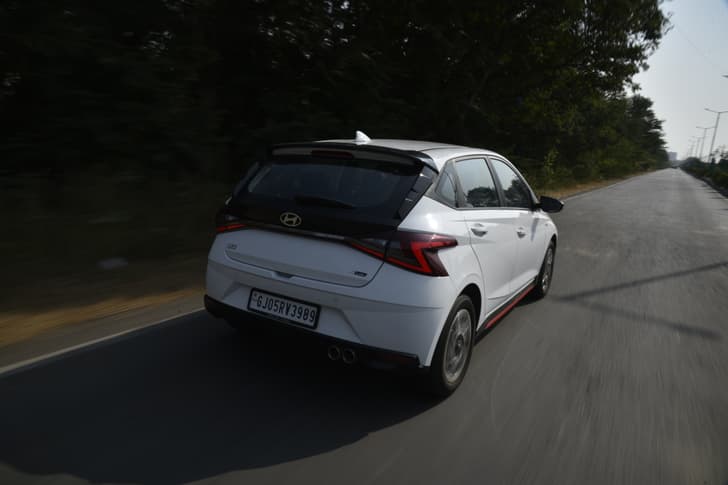
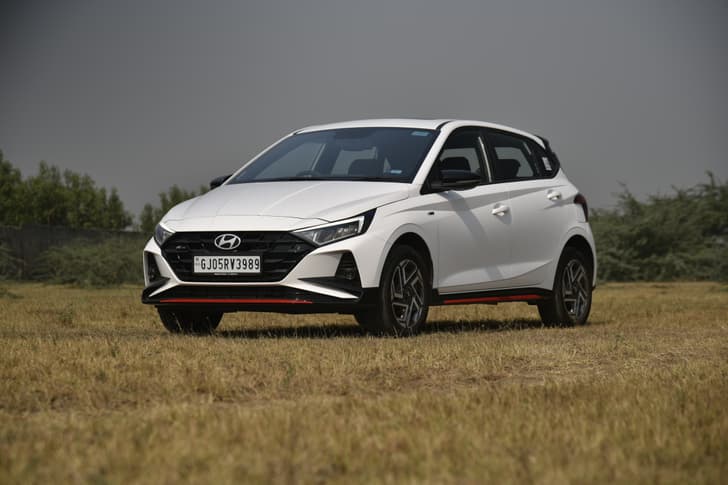
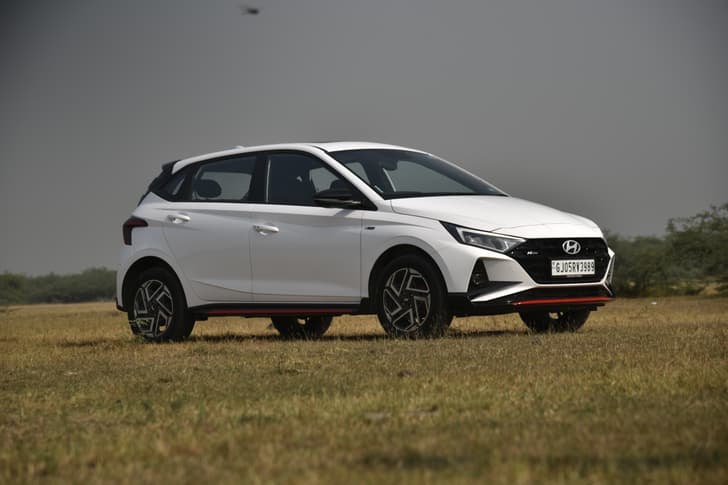
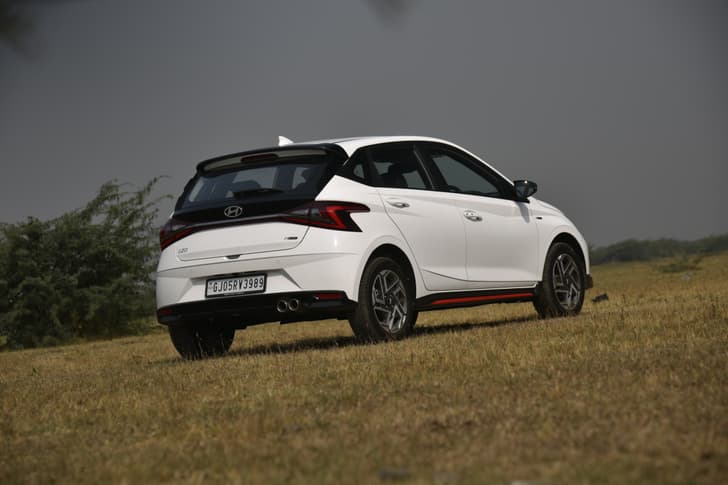
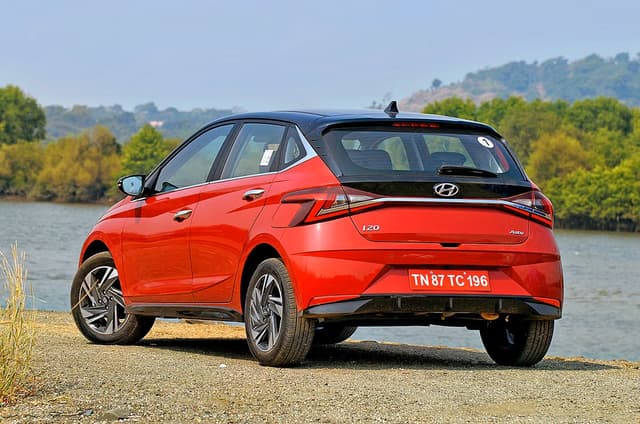
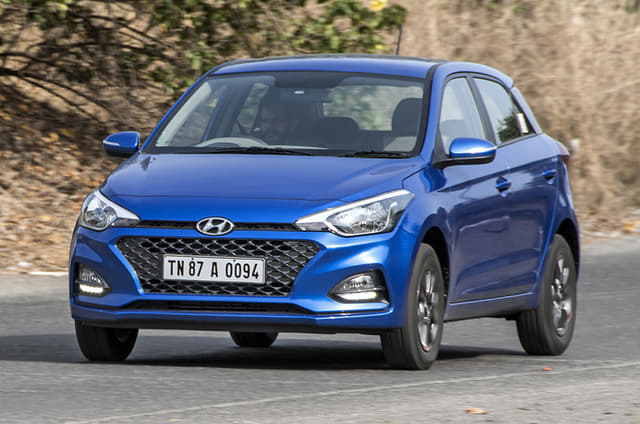
The Hyundai i20 set a high benchmark for premium hatchbacks when it launched. Its design blends maturity and style with crisp lines, a bold grille, swept-back headlamps and a clean silhouette that belies its compact footprint. The proportions are balanced and give the i20 a slightly upscale look compared with its peers.
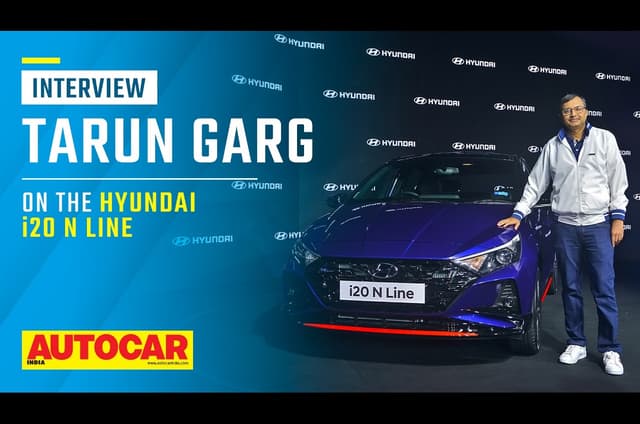
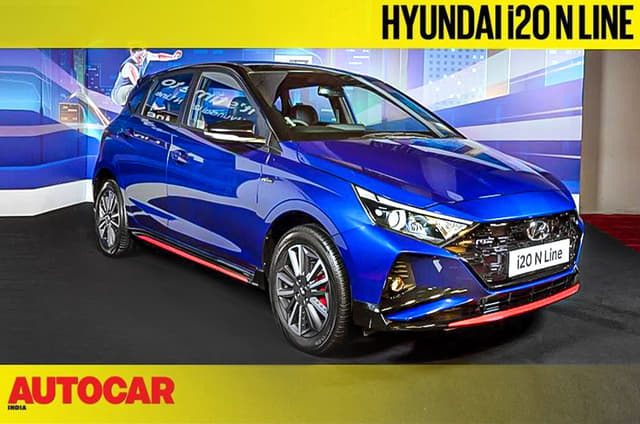
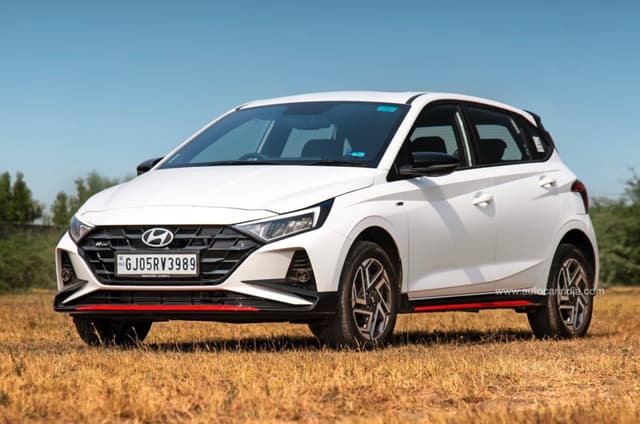
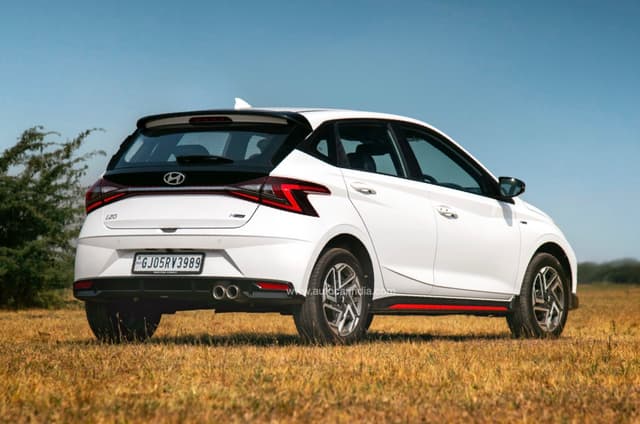
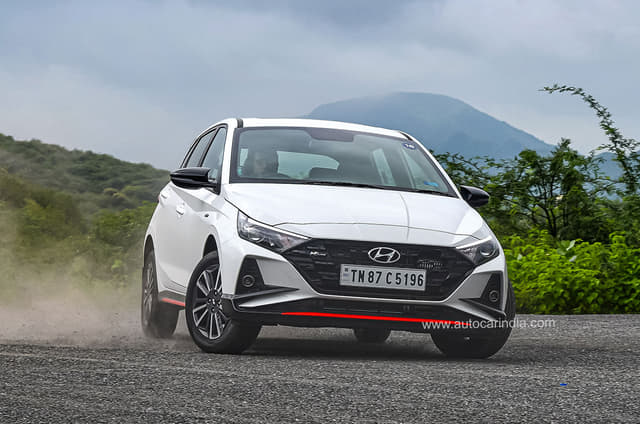
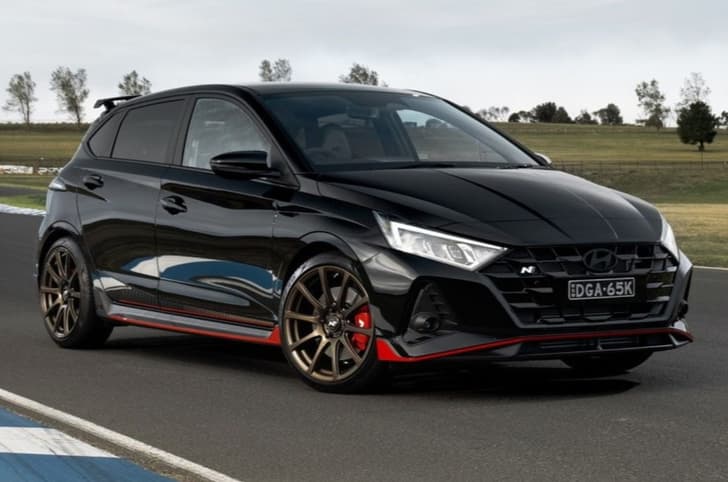
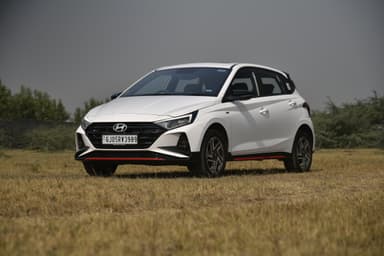
The i20 N Line adds a sportier edge to the same platform. Aggressive bumpers, larger intakes, gloss-black highlights, 17-inch wheels and red accents lift its stance visually. The overall shape remains familiar, but the performance cues make it feel like a hatchback with intent rather than just another top-trim model.
The N Line MT ramps up those cues further with deeper front spoilers, gloss-black treatment and unique decals that underline its performance focus. Engineering fundamentals — MacPherson front struts and torsion beam rear suspension — are unchanged, but the N Line tweaks steering and damping for a sharper feel.
8.0
Inside, the standard i20’s cabin impresses with fit and finish that punch above its price. The dashboard has a clean layout with quality plastics, a floating touchscreen, digital cluster and soft-touch surfaces in key areas. Seats are supportive, the centre console is logically laid out and rear passengers enjoy reasonable space for a premium hatch, with good headroom and luggage capacity.
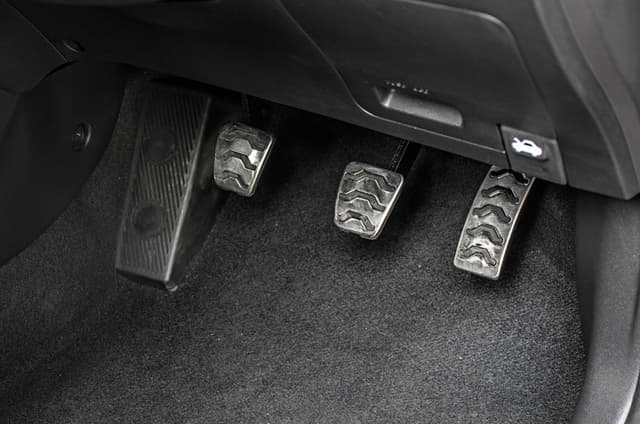
The i20 N Line keeps the same ergonomic strengths but adds sporty touches like red contrast stitching, paddle shifters on the automatic and aluminium pedals. Materials and fitment remain high quality, though the overall space packaging is fundamentally the same as the standard car.
The N Line MT swaps automatic-specific trim accents for a more driver-centric feel with a sporty gear lever and stitched elements that feel purposeful underfoot and at the fingertips. Rear space and comfort remain unchanged across all variants.
8.0
Across the i20 range, features are generous. Standard kit includes a touchscreen with Android Auto and Apple CarPlay, wireless charging, digital instrument panel, connected car tech and automatic climate control.
The N Line adds performance-themed elements such as unique drive modes, paddle shifters on the automatic, sport seats and N Line badging. Safety kit stays robust with multiple airbags, ABS with EBD, stability control and ISOFIX child mounts across most variants.
6.0
On the standard i20, fuel efficiency is competitive for the segment. The naturally aspirated petrol returns good real-world figures in city use, while the turbo petrol with DCT is efficient on highways if not aggressively driven.
The N Line variants share similar efficiency traits with the turbo engine. The automatic returns respectable economy for its power output in everyday driving. The manual, while slightly thirstier under spirited use, still delivers acceptable figures when driven sensibly.
7.0
Ride comfort in the standard i20 is one of its strengths. Suspension absorbs urban potholes and road irregularities with ease while body control stays composed within realistic speed envelopes. Steering is light at city speeds and builds confidence on highways.
The i20 N Line auto introduces a slightly firmer suspension tune and sharper steering calibration that adds confidence through corners. It feels more planted at speed than the regular i20, though the ride retains comfort rather than switching to hard sportiness.
The N Line MT further sharpens the experience. The combination of manual shifts, crisp chassis responses and confident turn-in make it one of the more engaging premium hatchbacks. Handling is predictable and controlled, with a direct steering feel that encourages brisk driving without instability.
8.0
Across the i20 range, features are generous. Standard kit includes a touchscreen with Android Auto and Apple CarPlay, wireless charging, digital instrument panel, connected car tech and automatic climate control.
The N Line adds performance-themed elements such as unique drive modes, paddle shifters on the automatic, sport seats and N Line badging. Safety kit stays robust with multiple airbags, ABS with EBD, stability control and ISOFIX child mounts across most variants.
8.0
The Hyundai i20 remains one of the most compelling premium hatchbacks in India with a strong balance of quality, features and everyday usability. It undercuts some European rivals on kit while offering a more refined drive than many peers.
The i20 N Line automatic adds a performance flavour without straying far from affordability in its segment, making it a strong choice if buyers want both refinement and a sporty character.
The N Line MT enhances value for driving enthusiasts who want a manual gearbox and sharper dynamics. It stands out as one of the most engaging premium hatchbacks available, merging performance-oriented fun with the practicality of the regular i20.
Reviewed by: Nikhil Bhatia
Hyundai i20 Official Brochure
Download the complete brochure with specs, features, and variants.
Hyundai i20 reviews

Hyundai i20 comparison
Hyundai i20 Mileage
Hyundai i20 petrol mileage is certified by ARAI at 16kpl for the 1197cc manual and 20kpl for the same engine with the CVT, while the 998cc turbo is rated at 16kpl with the manual and 20kpl with the dual-clutch automatic. In both cases the automatic carries the higher certified figure rather than the lower one.
That makes the choice simpler than it first looks, because if mileage is your main concern either automatic gets you the same 20kpl figure. You can therefore pick the engine you prefer to drive rather than the one you assume is cheaper to run. Real-world figures will sit below the certified numbers, and the turbo will drop furthest if you actually use its performance.
| PowertrainThe combination of engine type, fuel, and transmission that powers your vehicle and determines how it drives and what it runs on. | ARAI MileageMileage certified by the government, tested under controlled lab conditions. Real-world mileage will vary. | User Reported MileageMileage figures are reported by vehicle owners and represent the approximate real-world efficiency you may experience. Actual mileage will vary based on driving conditions, habits, and vehicle condition. |
|---|---|---|
Petrol-Manual 1197 cc | 16 kmpl | 15.59 kmpl |
Petrol-Automatic (CVT) 1197 cc | 20 kmpl | 15.48 kmpl |
Petrol-Manual 998 cc | 16 kmpl | 15.85 kmpl |
Petrol-Automatic (DCT) 998 cc | 20 kmpl | 15.62 kmpl |
Hyundai i20 news
Hyundai i20 Images
i20 images show 52 photos of the car, and these are the details worth studying closely:
The 10.25-inch touchscreen, which is the largest screen fitted to anything in this class
The electric sunroof and how far back it opens
The glovebox and window sill plastics, which our review found scratchy to the touch
The rear seat and the 311-litre boot behind it
Hyundai i20 videos
i20 videos cover 7 reviews and walkarounds, and they show you the things a specification list never can:
How the dual-clutch automatic behaves in slow traffic, where our review found it smooth but not snappy
How much knee room there really is once someone is sitting behind a tall driver
How quickly the touchscreen responds to inputs
How the suspension copes with broken city roads


Hyundai i20 Colours
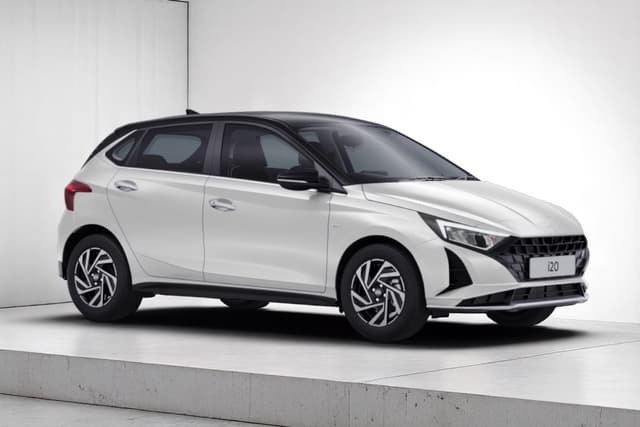
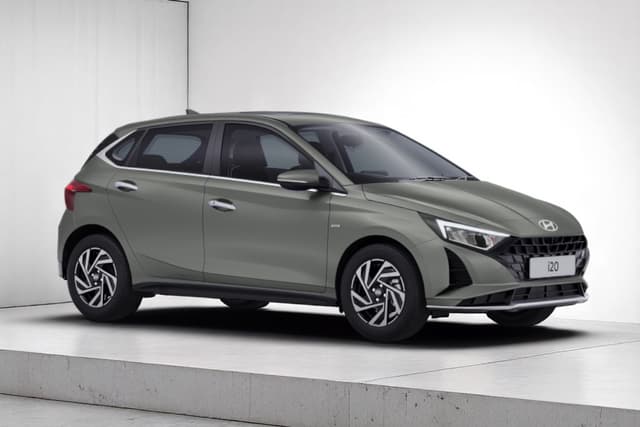
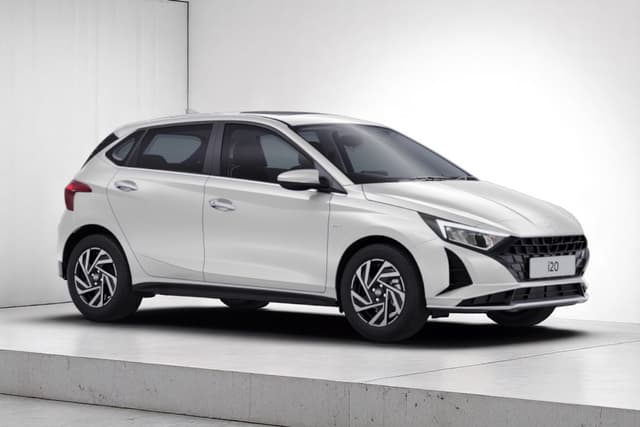
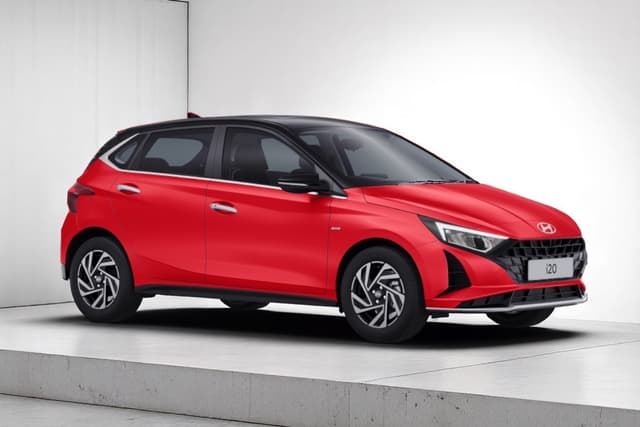
Hyundai i20 colours run to 9 options and include dual-tone choices. The named shades are Abyss Black, Amazon Grey, Atlas White, Fiery Red, Starry Night, Titan Grey and Typhoon Silver, with dual-tone versions offered on some of them.
Colour | Notes |
Atlas White, Typhoon Silver | Light shades, widely available |
Titan Grey, Amazon Grey | Grey options |
Abyss Black, Starry Night | Dark shades |
Fiery Red | The brightest option in the range |
Dual-tone finishes | Offered on selected shades |
Hyundai i20 FAQs
The Hyundai i20 is aimed at those looking for a no-compromise premium hatchback that is loaded with features. Both naturally aspirated and turbo-petrol engine options are on offer, which gives more flexibility to buyers.
At 311 litres, the i20's boot can hold enough for the odd airport run. Although, you'll have to haul your luggage in as the loading lip is quite high. The i20 also gives the flexibility to fold the rear backrest down to free up more luggage room.
The i20 rounds off the bumps well and the ride quality is also well judged. Even the suspension is nicely damped, and even up and down movements are well contained.
There is ample kneeroom and headroom for even six footers to sit in comfort at the back, and fitting in a third passenger won't be too much of a squeeze. The seatback is also nicely reclined and what aids comfort is the nicely positioned rear-centre armrest.
Compared to the standard car, the N Line gets 30 percent stiffer damping for the suspension and a retuned steering too. The upgraded suspension enhances the N Line’s sporty character, reduces body roll in the bends and enables it to corner flatter. The steering has a good heft to it and it's feelsome. It takes away the vagueness from the normal i20 and makes it feel sharper around corners, which only enhances the engagement. All of these make the i20 N Line a fun-to-drive hatch.
With the i20's lower trims, Hyundai is offering a 10.1-inch touchscreen infotainment system with wireless Apple CarPlay and Android Auto and a rearview camera for an additional Rs 15,000 as dealer-level fitments. At that price, the upgrade is justified recommended. Make sure to contact your nearest Hyundai showroom for both offer and stock availability.
At 170mm, the i20's ground clearance is adequate for Indian roads. It also has a relatively short wheelbase, which helps traverse most speedbreakers with ease.
Questions you may find useful
Hello all, I am looking to buy a new car with Rs. 10-12 lakh budget. I am confused between i20 IVT hatchback and mini SUV like the Kia Sonet DCA or Tata Nexon AMT. Most of my driving is 3000 to 4000km per month on the highway. I am in Bangalore.
Given your high running of 3,000-4,000km a month on the highway, the priority should be a car that is comfortable, stable at speed and easy to live with over long distances. The Hyundai i20 IVT is a good hatchback, but at that kind of running, a compact SUV makes more sense because of the higher seating position, better ground clearance and generally more comfortable ride over broken patches. Between the Kia Sonet DCT and Tata Nexon AMT, the Sonet DCT is the better fit for your usage. The DCT is a proper automatic gearbox, which is smoother and quicker to respond than an AMT, especially on highways where quick gear changes matter during overtakes. The Sonet also feels more refined, more premium and better put together overall. The Nexon is a solid car, but the AMT gearbox is not as smooth or as enjoyable on long highway runs. The only caveat with the Sonet DCT is that dual-clutch gearboxes can get a bit jerky in heavy stop-start traffic, but on highways, they are in their element. Overall, the Sonet DCT is the best fit for your usage and budget.
I'm planning to buy a new car with a budget of Rs. 8-10 lakh. I currently own a Hyundai Santro Xing and am looking to upgrade. I have shortlisted the Hyundai i20 Magna and the Maruti Suzuki Brezza LXi Turbo. We are a family of five, and my average monthly running is around 1,500 km. My priorities are comfort and good fuel efficiency. Which of these would you recommend, or is there a better option within my budget?
For a family of five with 1,500km a month, comfort and good mileage are key. The Hyundai i20 Magna is a good hatchback, but it won't feel like a big upgrade from your Santro Xing in terms of space. The Maruti Brezza LXI Turbo is the better choice here. It offers a more spacious cabin, a higher seating position and better comfort for five occupants. The turbo petrol engine should also be relatively efficient and well suited to your running. The Brezza is also a practical, reliable and comfortable SUV that will serve you well for years. Go for the Brezza LXI Turbo.
Upcoming Cars


Hyundai Cars


Trending Cars


Latest Cars